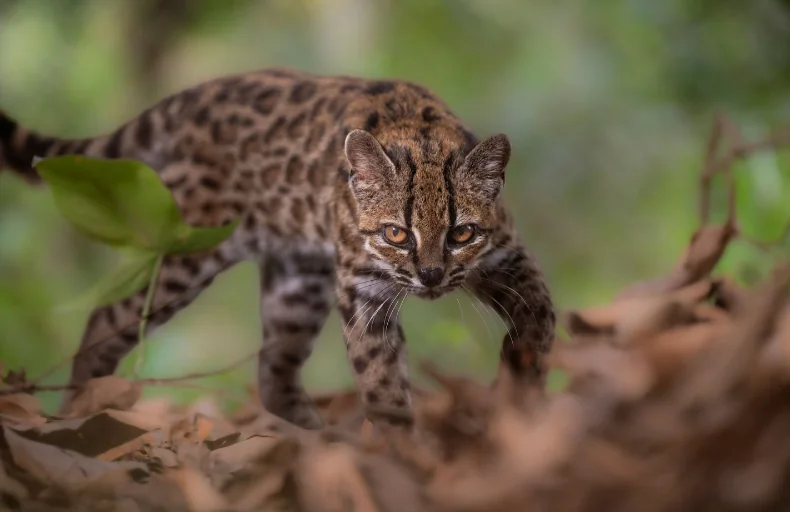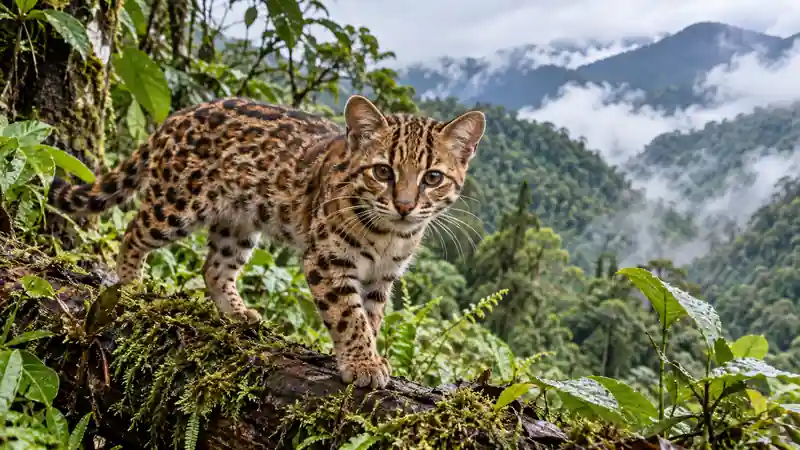

Scientists have identified a new tiger cat subspecies in Peru’s Yungas cloud forests, adding another distinct branch to South America’s small spotted-cat family and showing how genomic research is revealing wildlife diversity that appearance alone could not detect.
The newly described animal, Leopardus tigrinus antisuyo, was reported in research published in Current Biology on September 17, 2026. The discovery matters because genetically distinct populations can have smaller ranges and different conservation needs than scientists previously understood.
Antisuyo tiger cat identified in Peru
The Peruvian animal has been classified as a new subspecies of Leopardus tigrinus, commonly known as the northern tiger cat. Researchers named it antisuyo after Antisuyu, the eastern region of the former Inca Empire that included the area where the cat occurs.
The distinction is important: the Peru discovery is a new subspecies, not a new species. It emerged from the same research that identified an entirely separate tiger cat species in neighboring Bolivia.
The new wild cat species identified in Bolivia’s Yungas cloud forest, Leopardus tilcayo, was recognized as its own species after genomic evidence showed that it belonged to a separate evolutionary lineage.
Researchers analyzed 38 complete genomes
The international team examined complete genomes from 38 cats belonging to the Leopardus genus. Twenty-six represented different evolutionary units within the long-debated tiger-cat complex, while eight genomes were generated from museum specimens.
According to the University of Antioquia’s summary of the research, the genomic evidence resolved South America’s tiger-cat complex into five distinct species and identified the Peruvian Yungas population as the new subspecies L. tigrinus antisuyo.
The five species recognized in the study are Leopardus guttulus, Leopardus emiliae, Leopardus pardinoides, Leopardus tigrinus and the newly described Leopardus tilcayo.
Why DNA changed the tiger-cat family tree
Tiger cats can be difficult to classify because animals from different regions may share similar body size, markings and spotted coats even when their evolutionary histories are different.
Genomic analysis allowed researchers to look beyond appearance and compare large amounts of DNA. The results showed that some populations once grouped together had been evolving separately for long periods.
The study also found an unexpected relationship between the Peruvian and Bolivian cats. Although both live in neighboring Yungas regions and belong to the broader tiger-cat group, they are not each other’s closest relatives.
Museum specimens supplied crucial evidence
Eight genomes used in the project came from preserved museum material. That allowed researchers to include genetic information from places where modern samples are scarce or difficult to collect.
This approach, sometimes called museomics, is increasingly valuable in wildlife research because historical collections can preserve DNA from animals collected decades ago. For elusive forest cats, those specimens can help fill major gaps in geographic and evolutionary records.
The finding also fits a wider conservation pattern in which scientists increasingly use genetics, monitoring and long-term population records to understand wild cats, including efforts highlighted in modern wild cat conservation programmes.
Peru and Bolivia findings are scientifically different
The study’s two headline discoveries can easily be confused because both involve small spotted cats from the Yungas.
In Bolivia, researchers formally described Leopardus tilcayo as a new species. Genetic estimates indicate that its lineage separated from related tiger cats about 1.4 million years ago.
In Peru, scientists instead recognized Leopardus tigrinus antisuyo as a distinct subspecies within L. tigrinus. The Peruvian lineage is associated with the Yungas on the eastern slopes of the Andes, including material linked to Peru’s Pasco region.
Why the new classification matters for conservation
Recognizing a new subspecies does not mean the animal has suddenly appeared in Peru. These cats were already part of the ecosystem; what changed is scientists’ understanding of their biological identity.
That difference can affect conservation planning. If several genetically distinct populations are counted as one widespread animal, a smaller regional population may appear more secure than it actually is.
The Yungas are humid mountain forests with high biodiversity, but parts of the wider landscape face pressure from deforestation, agricultural expansion, mining, fires and other forms of habitat disturbance.
Researchers say each newly resolved lineage now needs more focused study of its distribution, genetic diversity, population size and specific threats before conservation risk can be assessed accurately.
More field research is still needed
Scientists still do not have a complete picture of the Antisuyo tiger cat’s population, exact geographic range, behavior or ecological requirements. Those questions will require field surveys, camera traps and additional genetic sampling across the Peruvian Yungas.
The discovery nevertheless gives researchers a more precise framework for future work. Instead of assuming similar-looking tiger cats across South America belong to the same biological unit, scientists can now investigate each lineage on its own evolutionary terms.
A discovery hidden behind a familiar appearance
The Antisuyo tiger cat highlights a central lesson from modern wildlife genetics: important discoveries do not always involve finding an animal no one has ever seen. Sometimes the breakthrough comes from proving that a familiar-looking population has a distinct evolutionary history that had remained hidden for generations.
For Peru’s cloud forests, that new understanding could help researchers build more accurate wildlife maps and determine whether the Antisuyo tiger cat requires conservation measures tailored specifically to its range and genetic identity.

Make Swikblog your go-to source on Google for reliable updates, smart insights, and daily trends.