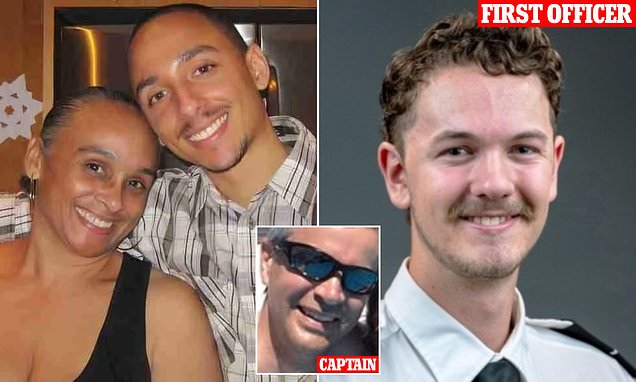

NANTUCKET, Massachusetts — Bermuda insurance executive Sergio Wayne Lottimore, 41, and his mother, Marilyn Lavonne Bean, 66, are among six people presumed dead after a private medical jet crashed in the Atlantic south of Nantucket while flying from Bermuda to Boston.
Bean was reportedly being transported to Boston for medical treatment after suffering a stroke, with Lottimore accompanying her as a family escort. Four Canadian aviation and medical crew members were also aboard the Latitude Air Ambulance Gulfstream G100 when contact was lost early Saturday, October 3.
Mother and son identified after Nantucket search
Lottimore and Bean were both from Bermuda. Their identities were confirmed after an extensive search operation that initially described the two passengers only as a patient and family escort.
Lottimore was a senior figure at Hamilton Re. The company had promoted him in 2026 to Senior Vice President and Head of Specialty Reinsurance, after he previously led its credit, bond and political risk reinsurance business.
Hamilton said Lottimore had extensive experience in the financial-lines market. Warwick Academy in Bermuda, where he graduated in 2002 and served as a prefect, also paid tribute following news of his presumed death.
The identities mark a major development in the Nantucket air ambulance disappearance, which began as a rescue operation after aviation authorities lost contact with the Boston-bound jet.
Four Latitude crew members also presumed dead
Latitude Air Ambulance identified the other four people aboard as Captain Philip Gregory Childerhose, First Officer Thomas Henry Farquhar, flight nurse Sarah Jane Paton and respiratory therapist Jolene Beth Weir.
The Ontario-based medical transport company said all six people aboard Heartbeat 104 were now presumed to have died.
Childerhose had years of experience flying medical evacuation missions, while Paton and Weir were part of the specialist medical team caring for patients during flights.
Heartbeat 104 reported electrical difficulties
The aircraft was a Canadian-registered Gulfstream G100 operating under the call sign Heartbeat 104.
According to the Transportation Safety Board of Canada, the aircraft departed Bermuda with six occupants and was approaching the Boston area when its crew reported electrical difficulties.
The jet then descended rapidly before air traffic control lost contact south of Nantucket. Investigators have not determined that the electrical problem caused the crash.
Air-traffic-control recordings reported by U.S. media indicate controllers were struggling with weak communications and repeatedly trying to confirm whether the crew was declaring an emergency before the aircraft disappeared.
DuPont I-5 Crash: Girls Accused of Knife Attack on Soldiers Before Collision
Smit Machchhar and Flydubai FZ1073 Cockpit Emergency: What Happened
Debris found after 66-hour search
The U.S. Coast Guard launched a large search involving aircraft, helicopters, cutters and partner agencies.
Crews searched more than 4,400 square miles over approximately 66 hours. Debris associated with the aircraft was located about 20 miles south of Nantucket, in water reported to be roughly 80 to 90 feet deep.
The discovery shifted the mission from finding survivors to recovering the aircraft and evidence that could explain the crash.
The case follows other recent aviation emergencies involving rapidly developing technical problems, including the British Airways BA295 emergency over Ireland, though there is no indication the incidents are connected.
Canada will lead the investigation
The Transportation Safety Board has opened investigation A26F0321. Canada is leading because the aircraft was Canadian-registered and the accident occurred in international waters.
The U.S. National Transportation Safety Board is assisting as an accredited representative, while investigators are expected to focus on recovering the wreckage and examining the reported electrical difficulties, aircraft systems, maintenance history and final communications.
No official cause has been determined. Until investigators recover and analyze more evidence, the electrical problem remains an important clue rather than a confirmed explanation for the crash.

Make Swikblog your go-to source on Google for reliable updates, smart insights, and daily trends.