
TANZANIA — A safari plane carrying 30 people made a dramatic gear-up landing at Kilimanjaro International Airport after striking and killing a zebra during takeoff from Seronera Airstrip inside Tanzania’s Serengeti National Park.
A safari plane was forced to crash-land after striking and killing a zebra during takeoff in Tanzania All 26 passengers and four crew members escaped unharmed https://t.co/G0V8xM7TLT
— Dexerto (@Dexerto) October 6, 2026
The Embraer EMB-120, registration 5H-HLL, was flying from Seronera to Zanzibar on October 4, 2026, with 26 passengers and four crew members aboard when the wildlife strike occurred.
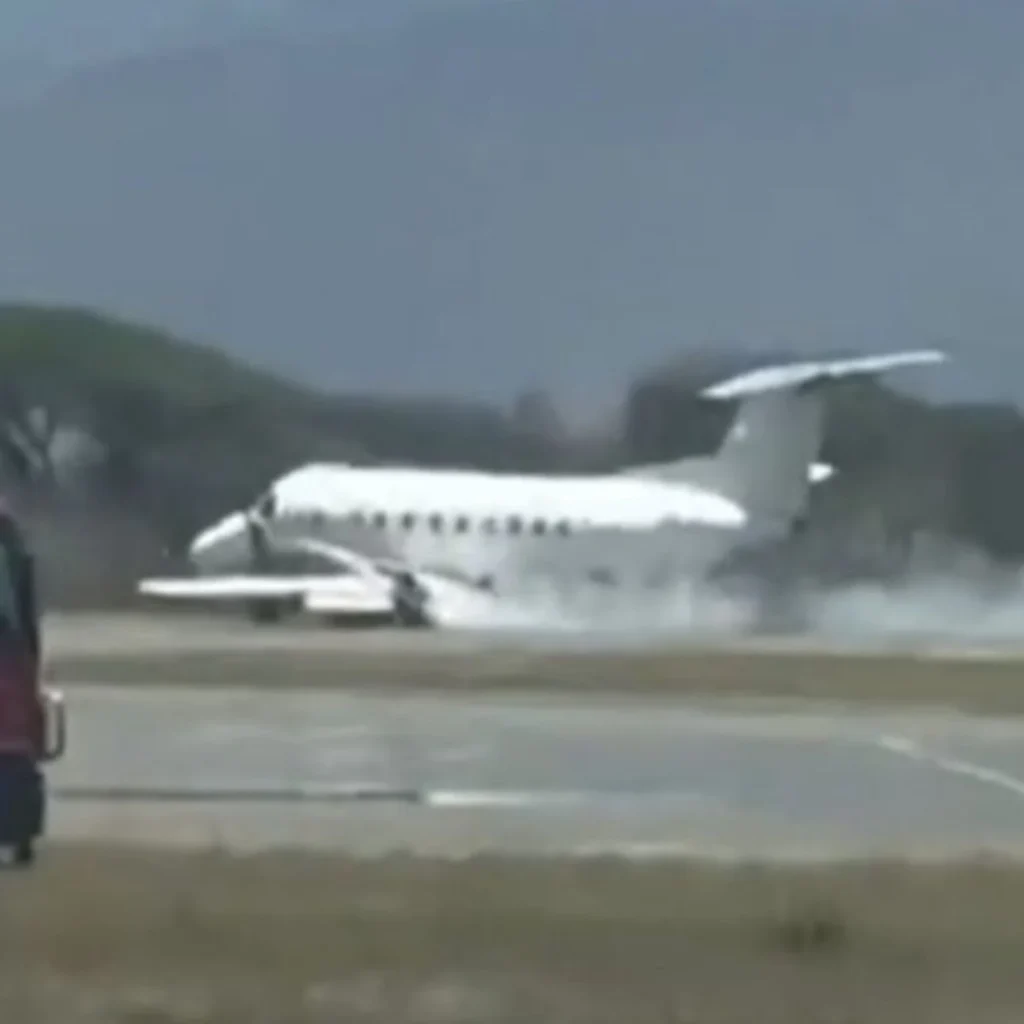
The aircraft subsequently encountered a problem with its main landing gear. The crew diverted to Kilimanjaro, where the plane landed on Runway 09 with its main gear retracted and slid along the runway before stopping.
Despite the serious emergency, all 30 people aboard escaped without reported injuries. The aircraft sustained substantial damage, and operations at Kilimanjaro were disrupted for several hours.
Zebra struck during departure from Seronera
The collision happened as the aircraft departed Seronera Airstrip, an important aviation gateway for travelers visiting the Serengeti.
The zebra was killed in the strike. The incident highlights an unusual risk faced by aircraft operating from airstrips surrounded by protected wildlife habitat, where large animals can potentially enter areas used for aircraft movements.
Seronera serves scheduled and private flights connecting safari travelers with other destinations in Tanzania. The Tanzania Civil Aviation Authority oversees civil aviation safety in the country.
Main landing gear would not deploy
After the wildlife strike, the aircraft encountered trouble with its main landing gear. Instead of continuing to Zanzibar, the pilots diverted to Kilimanjaro International Airport, where a long paved runway and emergency services were available.
The main gear could not be lowered for a conventional landing. The pilots therefore brought the EMB-120 down on Runway 09 with the gear retracted.
Video from the scene showed the turboprop sliding along the runway on its underside, with smoke visible beneath the aircraft as it slowed.
A gear-up landing can cause extensive structural damage and creates additional risks from friction, fuel leaks or fire. Aviation incident reporting described the damage to 5H-HLL as substantial.
British Airways BA295 Emergency Over Ireland: Latest Flight Update
Philadelphia Airport Ground Stop After FAA Radio Outage Near Newark
All 26 passengers and four crew escaped safely
No injuries were reported among the 26 passengers or four crew members.
That outcome is particularly significant given the sequence of events: a large-animal strike during departure, a subsequent landing-gear problem, a diversion and finally a gear-up landing.
The incident follows several recent aviation emergencies requiring crews to change their plans quickly. Swikblog previously reported on the KLM KL735 power-bank fire emergency, in which an unexpected onboard problem also forced an immediate aviation safety response.
Kilimanjaro Airport disrupted for about five hours
The emergency affected more than those aboard the aircraft because the disabled plane disrupted runway operations at Kilimanjaro International Airport.
Local reporting placed the incident between approximately 11 a.m. and noon local time. Operations reportedly resumed at about 4:30 p.m., putting the disruption at roughly five hours while authorities dealt with the aircraft and runway.
Kilimanjaro is an important gateway for northern Tanzania and its tourism industry, serving travelers heading toward Mount Kilimanjaro, the Serengeti and other major destinations.
Zebra strike and gear failure remain under investigation
A central question is whether the collision with the zebra directly caused the landing-gear failure.
The wildlife strike occurred before the landing-gear problem, but investigators have not yet publicly established a definitive mechanical connection between the two events. Until that happens, describing the zebra strike as the confirmed cause of the gear failure would go beyond the available evidence.
Investigators are expected to examine damage from the impact, the landing-gear system and the sequence of events that led to the Kilimanjaro diversion.
Aircraft 5H-HLL identified as an Embraer EMB-120
The aircraft involved was identified in aviation reporting as an Embraer EMB-120 Brasilia, registration 5H-HLL.
Reports have associated the passenger service with Sindbard Air. Tanzania’s aircraft register, however, lists Angelic Handlers Company Limited as the registered operator of 5H-HLL and the Ministry of Interior of South Sudan as its owner.
The distinction is worth noting because an aircraft’s registered owner or operator can differ from the commercial identity associated with a particular passenger service.
Swikblog has also followed other recent aircraft emergencies, including the Nantucket medical aircraft tragedy. The circumstances are unrelated, but both incidents underline how mechanical or operational problems can rapidly change the course of a flight.
For the Tanzania flight, the immediate outcome was far more fortunate: all 30 people survived the zebra strike, diversion and subsequent gear-up landing without reported injury, while investigators now work to establish exactly why the landing gear could not be deployed.

Make Swikblog your go-to source on Google for reliable updates, smart insights, and daily trends.