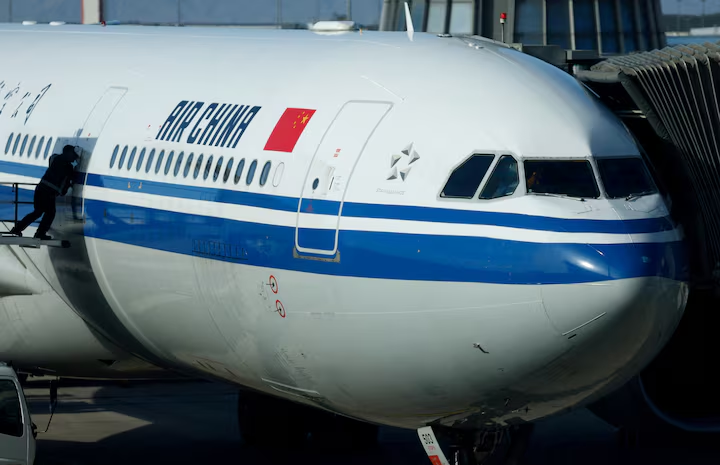

Air China has resumed direct passenger flights between Beijing and Pyongyang, restoring one of the region’s most closely watched international air routes after a six-year suspension. The first flight departed Beijing Capital International Airport on March 30, marking another step in North Korea’s gradual reopening following years of strict border controls introduced during the COVID-19 pandemic.
The route now operates once a week, reconnecting the Chinese and North Korean capitals by air after passenger train services between the two cities resumed earlier in March. Together, the restored rail and air links indicate a carefully managed expansion of cross-border travel rather than a broad reopening of the country.
For aviation, diplomacy and regional trade observers, the development is significant because the Beijing–Pyongyang corridor has long served as one of North Korea’s most important international transport connections.
Why the Beijing–Pyongyang route matters
Before the pandemic, direct flights between Beijing and Pyongyang provided an important link for diplomats, business travellers, aid organisations and approved visitors. Services were suspended in early 2020 when North Korea sealed its borders under some of the world’s strictest pandemic restrictions.
Air China, China’s flag carrier, has now restored the service, joining North Korea’s state-owned Air Koryo, which had previously resumed limited international operations. Because China remains North Korea’s largest trading partner, the return of this route carries diplomatic and economic significance beyond commercial aviation.
The resumption also follows the restart of passenger rail services between Beijing and Pyongyang, reinforcing the view that North Korea is restoring essential international connections in stages instead of reopening all at once.
International travellers are also keeping a close eye on changing border policies elsewhere. Europe, for example, is preparing to introduce its new Entry/Exit System (EES), which is expected to change arrival procedures for millions of visitors.
North Korea’s reopening remains tightly controlled
Although the return of Air China flights represents meaningful progress, it should not be interpreted as a full reopening of North Korea to international tourism.
Foreign access remains heavily regulated, with entry approvals still limited. Analysts say the restored transport services primarily support official travel, approved business activity and other authorised passengers rather than mass tourism.
Industry observers have also noted that demand for the route is expected to remain modest while travel restrictions continue. Air China has initially scheduled the service as a weekly operation, allowing the airline to assess passenger demand and operational requirements before considering any expansion.
The cautious rollout mirrors North Korea’s broader strategy since easing pandemic-era restrictions. Instead of reopening rapidly, authorities have gradually restored selected transport links with key partners while maintaining tight controls over international arrivals.
Read More:
- Primark opening two new US stores in July 2026
- HomeGoods opening two new stores in July 2026
- Visit the Swikblog homepage for more latest news
What could happen next?
The restart of direct flights is likely to be monitored closely by governments, airlines and travel companies looking for signs of North Korea’s next steps.
Questions remain over whether additional flight frequencies, new international routes or wider tourism access will follow. For now, officials have announced only the restored Beijing service, with no broader expansion confirmed.
Travel experts are also watching other international policy changes that could influence future travel planning, including the latest timeline for the ETIAS travel authorisation system, which will introduce a new pre-travel requirement for many visitors heading to Europe.
Even so, the combination of resumed rail travel and regular Air China flights represents one of the clearest indications yet that North Korea is cautiously rebuilding selected international connections after years of isolation. While the country remains among the world’s most tightly controlled destinations, each restored transport link offers another measurable sign of how its reopening strategy is evolving.
Source: Reuters
You may also like SA Treasurer Rejects Free Public Transport as Fuel Prices Remain in Focus.

Make Swikblog your go-to source on Google for reliable updates, smart insights, and daily trends.