Written by Rajiv Singh
Airbus has cut its 2025 commercial aircraft delivery target after uncovering a significant quality issue affecting fuselage panels on its flagship A320 family. The manufacturer now expects to hand over around 790 jets in 2025, down from an earlier goal of roughly 820 aircraft, as inspections and potential rework disrupt an already stretched production schedule. The decision follows revelations that metal skins in forward fuselage sections were produced with the wrong thickness, a fault traced to a supplier and highlighted in detailed reporting by The Guardian .
What Is the A320 Fuselage Problem?
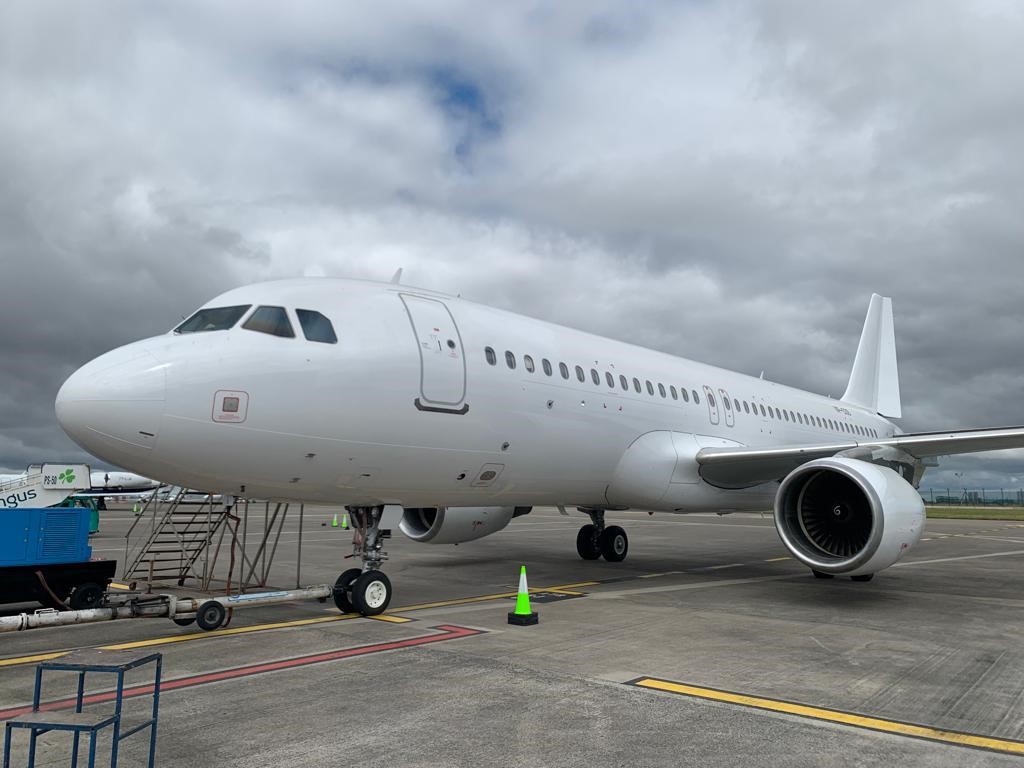
The issue centres on fuselage panels located near the front of the aircraft, behind the cockpit and around the forward doors. According to industry sources, these panels were manufactured with a thickness that does not meet Airbus’s original design specifications. While regulators and Airbus have stressed that there is no immediate safety risk for aircraft already in service, the problem is serious enough to require extensive inspections and, in some cases, structural work before new jets can be delivered.
In total, hundreds of A320-family aircraft are affected. The tally includes jets already delivered to airlines, aircraft currently on final assembly lines, and airframes at earlier stages of production. Each must be checked, documented and, if needed, repaired. That process slows the flow of completed aircraft leaving Airbus plants and makes it impossible for the company to meet its original 2025 delivery ambition.
Why Airbus Cut Its 2025 Delivery Target
Airbus entered 2025 with a highly ambitious ramp-up plan, aiming to keep pace with strong demand from airlines renewing fleets and expanding capacity. Much of that growth was built around the A320 family, which has become the backbone of short- and medium-haul flying worldwide. When the fuselage fault emerged, it directly hit the most critical part of the production system.
Deliveries in late 2025 were already under pressure as Airbus tried to clear a heavy year-end backlog. The need to inspect and potentially rework fuselage sections forced the company to accept that some aircraft would slip into later delivery slots. Rather than push factories and suppliers to breaking point, Airbus opted to lower the numerical target while maintaining its full-year financial guidance, signalling to investors that margins and cash flow remain manageable despite the disruption.
Another Blow After the A320 Software Recall
The fuselage defect did not occur in isolation. Only days earlier, Airbus had been dealing with a separate high-profile issue involving the A320’s flight-control software. In late November, the company issued one of the largest technical bulletins in its history, calling for urgent updates across thousands of A320-family jets worldwide after a problem was identified in how computers handled data under certain conditions of solar radiation. This major recall and software patch programme was widely covered by Reuters and other global outlets.
Airlines moved quickly to install the software fix, sometimes scheduling aircraft out of service on short notice to comply with the directive. Although most carriers reported only limited disruption, the episode highlighted how vulnerable the global aviation system is when a single aircraft type dominates fleets and schedules. The follow-up discovery of a structural-quality issue on the same aircraft family has reinforced questions about supply chain oversight and quality control at a time when output is being pushed to record levels.
Impact on Airlines and the Wider Industry
For airlines, the immediate consequence of Airbus’s decision is a delay in receiving some of the narrow-body jets they were counting on for 2025. Carriers planning to add routes, retire older aircraft or improve fuel efficiency now face a more constrained fleet plan. Some will extend the life of existing jets longer than intended, keep leased aircraft in service, or slow network expansion until new A320s arrive.
The situation also has implications for the broader aviation ecosystem. Leasing companies may see timing changes in contracted deliveries, while maintenance providers and regulators will track how the fuselage checks and repairs are carried out across multiple regions. With Boeing still managing its own production and certification challenges, there is limited spare capacity elsewhere in the market to absorb further delays in narrow-body supply.
Quality, Confidence and the Road Ahead
Airbus’s handling of the fuselage defect will be watched closely by airlines, regulators and passengers alike. The company has emphasised transparency and insisted that safety is not compromised, but the combination of a major software recall and a structural-quality issue within weeks inevitably raises questions about how quickly production has been ramped up and how rigorously suppliers are being monitored.
Aviation history shows that even when incidents do not lead directly to accidents, they can have long-term effects on public confidence and regulatory scrutiny. For readers following aviation developments over many years, the renewed search for Malaysia Airlines Flight MH370 remains a reminder of how deeply airline safety stories can resonate. Swikblog has previously covered that effort in detail in our piece “MH370 Search Resumes 2025” , which explores the broader context of how aviation safety investigations evolve over time.
For now, Airbus’s reduced delivery target is a clear signal that fixing the A320 fuselage problem – and restoring absolute confidence in the type – matters more than hitting an ambitious numerical milestone. How efficiently the inspections are completed, and how effectively the company strengthens supplier oversight, will shape not only its 2025 results but also the long-term reputation of the world’s most widely used single-aisle jet.

Make Swikblog your go-to source on Google for reliable updates, smart insights, and daily trends.