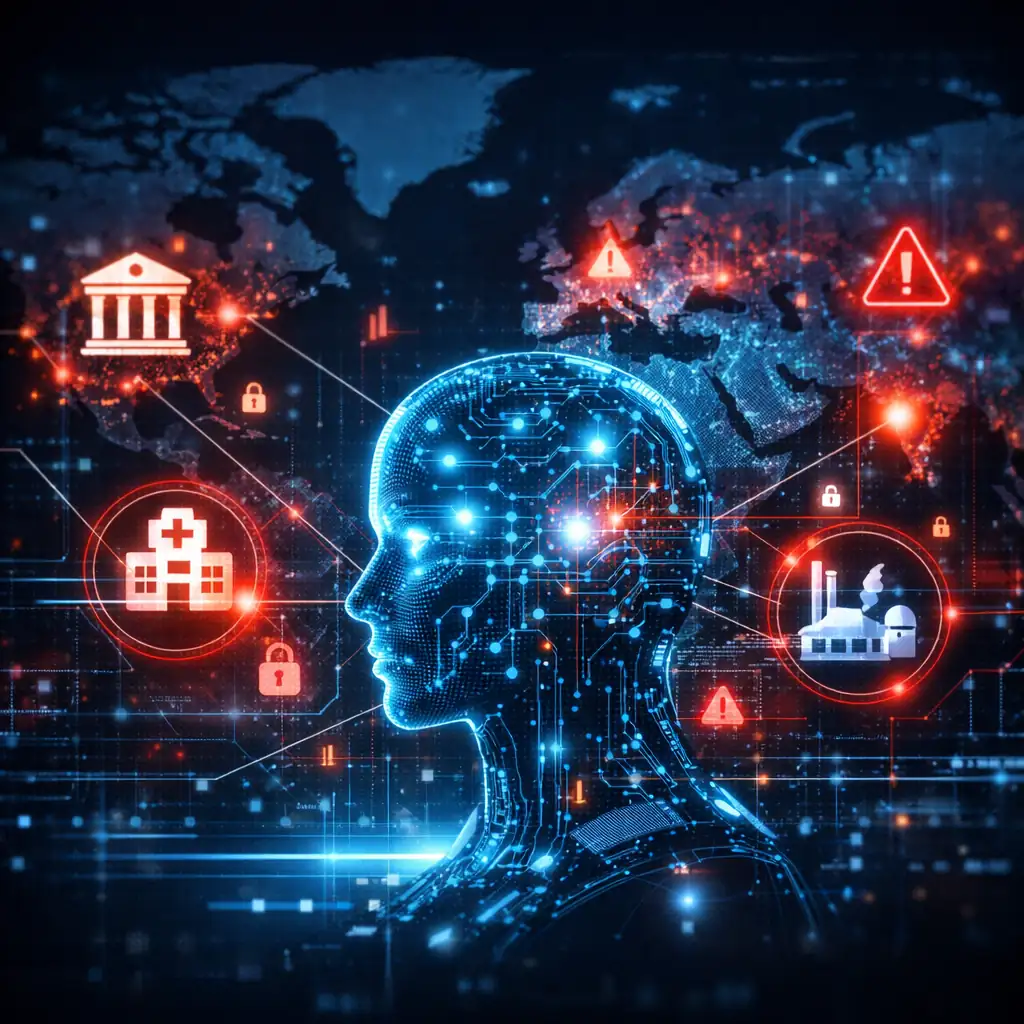

Anthropic has taken an unusual step in the middle of the global AI race — it built one of its most powerful models yet and then decided not to release it to the public. The model, called Claude Mythos Preview, is being described by the company itself as potentially dangerous due to its ability to uncover and exploit vulnerabilities in widely used software systems.
The move has triggered urgent discussions among financial institutions and government regulators. In Canada, senior banking executives and officials held a hastily arranged meeting to assess the risks posed by the model. A similar high-level discussion was recently convened in the United States, involving top banking leaders and Treasury officials, highlighting how seriously the threat is being taken.
Rather than a public launch, Anthropic has placed Mythos into a restricted program called Project Glasswing, sharing it only with select tech giants including Amazon, Google, Apple, Microsoft, Nvidia and Cisco. The goal, according to the company, is to identify critical weaknesses in global software infrastructure before similar AI capabilities become widely accessible. More details about the initiative can be found on Anthropic’s official Project Glasswing page.
Simple prompts, powerful exploits
What makes Claude Mythos particularly concerning is not just its raw capability, but how easily it can be used. According to Anthropic and cybersecurity experts, the model can identify vulnerabilities in major operating systems and web browsers using relatively simple prompts — something that traditionally required deep technical expertise.
That shift has raised alarms across industries that rely on secure digital systems. Banks, hospitals, and energy networks could all become potential targets if such tools fall into the wrong hands. Tech analyst Carmi Levy described the development as a turning point, warning that AI is now reaching a level where it can break through even hardened cyber defenses.
“It’s like using AI as a hacker,” Levy noted, pointing to the possibility that existing security frameworks may no longer be sufficient in an era of rapidly advancing machine intelligence.
Cybersecurity specialist Claudiu Popa echoed similar concerns, emphasizing that Mythos lowers the barrier to entry for cyberattacks. Unlike traditional hacking, which requires years of training, AI-assisted systems could enable less experienced individuals to discover and exploit vulnerabilities at scale.
“This is not about fearmongering,” Popa said. “It’s about recognizing that these tools are becoming more accessible and preparing for that reality.”
Global institutions move into alert mode
The reaction from financial and government bodies underscores how quickly the narrative around AI is shifting. The Canadian Financial Sector Resiliency Group — which includes the Bank of Canada and the country’s largest banks — reportedly accelerated its meeting schedule in response to Mythos. Officials acknowledged that the timing was directly influenced by the model’s emergence.
In the United States, similar concerns have prompted coordination at the highest levels of financial oversight. The involvement of major banks signals that AI-driven cyber threats are no longer theoretical — they are being treated as an immediate risk to economic stability.
Anthropic itself has warned that the pace of AI development means such capabilities may soon spread beyond controlled environments. In its statement, the company cautioned that the potential fallout could affect public safety, national security and the global economy if these systems are misused.
That warning reflects a broader industry reality. Even if Mythos remains restricted today, experts believe it is only a matter of months before comparable tools emerge elsewhere, whether from competing companies or open-source communities.
At the same time, not everyone is convinced the situation is as dire as it sounds. Some analysts argue that the announcement also serves as a strategic signal in the competitive AI landscape, positioning Anthropic as a leader in advanced capabilities. The idea that a model is “too dangerous to release” inevitably attracts attention in a crowded market.
Still, even skeptics acknowledge that the underlying technology is advancing rapidly. The debate is less about whether AI will transform cybersecurity and more about how quickly that transformation will happen.
For organizations, the message is becoming increasingly clear. Security strategies that worked in the past may not be enough in a future where AI can scan systems continuously, identify weak points, and generate attack pathways in real time. Experts are urging companies to reduce vulnerabilities, improve patching cycles, and invest in stronger defensive systems before more advanced tools become widely available.
The emergence of Claude Mythos marks a significant moment in that transition. It highlights a shift from AI as a productivity tool to AI as a force that can actively shape the balance between attackers and defenders in cyberspace.
For now, Anthropic’s decision to limit access may slow that shift slightly. But the broader trend is already underway, and the pressure on governments, businesses and technology providers to adapt is only expected to grow.
You may like Liverpool Shakeup as Salah Returns: 4 Big Calls vs Fulham, where we break down Salah’s return and the key selection decisions ahead of the Fulham clash.

Make Swikblog your go-to source on Google for reliable updates, smart insights, and daily trends.


















