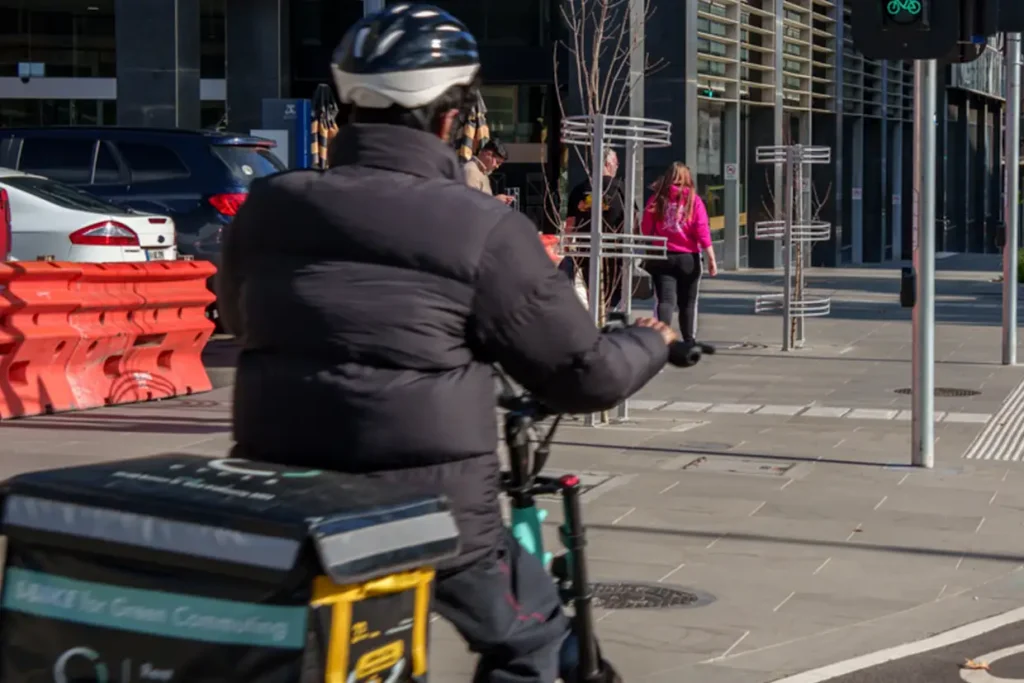

Australia’s first minimum standards order for on-demand delivery workers is now in force, giving eligible app-based couriers a legally enforceable earnings floor of A$31.30 to A$32 an hour for engaged delivery time. The Fair Work Commission made the interim order on August 11, and it began operating nationwide on August 17, 2026.
The rules cover qualifying employee-like workers who collect and deliver food, beverages and supermarket groceries through digital labour platforms. The order does not automatically turn those workers into employees, so covered couriers can still decide whether and when to accept delivery engagements.
How much are delivery workers entitled to?
For the period from August 17 to December 31, 2026, the minimum safety-net rate depends on the vehicle used:
- A$31.30 an hour for workers using no vehicle, a pedal bicycle, an electric bicycle or a scooter.
- A$31.50 an hour for workers using a combustion-engine motorcycle or scooter.
- A$32 an hour for eligible electric or combustion-powered motor vehicles with a carrying capacity of up to one tonne.
The rates are higher than Australia’s National Minimum Wage of A$26.44 an hour from July 1, 2026, but the figures are not directly comparable. Delivery contractors can still bear costs such as fuel, vehicle purchases or leases, maintenance, parts, registration and other operating expenses. The 2026 Australian minimum wage increase gives useful context for the employee wage benchmark.
The order already sets the next step in the rate schedule. From January 1, 2027, the three safety-net levels will increase to A$31.80, A$32 and A$32.50 an hour respectively. From 2028, the rates are due to be adjusted annually in line with the preceding National Minimum Wage increase unless the Commission orders a different variation.
A$32 an hour does not cover every hour logged into an app
The most important detail for workers is the meaning of engaged time. In general, it starts when a courier accepts a delivery engagement and ends when that engagement is completed.
Time spent online waiting for a new job is therefore not automatically covered by the minimum earnings floor. This means a worker may be logged into an app for several hours while recording fewer hours of engaged time.
The order also allows some periods to be excluded, including certain delays, breaks and time lost because of circumstances outside the platform operator’s control. The Australian food delivery minimum pay framework explains why this distinction can make a major difference when comparing the headline rate with effective earnings across a full shift.
How the earnings floor and top-up system works
Platforms can continue using per-delivery payment models. What changes is that eligible earnings must be checked against the statutory floor over an earnings period set by the platform, which can be as long as 21 days.
The minimum amount is calculated by multiplying the worker’s total engaged time by the applicable safety-net rate. If qualifying pay falls short, the platform must make a top-up payment to cover the difference.
Under the order, that top-up is paid in the next earnings period or within seven days after that next period. Workers whose existing delivery earnings already exceed the minimum floor for their engaged time may not receive an additional payment.
Who is covered and what costs still sit with workers?
The order applies where employee-like workers use a digital labour platform to perform on-demand work that predominantly involves collecting and delivering consumables or supermarket groceries. It does not cover workers using vehicles with a carrying capacity above one tonne.
Covered couriers continue to carry several vehicle-related responsibilities. They must acquire, maintain and repair their vehicle at their own expense and meet applicable running costs, licences, permits and registration requirements.
That is one reason the new safety-net figure should not be treated as equivalent to an employee’s ordinary hourly wage. Two couriers receiving the same engaged-time rate can still end a shift with different effective earnings because of waiting time, delivery demand and vehicle expenses.
Insurance, records and other protections are part of the order
The reform extends beyond pay. Digital labour platform operators covered by the order must fund personal accident insurance providing a reasonable minimum level of cover that reflects the work performed through the platform.
Workers remain responsible for compulsory third-party vehicle insurance where required. The order also contains provisions on dispute resolution, consultation over certain significant changes, workplace delegate rights, information sharing and a gig worker information statement.
Platforms must retain specified records for seven years, including gross and net payments and total engaged time for each earnings period. Workers can request copies of records that the platform is required to keep.
Canberra Cafes and Restaurants Hit With Food Safety Warnings
SunRice Cuts 78 Jobs in Riverina Amid Water Buyback Pressure
Separate last-mile delivery cases remain active
The on-demand food and grocery order is interim, and related Fair Work Commission proceedings are still moving ahead. Separate cases known as MS2024/1 and MS2024/2 concern proposed minimum standards for employee-like workers and road transport contractors performing last-mile delivery work.
As of August 20, interested parties in those cases face a August 21 deadline for submissions and evidence responding to draft consent orders filed by the Transport Workers’ Union. A further hearing is scheduled for August 25 and 26, 2026.
Those proceedings do not change the fact that the on-demand delivery order is already operating. However, the current order requires the Commission to begin a review within 21 days if a notice of intent and draft minimum standards order is later published in either of the two related last-mile matters.
The latest timetable and official documents are available through the Fair Work Commission’s minimum standards cases page.
For eligible food and grocery couriers, the immediate position is clear: the minimum earnings floor now applies to engaged delivery time, while actual take-home earnings can still vary with waiting periods, operating costs, vehicle type and the amount already earned from individual deliveries.

Make Swikblog your go-to source on Google for reliable updates, smart insights, and daily trends.