
By Swikriti•Updated: January 2026
Australia is preparing to pause together for a National Day of Mourning following the tragedy at Bondi—an event that has left families grieving, communities shaken, and an entire country searching for words big enough to hold its sorrow.
A national day of mourning is not declared lightly. It is reserved for moments that feel bigger than headlines—moments that reshape the mood of streets, workplaces, schools, and homes. This time, it is about honouring those who were taken, supporting those who survived, and recognising the quiet bravery of first responders and everyday people who stepped forward when it mattered most.
What the National Day of Mourning means
The National Day of Mourning is designed to be both simple and deeply human: a shared acknowledgement of loss. Across the country, flags are expected to be flown at half-mast, and many organisations will observe a minute of silence to remember the victims and stand with the families and communities affected.
For many Australians, the day will also be a chance to reflect on the kind of country they want to be in the aftermath—one that refuses to let fear or division define the next chapter.
How the day is likely to be observed
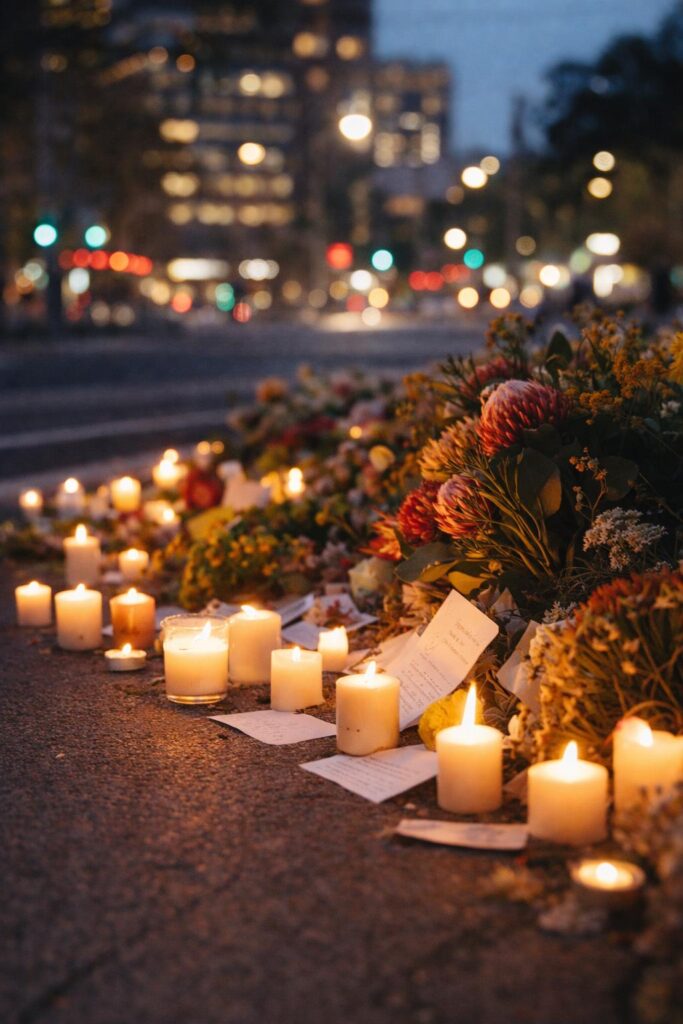
Not everyone mourns in the same way, and that’s part of what makes national remembrance meaningful. Some people will attend community vigils. Others will light a candle at home, leave flowers at a memorial site, or simply stop and breathe in silence for a moment. Schools may hold age-appropriate reflections, workplaces may mark a pause, and faith communities may open doors to anyone needing space to grieve.
If you’re looking for official guidance on observances, flag protocols, and national arrangements, you can refer to the Prime Minister’s official updates and statements via the Australian Government’s site: Prime Minister of Australia — official updates.
The scenes that moved the country
In the days following the tragedy, Australians gathered in large numbers—at beaches, community halls, and public spaces—creating memorials of candles, handwritten notes, and flowers. Many people who didn’t personally know the victims still felt compelled to show up, because grief of this magnitude doesn’t stay private for long; it spills into public life.
One of the most widely shared moments from recent memorial gatherings has been the collective singing of Waltzing Matilda—a song that can sound like nostalgia on a normal day, but becomes something else entirely when thousands sing it with tears in their eyes. In moments like these, music turns into a kind of public language for people who can’t quite speak yet.
For ongoing coverage of vigils and community commemorations, Australia’s public broadcaster has continued reporting from Sydney and beyond: ABC News — latest coverage.
What to do if you’re struggling
A day of mourning can also be emotionally heavy for people far from the immediate tragedy—especially those who have lived through trauma, loss, or anxiety about public spaces. If you’re finding it hard to cope, it may help to limit doom-scrolling, talk to someone you trust, and choose one small act of care: a walk, a check-in with a friend, or stepping outside for a few minutes of air.
If you’re in Australia and need immediate support, reaching out to local crisis and mental health services can make a real difference. Many communities also organise supportive spaces through councils, neighbourhood centres, and faith organisations during nationally significant events.
A national pause — and a promise to remember
The purpose of mourning is not to “move on” quickly—it is to remember in a way that honours life. On this National Day of Mourning, the country will hold close the names, the faces, and the stories that matter behind every statistic. And in that pause—quiet, shared, and visible—Australia will remind itself that compassion is stronger than shock, and unity is stronger than fear.
Read more on Swikblog.

Make Swikblog your go-to source on Google for reliable updates, smart insights, and daily trends.