
By Swikblog News Desk
In Iran, the currency story isn’t living in spreadsheets anymore. It’s showing up at kitchen tables, in hospital queues, and on streets where anxiety can turn into panic in minutes. As the rial slides to new lows, the cost of daily life has surged so fast that millions of people are being forced into impossible choices: food or rent, medicine or school fees, heating or debt. And as pressure piles up, the human cost is rising in ways that are no longer metaphorical.
On the surface, a collapsing currency sounds like an economist’s problem. In reality, it acts like a national stress test. When your money buys less every day, wages can’t keep up, savings evaporate, and basic goods become unpredictable—sometimes available, sometimes not. The result is a kind of rolling emergency: families cut meals, pharmacies run short, and small businesses struggle to restock as import costs jump overnight.
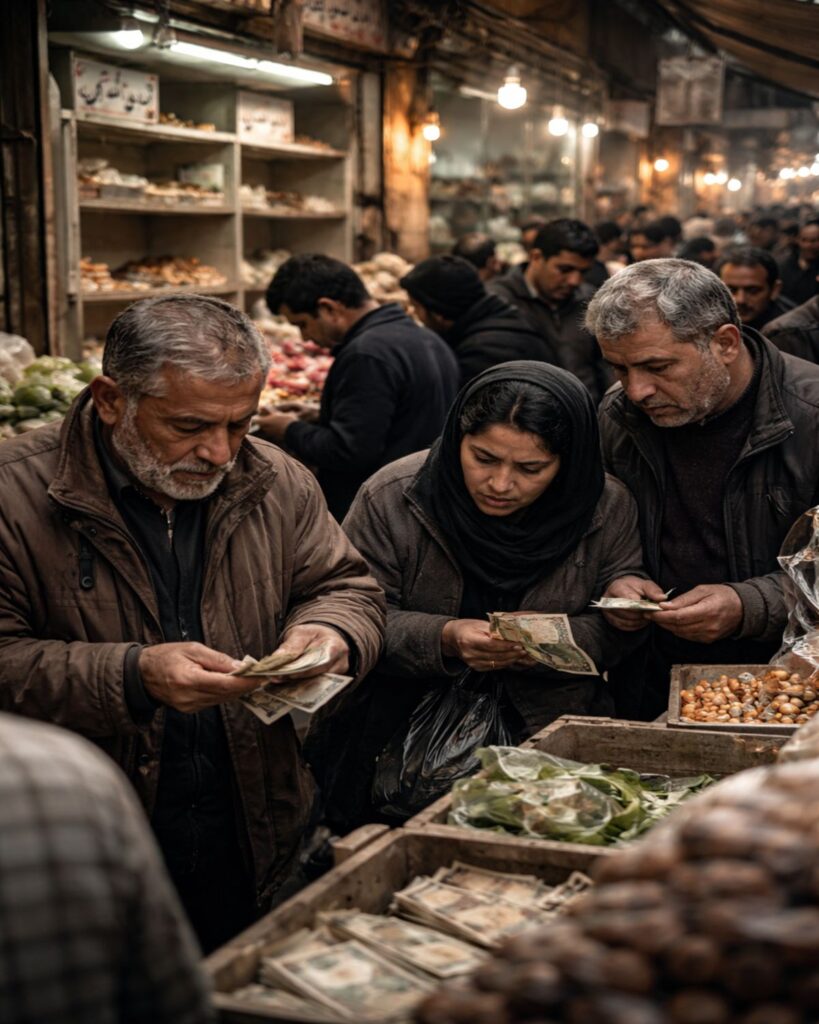
Reports in recent days describe a country gripped by price shocks, fear of shortages, and eruptions of unrest tied to economic desperation. Traders and shopkeepers—often the backbone of local commerce—have been among those sounding the alarm as volatility makes it harder to operate and easier to lose everything in a week. When markets lose trust in the currency, people rush to protect themselves, usually by converting cash into dollars, gold, or goods. That scramble accelerates the spiral.
One reason this moment feels different is how quickly the currency crisis has moved from hardship to tragedy. When prices surge and supplies thin out, crowds form—at markets, fuel stations, and distribution points. In tense conditions, a single rumour can trigger a stampede; a single confrontation can ignite wider chaos. As protests and crackdowns intensify, some outlets report hundreds of deaths and mass arrests linked to the unrest. In other words: the currency collapse isn’t just shrinking paychecks—it’s destabilising public safety.
So what’s driving the freefall? Iran’s economy has been squeezed for years by layers of sanctions and isolation from global finance, while domestic mismanagement and corruption have made it harder to cushion shocks. Add to that a long period of high inflation, dwindling confidence, and a widening gap between official exchange rates and the street rate people actually face. When citizens and businesses stop believing the currency will hold value, even for a month, the slide can become self-fulfilling.
Another factor often highlighted by analysts is the structure of power inside the economy. A growing share of key sectors—construction, transport, energy-linked business, and parts of trade—has been associated with entities close to the state’s security apparatus. Critics argue that when powerful groups dominate large parts of the economy, competition shrinks, transparency fades, and ordinary people are left paying the “risk premium” through higher prices and fewer options.
For readers trying to understand the scale, consider this: when a currency loses value dramatically over decades—and then accelerates even faster—every imported product becomes more expensive instantly. That includes not only consumer items but crucial inputs such as medical supplies, industrial parts, and certain food staples. The pain is especially sharp for lower-income households, who spend a greater share of their income on essentials and have less room to adapt.
In this environment, even “normal” daily routines become fragile. A price jump doesn’t just mean paying more—it means uncertainty: will it cost twice as much next week? Will it be available at all? That uncertainty fuels hoarding, black-market pricing, and speculative behaviour, which further undermines stability. It also deepens mistrust: people feel the system is rigged, and the anger can spill into the streets.
That is why some commentators are openly asking whether Iran’s currency crisis is morphing into something bigger: a political turning point. When economic grievances spread across groups—workers, students, merchants, families—and the response becomes increasingly forceful, the crisis stops being about numbers and becomes about legitimacy. History shows that governments can survive long periods of hardship, but they struggle when hardship turns into a shared national story of humiliation and fear.
It’s also why the world is paying attention. Iran sits at the centre of major regional fault lines, and internal instability can spill outward—through migration, security tensions, or sudden policy shifts. For global markets, instability can influence risk sentiment and energy headlines. For families inside Iran, though, the stakes are simpler and more urgent: safety, food, dignity, and the hope that tomorrow won’t be worse than today.
What happens next depends on whether confidence can be restored—economically and socially. Stabilising a currency usually requires a mix of credible policy, trusted institutions, and access to foreign currency inflows. But when politics and economics are fused together, fixes are rarely technical alone. In the meantime, the most important story isn’t the exchange rate itself. It’s the people living through the consequences—and the growing evidence that the cost is being measured in lives.
Read more:
- Explainer on the protests and currency plunge (with on-the-ground context) from Al Jazeera.
- Reporting on traders turning against clerics amid the economic crisis from Reuters.
Related on Swikblog: More breaking stories | Editor’s pick

Make Swikblog your go-to source on Google for reliable updates, smart insights, and daily trends.