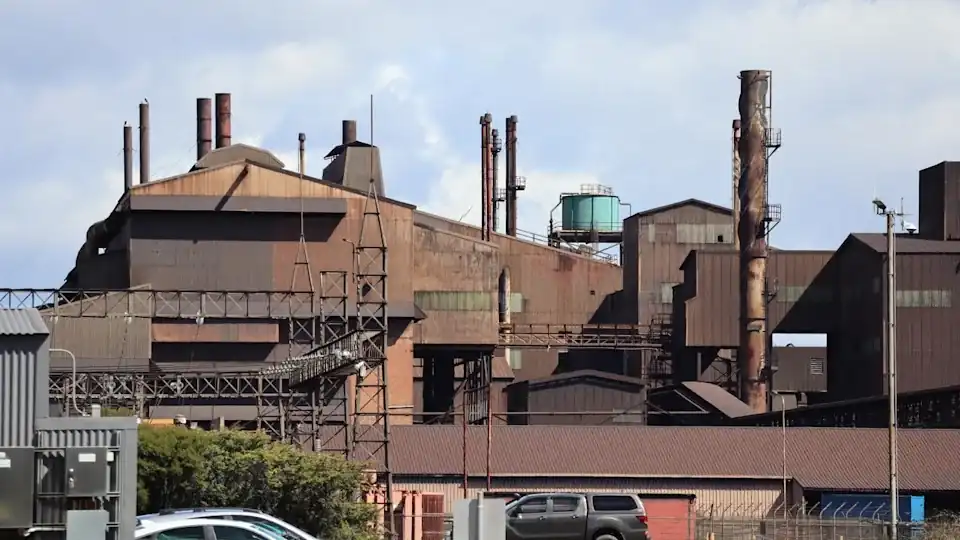

Australia’s only manganese smelter has closed after a proposed sale collapsed, leaving 217 employees at Liberty Bell Bay in northern Tasmania without jobs. The shutdown ends more than 60 years of production and removes the country’s only domestic source of manganese ferroalloys used in steelmaking.
Administrators EY-Parthenon announced the closure on July 16, 2026, after the remaining prospective buyers withdrew from negotiations. Employees were formally made redundant on July 20, although a small crew will stay temporarily to secure the plant, manage assets and meet environmental requirements.
Why did Liberty Bell Bay close?
The smelter had not produced manganese alloys since May 2025, when owner GFG Alliance reduced operations after experiencing difficulties securing ore. Liberty Bell Bay entered voluntary administration in March 2026 amid wider financial problems affecting the industrial group owned by businessman Sanjeev Gupta.
EY-Parthenon then launched a sale process and selected a consortium involving Perth-based Adroit Capital and US investment firm White Oak Global Advisors as its preferred buyer.
Adroit withdrew in June after a key financial backer left the proposal. The remaining consortium members ended negotiations in July when the commercial and operating arrangements needed to restart the plant could not be completed.
Administrators said the business could not continue without a viable sale or additional funding. They also pointed to difficult operating conditions in the global ferroalloy market.
What happened to the 217 workers?
The plant’s 217 employees were issued redundancy notices on July 20. A limited number will remain for several weeks to help shut down equipment safely, prepare assets for sale and maintain regulatory compliance.
EY-Parthenon estimates employees are owed approximately A$27 million. This includes about A$22 million in redundancy and payment instead of notice, A$2.5 million in long-service leave, A$2 million in annual leave and A$661,000 in superannuation.
Eligible employees may be able to recover unpaid entitlements through the Australian Government’s Fair Entitlements Guarantee. Employment, financial and wellbeing assistance has also been made available to workers and their families.
The economic effect is expected to reach beyond the smelter. Contractors, freight companies, suppliers and service businesses around George Town and northern Tasmania previously depended on work generated by the facility. Similar concerns about regional employment have followed other industrial closures, including the Magellan Aerospace Middletown Chapter 11 filing and its impact on jobs.
Administrators say insolvency may date back to 2025
An EY-Parthenon report released after the closure says Liberty Bell Bay may have been insolvent from as early as May 1, 2025. Insolvency occurs when a company cannot pay its debts when they fall due.
The report estimates total debts of between A$70 million and A$300 million. It says annual revenue dropped from A$172 million in 2024–25 to approximately A$11 million in 2026, while overdue payments and operating losses increased.
Administrators recorded losses of A$21 million in 2022–23 and A$80 million in 2024–25. They also identified a net A$191 million balance in inter-company loans involving related GFG Alliance businesses.
A possible insolvent-trading claim has been preliminarily estimated at about A$25 million. That matter remains subject to further investigation, and no final finding of unlawful conduct has been made.
How much government support was provided?
The Tasmanian Government approved a secured A$20 million loan in August 2025. Approximately A$14 million was used to purchase a 23,000-tonne shipment of manganese ore, but the material was never processed because the furnaces did not restart.
The state says the ore secures the loan and may be sold to recover public funds. The amount ultimately recovered will depend on the sale price, associated costs and the priority of creditor claims.
The Commonwealth and Tasmanian governments jointly committed almost A$10 million to support wages during administration. They also offered to consider a A$20 million restart package and continuation of a concessional 10-year electricity agreement, according to the governments’ official Liberty Bell Bay update.
Read More:
Why the Bell Bay smelter mattered
The facility opened in 1962 and was originally developed by BHP. It produced manganese-based ferroalloys that improve the strength, hardness and resistance of steel used in infrastructure, construction, transport and mining equipment.
With Bell Bay closed, Australian steel manufacturers will rely on imported manganese ferroalloys unless the plant is sold and restarted. No new buyer or confirmed reopening proposal had emerged as of July 25.
The shutdown comes during a period of change for long-established Tasmanian businesses, including James Boag moving brewing production from Tasmania.
Creditors are scheduled to meet on August 3 to decide whether Liberty Bell Bay should enter liquidation and who should be appointed as liquidator.
Until that vote takes place, the company remains in administration. The retained crew will secure the property, manage environmental obligations and prepare remaining assets for possible sale. A future acquisition of the site remains possible, but there is currently no funded plan to resume manganese production.

Make Swikblog your go-to source on Google for reliable updates, smart insights, and daily trends.