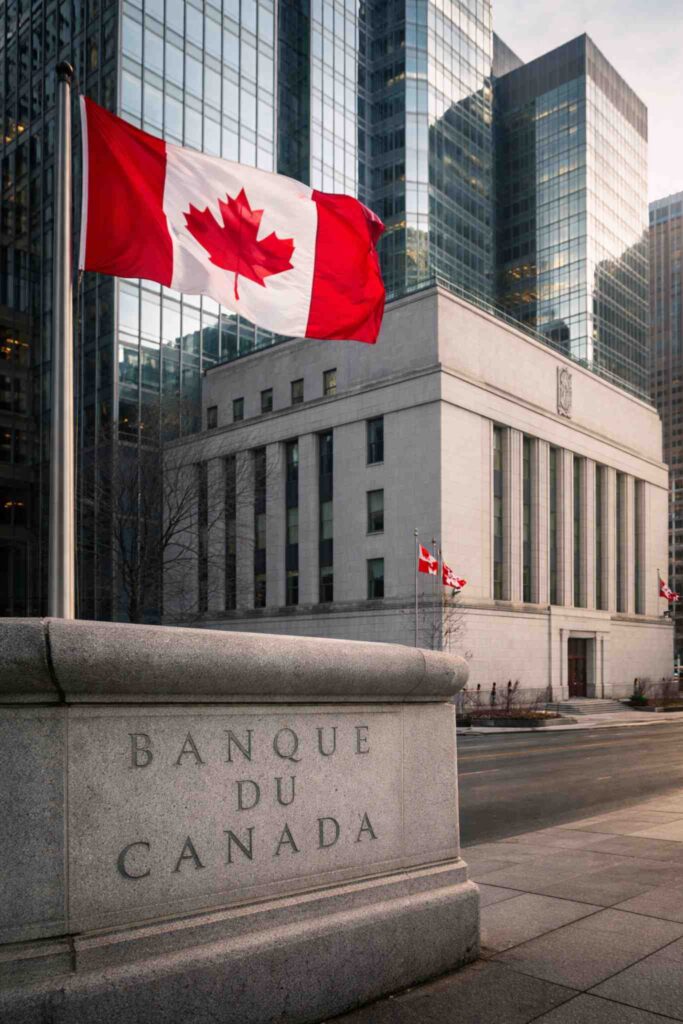

Canada’s interest rate outlook is being reshaped by a sudden energy shock and rising geopolitical uncertainty just days before the Bank of Canada’s next policy decision. The central bank is scheduled to announce its latest interest rate update on March 18, and economists increasingly expect policymakers to keep the benchmark policy rate unchanged at 2.25%.
The Bank of Canada has maintained its key interest rate at that level since October 2025. During its January policy meeting, the governing council said the rate remained “appropriate” given economic conditions and the gradual progress made toward controlling inflation.
However, developments in global energy markets and geopolitical tensions since January have altered the economic landscape. A surge in oil prices and growing global uncertainty have complicated expectations for rate cuts in 2026, pushing many analysts to revise their outlook for Canadian monetary policy.
Geopolitical Conflict Drives Oil Price Surge
The biggest factor influencing the outlook for interest rates is the recent surge in oil prices following military escalation in the Middle East. The spike came after the United States and Israel launched the “Epic Fury” military operation targeting Iran.
According to research from Bank of America Securities, oil prices have jumped more than 30% since the conflict began. The sharp increase in crude prices has introduced new upside risks to inflation across North America.
Higher energy costs can quickly ripple through the economy by raising transportation, manufacturing, and consumer goods prices. For central banks that are still attempting to keep inflation under control, such a development significantly complicates monetary policy decisions.
While Canada benefits from higher oil exports as a major energy producer, the resulting price pressures can also increase household costs and reignite inflation — something policymakers have spent years trying to contain.
Bank of America Revises Rate Cut Outlook
The energy shock has already prompted economists to revise their forecasts for Canada’s monetary policy path. Bank of America analysts now expect the Bank of Canada to keep its policy rate unchanged throughout 2026.
This marks a significant shift from earlier projections that anticipated two quarter-percentage-point rate cuts during the year.
Economist Carlos Capistran noted that the geopolitical shock has introduced clear upside risks to both growth and inflation. The surge in oil prices may support parts of Canada’s domestic economy while simultaneously increasing price pressures across the broader economy.
Because of that dynamic, analysts believe the central bank will likely adopt a cautious approach rather than moving quickly toward rate cuts.
Despite the heightened uncertainty, Bank of America does not expect the Bank of Canada to raise interest rates again. Instead, policymakers are expected to maintain a “wait and see” strategy as long as long-term inflation expectations remain stable.
Mortgage Experts Expect Rates to Stay on Hold
Mortgage industry experts are also predicting a pause in the upcoming rate decision. Penelope Graham, a mortgage expert at Ratehub.ca, believes the Bank of Canada will likely maintain the current policy rate in its March announcement.
She said the war between the United States and Iran has significantly shifted the economic outlook for Canada.
If higher oil prices persist, they could quickly reheat inflation growth and make it harder for the central bank to justify lowering borrowing costs. That scenario could force policymakers to delay any potential rate cuts even as Canadians continue to face high living costs and economic uncertainty.
Given the rapidly evolving global situation, Graham expects the Bank of Canada to keep interest rates unchanged and suggests there may be “little to no rate relief on the horizon” for the remainder of the year.
What a 2.25% Policy Rate Means for Canadians
If the Bank of Canada holds the policy rate at 2.25%, the decision would reinforce the idea that borrowing costs may remain elevated for longer than previously expected.
For Canadian households, that means mortgage rates are unlikely to decline significantly in the near term. Variable-rate mortgage holders may continue facing higher monthly payments compared with the ultra-low rate environment that existed earlier in the decade.
Higher borrowing costs can also affect credit cards, personal loans, and home equity lines of credit that are closely tied to the central bank’s benchmark rate.
At the same time, a prolonged pause in rate cuts could provide some stability to financial markets. Investors and lenders prefer predictable policy conditions, and the Bank of Canada maintaining its rate could help anchor expectations while policymakers assess the evolving global situation.
Energy Markets Could Shape the Next Policy Moves
Much of the Bank of Canada’s policy outlook will depend on what happens next in global energy markets. Oil prices surged dramatically after the military escalation began, but markets have already shown signs of volatility.
Prices dropped sharply after U.S. President Donald Trump said the military objectives of the strikes could be achieved “very soon,” describing the attacks as a “tremendous success right now” while warning that the United States could still escalate further if necessary.
The unpredictability of geopolitical events makes it difficult for central banks to set long-term policy expectations. If oil prices stabilize or decline, inflation pressures could ease and reopen the possibility of future rate cuts.
However, if crude prices remain elevated, policymakers may feel compelled to keep interest rates steady to prevent inflation from accelerating again.
Markets Focus on the March 18 Decision
As the March 18 policy announcement approaches, economists and investors will be watching closely not only for the interest rate decision itself but also for the central bank’s forward guidance.
Even if the policy rate remains unchanged, the Bank of Canada’s comments on inflation risks, energy prices, and global economic uncertainty could significantly influence market expectations for the rest of 2026.
For now, the consensus view among analysts is becoming clearer: the central bank is likely to stay cautious as it evaluates the economic impact of rising oil prices and geopolitical tensions.
Readers can follow official policy updates directly from the Bank of Canada. Additional global market coverage and economic analysis is available through Investing.com.
Until global energy markets stabilize and inflation risks fade further, the Bank of Canada may prefer patience over action — leaving its policy rate at 2.25% while policymakers navigate an increasingly complex global economic environment.

Make Swikblog your go-to source on Google for reliable updates, smart insights, and daily trends.