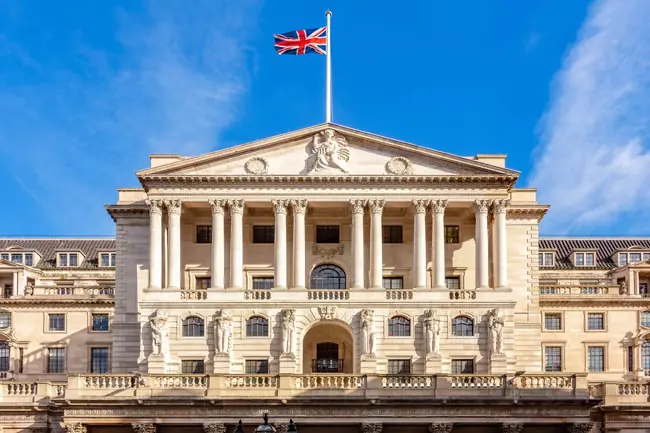

The Bank of England is expected to keep interest rates at 3.75% as policymakers balance weak UK growth, easing inflation and renewed energy-market disruption linked to the Middle East.
Economists at Oxford Economics and Nomura expect the nine-member Monetary Policy Committee (MPC) to vote seven to two in favour of holding Bank Rate. The decision is scheduled for noon on Thursday, July 30, alongside updated forecasts for inflation, growth and employment.
A hold would prevent an immediate increase in borrowing costs for households and businesses. However, oil prices and the duration of the Middle East conflict could determine whether rates remain unchanged, rise later in 2026 or start falling in 2027.
Why the Bank is expected to hold at 3.75%
UK consumer price inflation eased from 2.8% in May to 2.6% in June, reaching a 15-month low. Slower increases in food and motor-fuel prices contributed to the decline, providing an encouraging early signal for Prime Minister Andy Burnham’s government.
Inflation nevertheless remains above the Bank’s 2% target and is expected to increase again during the second half of 2026.
Lower inflation does not mean prices are falling; it means they are increasing more slowly. This helps explain why the UK cost of living can remain high even when inflation falls, particularly for households whose incomes have not matched previous price increases.
The Bank previously forecast that inflation could reach approximately 3.25% later this year. Higher energy costs are expected to reach household bills from July and could also increase petrol, transport, manufacturing and food-distribution expenses.
The confirmed decision, MPC vote and updated forecasts will be published on the Bank of England’s official Bank Rate page.
Middle East conflict increases inflation risk
The end of a ceasefire involving US-Israeli and Iranian forces has renewed concerns about energy supplies. Attacks affecting Red Sea shipping and threats from US President Donald Trump have increased uncertainty around important oil routes.
Oil recently moved above $100 a barrel for the first time since May. Prices then dropped following a pause in attacks before rising again on Wednesday, showing how quickly the outlook can change.
A brief increase may not force the Bank to act. A prolonged period of expensive energy would be more serious because businesses could pass higher costs to customers, while workers may seek larger pay increases.
The Bank cannot control international oil prices. Its task is to stop a temporary energy shock from producing persistent inflation across wages, services and consumer prices.
Could interest rates rise in September?
Before the latest escalation, many economists expected Bank Rate to remain at 3.75% for the rest of 2026. That remains possible, but the risk of another increase has returned.
Thomas Pugh, chief economist at RSM UK, said oil prices would largely determine the direction of rates over the next year. If prices remain close to $100 through the summer, he believes a September increase could move firmly onto the table, followed by another during winter.
If another peace agreement pushes oil lower, a weakening labour market and deteriorating growth outlook could keep the Bank on hold this year. Under that scenario, RSM UK expects three rate cuts during 2027.
Governor Andrew Bailey’s comments will be examined for clues about whether the Bank views the energy shock as temporary or sees a growing risk of inflation remaining above target.
Weak growth limits the Bank’s options
UK gross domestic product rebounded in May but expanded by only 0.1% during the month. Raising rates in a nearly stagnant economy could further restrict household spending, housing activity and business investment.
The MPC must therefore balance the threat of renewed inflation against the danger of placing more pressure on an already fragile economy.
Read More:
What a rate hold means for mortgages
Tracker mortgage payments should remain unchanged if Bank Rate stays at 3.75%, because those products normally move directly with the central rate. Standard variable-rate customers may also avoid an immediate increase, although lenders set those rates independently.
Fixed mortgage rates are influenced by swap markets, government bond yields and expectations about future Bank decisions. They can rise even when Bank Rate is unchanged, as seen when major UK lenders increased mortgage costs and withdrew cheaper deals.
Homeowners approaching the end of a low fixed-rate agreement could still face higher repayments. Comparing deals early may provide more options, but borrowers should check product fees and early-repayment charges.
What it means for savers and household finances
A rate hold may support competitive savings returns, but banks do not have to pass the full 3.75% rate to customers. Older easy-access accounts may pay less than newer products.
Credit cards, overdrafts and personal loans are unlikely to become significantly cheaper. The MPC vote, revised forecasts and Bailey’s guidance will offer the clearest indication of whether rates are likely to remain stable or increase again.

Make Swikblog your go-to source on Google for reliable updates, smart insights, and daily trends.