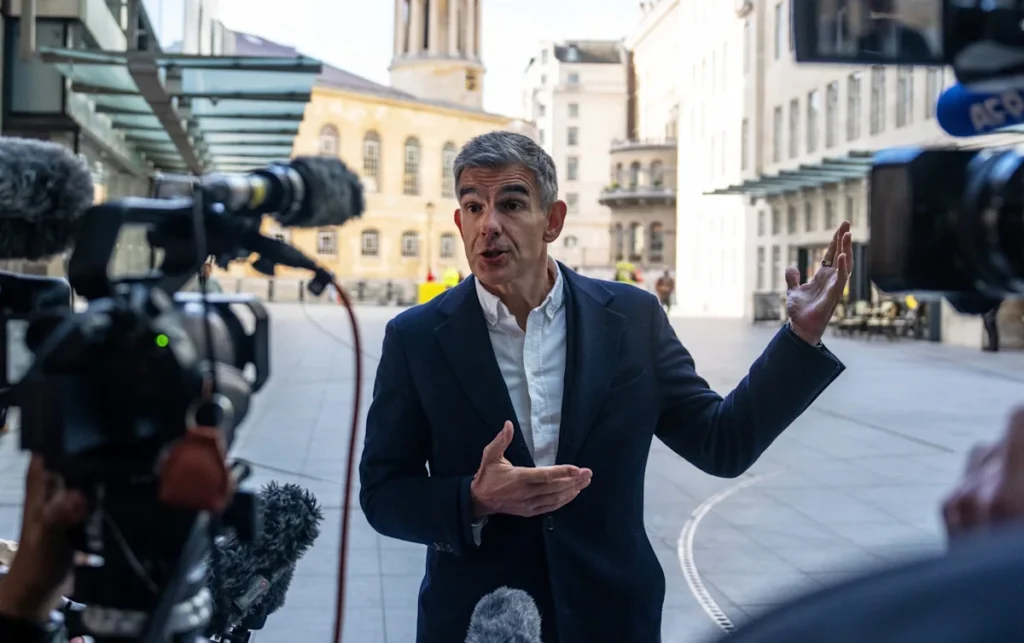

The BBC is entering one of the most significant periods of change in its recent history, with 550 jobs set to disappear this financial year as part of a broader plan to reduce around 2,000 roles over the next three years.
The announcement marks the first major restructuring initiative under director-general Matt Brittin, who took over leadership of the broadcaster in May. While the immediate focus is on job reductions, the wider objective is to reshape the BBC for a media environment increasingly dominated by streaming platforms, mobile audiences and social media consumption.
The first wave of cuts will affect the BBC’s News, Nations and Content divisions, with BBC News expected to be among the hardest-hit areas. Staff have also been warned that compulsory redundancies will be necessary and that some programmes will be closed as part of the savings drive.
BBC targets £160 million in savings
The broadcaster is seeking to save £160 million by the end of the current financial year as it attempts to manage rising costs while continuing to fund news, entertainment, educational programming and regional services.
The 550 job losses announced this week represent only the beginning of that effort. The BBC is expected to outline another 700 job reductions in its corporate division in the coming months, while additional changes are likely as part of the longer-term restructuring programme.
Senior leadership will not be immune from the cuts. Around one in 10 senior managers is expected to leave as the organisation attempts to simplify operations and reduce overhead costs.
The corporation has also confirmed that its commissioning budget for programmes and news will be reduced by £80 million in 2027-28, a decision that could influence the scale and variety of future productions.
Programmes and channels face an uncertain future
Beyond staffing reductions, the BBC has begun reviewing parts of its broadcasting portfolio. Staff have been informed that some programmes will close, although specific titles have not yet been publicly confirmed.
Brittin told employees that content delivering the greatest audience value and public impact would remain a priority. However, maintaining that balance becomes increasingly difficult when budgets are shrinking across multiple departments.
Entire television channels and radio networks are also being assessed. Among the options reportedly being considered is a potential merger of BBC Four with BBC Two, reflecting a broader industry trend in which traditional broadcast channels are being reevaluated as viewing habits continue to evolve.
For many public broadcasters, the challenge is no longer simply attracting viewers. It is deciding how to allocate limited resources between legacy services and emerging digital platforms.
Digital growth sits at the centre of the strategy
A major theme behind the restructuring is the BBC’s effort to strengthen its position in digital media. Brittin, who previously held senior roles at Google, has signaled that improving BBC iPlayer will be a key priority.
The broadcaster has increasingly focused on reaching audiences who consume content through smartphones, streaming services and social platforms rather than traditional television schedules.
Younger viewers in particular are more likely to discover news through short-form video, social feeds and on-demand content. That shift has forced broadcasters worldwide to rethink how they distribute journalism and entertainment.
Investing in digital products may help the BBC remain competitive in the years ahead, but it also creates difficult choices. Funding technology upgrades often requires savings elsewhere, creating tension between innovation and maintaining existing services.
Concerns over the future of BBC News
The expectation that BBC News will face some of the deepest cuts has sparked concern among media observers and former BBC journalists.
News remains one of the corporation’s most visible public services, particularly during major political events, global crises and breaking news situations. Reductions in newsroom staffing can place additional pressure on journalists and editors who are already operating in a fast-moving and highly competitive information environment.
Former Newsnight presenter Emily Maitlis has warned that repeated budget reductions and cuts to news teams could be damaging. Bectu union head Philippa Childs has also described the cuts as devastating for the workforce and warned that audiences may notice the impact on programming and output.
At the same time, the BBC’s leadership is likely to argue that restructuring is necessary to protect the organisation’s long-term future. The question is whether the broadcaster can reduce costs without weakening the public-service journalism and cultural programming that make it distinct.
What the BBC cuts could mean for viewers
For audiences, the effects may appear gradually. Some programmes may disappear, schedules could change, and more content may be pushed toward digital platforms as the broadcaster tries to meet viewers where they now spend more time.
The BBC is not alone in facing this pressure. Across media and business, organisations are trying to reduce costs while investing in technology, digital distribution and new audience habits. Those pressures have become more visible during periods of global market uncertainty and shifting business strategies.
Read More
If Brittin’s plan succeeds, the BBC could emerge leaner and more digitally focused. If the cuts go too deep, however, the corporation risks weakening the depth of its news operation and reducing the range of programming available to the public.
More official background on the BBC’s public service role and structure is available through the BBC corporate information page.

Make Swikblog your go-to source on Google for reliable updates, smart insights, and daily trends.