The bantamweight’s bout with Ricky Turcios was pulled from UFC 324 after a frightening moment on the scale in Las Vegas, adding fresh urgency to long-running calls for safer weight-management rules in MMA.
UFC bantamweight Cameron Smotherman was taken for medical evaluation after collapsing moments after making weight at the official weigh-ins for UFC 324 in Las Vegas, prompting the promotion to cancel his scheduled bout and sending a familiar argument racing back through the sport: how much risk is being absorbed long before the cage door even closes?
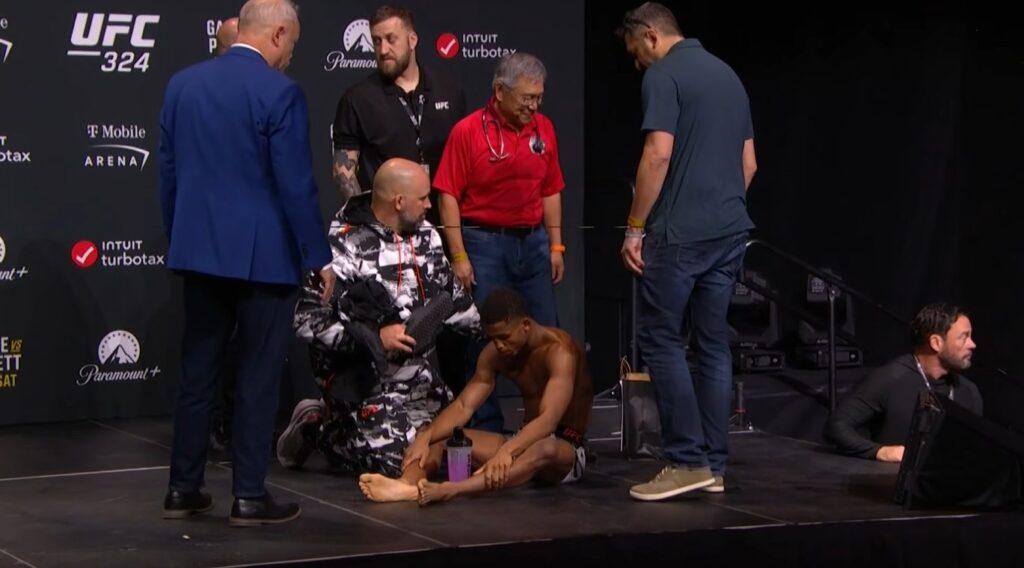
Smotherman, 28, appeared visibly unsteady as he stepped onto the scale at T-Mobile Arena, registering 135.5 pounds to make the bantamweight limit. But as he walked away, he suddenly lost consciousness and fell forward onto the stage. Staff and medical personnel moved quickly, surrounding him within seconds as the room shifted from routine choreography to alarm. He regained consciousness shortly afterward and was escorted away for further examination.
What changed on the card: Smotherman’s three-round bantamweight fight with Ricky Turcios, originally set for the prelims, was canceled after the on-stage collapse.
The UFC has not released extensive detail about Smotherman’s condition beyond confirming that the bout would not go ahead. A late scratch is disruptive at the best of times, but weigh-in withdrawals hit a particular nerve: they are the public face of a private ordeal, the point where weeks of preparation narrow into a single number — and where the body’s limits can become painfully visible.
Smotherman entered the week with a 12–6 professional record and was slated for his fourth appearance under the UFC banner. For Turcios, a former winner of The Ultimate Fighter, the cancellation is another reminder of the sport’s hard edges: he did what was required, made weight, turned up, and still saw the contest disappear.
In mixed martial arts, “making weight” is rarely just a matter of dieting. The final days can involve deliberate dehydration: sweat suits, sauna sessions, hot baths, salt manipulation — all designed to pull water from the body quickly. The aim is to weigh in as light as possible for a contracted limit, then rehydrate and refuel before fight night. It’s legal, it’s common, and it’s also the part of the job that can go wrong in ways that look dramatic and feel worse.
The debate is not new, but incidents like Friday’s sharpen it. Supporters of the current system argue that cutting weight is an accepted skill in combat sports and that athletes make informed choices. Critics counter that the incentives are warped: if everyone is chasing an edge, refusing to cut can feel like volunteering to be undersized — and that turns “choice” into something closer to a requirement.
The UFC has introduced measures over the years intended to reduce extremes, including early-morning official weigh-ins and closer medical observation, while athletic commissions set rules and can intervene when a fighter’s health is at risk. Yet the basic structure remains: fighters still target lower weight classes, and a weigh-in day still doubles as a stress test.
Friday’s weigh-ins brought other complications too. Former flyweight champion Deiveson Figueiredo came in over the bantamweight limit, as did flyweight Alex Perez, with both fighters fined a portion of their purses. Despite missing weight, their bouts are expected to proceed, underlining another tension in the system: a missed number can be punished financially while the contest continues, even as a medical incident can end one immediately.
All of this arrives on the eve of a card with major headline value. UFC 324 is topped by an interim lightweight title fight between Liverpool’s Paddy Pimblett and Justin Gaethje, a pairing marketed as both spectacle and legitimacy — the brash crowd favourite against the veteran known for turning chaos into a weapon. The sport will move on, because it always does, but the weigh-in stage doesn’t easily fade from memory when it shows a fighter’s vulnerability so plainly.
The question now is what, if anything, will change. Some advocates push for broader adoption of additional weight classes to reduce extreme drops. Others favour stricter hydration testing, more aggressive limits on percentage weight regain, or commission-led “walking weight” monitoring across camps. None of those solutions are simple, and none remove risk entirely from a sport built around controlled danger. But the argument grows louder each time the danger looks uncontrolled.
For fans who only tune in for the walkouts and the lights, the weigh-in is supposed to be paperwork with cameras — a brief prelude to the part that feels real. Smotherman’s collapse was a reminder that the most punishing contest can arrive before fight night, in front of microphones, under bright stage lighting, and with no opponent in sight.
Event information and bout listings can be found via the official UFC event hub: UFC 324: Gaethje vs Pimblett. For more fight coverage on Swikblog, visit Swikblog.com.

Make Swikblog your go-to source on Google for reliable updates, smart insights, and daily trends.