
A routine road-safety reminder from Transport for NSW has unexpectedly turned into a major online debate, after the agency warned that driving barefoot could still lead to a fine if it affects a motorist’s control of the vehicle.
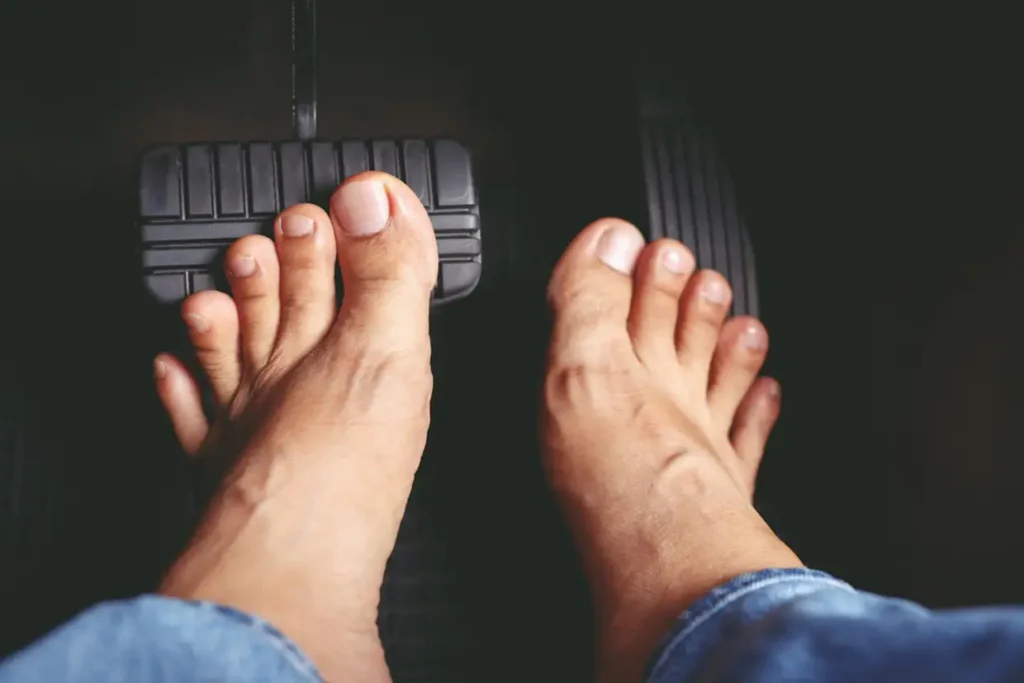
The discussion began after Transport for NSW shared a Facebook post titled “WARNING: Dogs out,” featuring an image of bare feet on car pedals. The post was intended as a light safety reminder, but it quickly drew strong reactions from drivers who argued that barefoot driving can feel safer and more controlled than wearing certain shoes.
The warning also exposed a common misunderstanding about Australian road rules. Driving barefoot is not specifically illegal in New South Wales or anywhere else in Australia, but drivers must remain in proper control of their vehicle at all times.
Can You Legally Drive Barefoot in Australia?
Yes, Australians can generally drive barefoot. There is no road rule in NSW or any other state or territory that specifically bans driving without shoes.
However, Transport for NSW clarified that drivers could still be fined if being barefoot affects their ability to drive safely. The legal concern is not bare feet alone, but whether a driver can brake, accelerate and control the vehicle properly.
Drivers can review official road-safety guidance through the Transport for NSW road rules and safety information.
In practical terms, police are unlikely to fine someone simply because they are barefoot. The risk increases if bare feet are linked to unsafe driving, a pedal slip, delayed braking, loss of control or a crash.
Why the Warning Sparked a Backlash
The warning drew a strong response because many motorists believe barefoot driving gives them better pedal feel.
Some drivers said they have driven without shoes for years, while others claimed they passed their practical driving tests barefoot. Many argued that they can feel the brake and accelerator more clearly without footwear, making their driving feel smoother and more natural.
That reaction explains why the issue became so divisive. For some motorists, barefoot driving is not seen as careless. It is seen as a personal habit that improves comfort and confidence behind the wheel.
Authorities, however, tend to focus less on preference and more on what happens in an emergency. A driver may feel comfortable in normal conditions, but the real test is whether they can brake firmly and stay in control when something unexpected happens.
Bare Feet, Thongs, Socks and High Heels
Much of the online debate shifted toward footwear that drivers said may be riskier than bare feet.
Loose thongs can slide off and become trapped near pedals. Socks may reduce grip. High heels can change the angle of the foot and make braking awkward. Platform shoes or heavy boots may reduce pedal sensitivity.
This is why road-safety advice usually recommends secure, comfortable and enclosed footwear. The safest driving shoe is one that stays firmly on the foot, gives steady grip and allows predictable pressure on the pedals.
The key point is simple: police are not usually judging footwear as a style choice. They are looking at whether the driver had proper control of the vehicle.
When Could a $410 Fine Apply?
The possible fine is connected to improper control of a vehicle, not to a direct ban on bare feet.
If a driver is involved in an incident, police may consider anything that contributed to unsafe driving. That can include distraction, poor visibility, loose objects, passengers, pets, unsafe footwear or no footwear at all.
In that context, barefoot driving could become relevant if it played a role in the driver losing control or failing to respond safely.
Recent enforcement campaigns, including a holiday road crackdown targeting risky driving behaviours, have shown how seemingly minor habits can attract penalties when they compromise safety.
The Dashboard Feet Risk Passengers Should Know
The barefoot-driving debate also revived another common car habit: passengers putting their feet on the dashboard.
While it may not always be treated as a specific offence, it can create serious safety risks. If a passenger’s legs are resting on the dashboard during a crash, an airbag can deploy with enormous force and push the legs backward toward the body.
That can cause severe injuries, even in crashes that may otherwise be survivable.
The same principle applies here: something does not need to be written as a simple legal ban to be dangerous.
What Drivers Should Take Away
The Transport for NSW warning does not mean every barefoot driver will be fined. It means drivers remain responsible for staying in full control, regardless of what they are wearing on their feet.
Read More
For motorists who prefer driving barefoot, the safest approach is to be honest about whether it helps or hinders control. If bare feet feel slippery, painful or unstable, they should not be used for driving.
For those wearing shoes, the same test applies. Avoid footwear that can slip off, catch under pedals or make braking harder.
Driving barefoot in Australia is legal, but it is not risk-free in every situation. If bare feet, thongs, socks or unsuitable shoes affect safe driving, a common habit could quickly become an expensive problem.

Make Swikblog your go-to source on Google for reliable updates, smart insights, and daily trends.