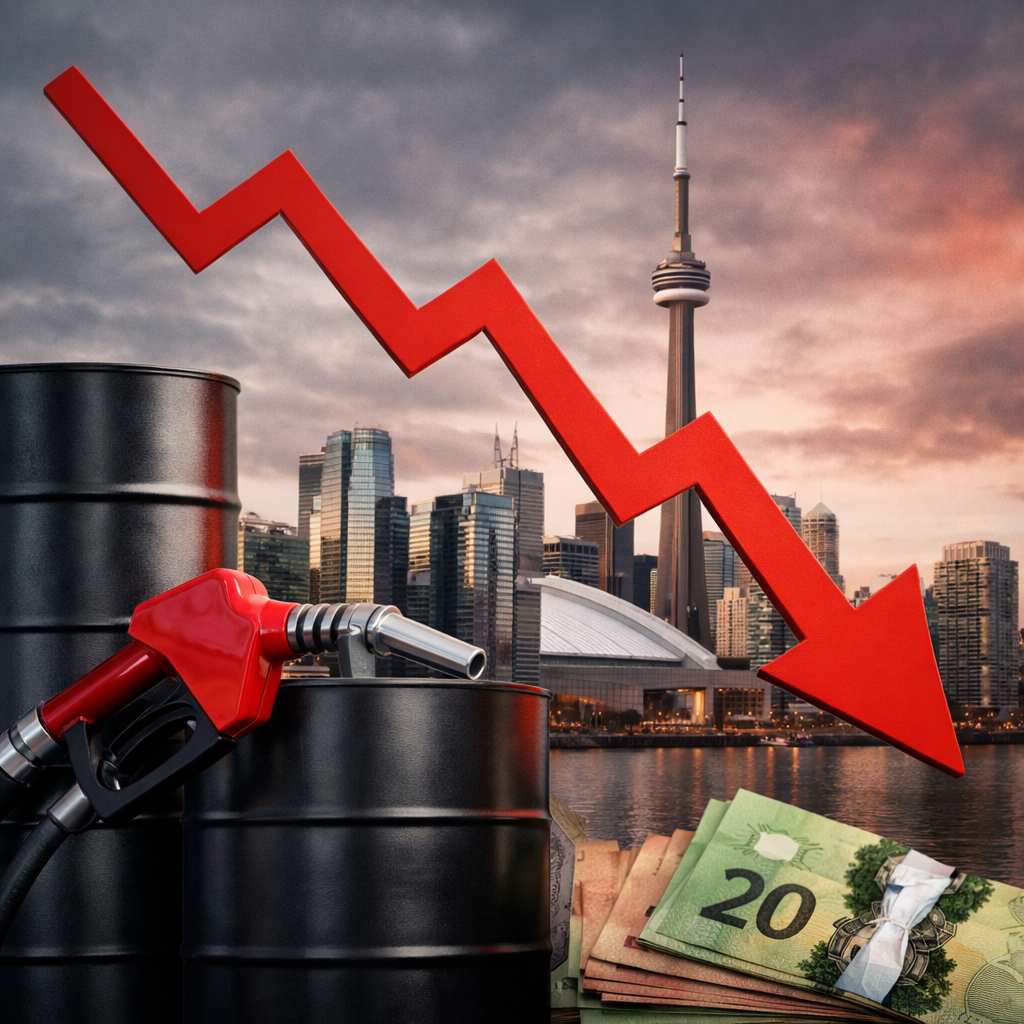

Canada’s economic outlook for 2026 has taken a sharper turn than expected, with Deloitte Canada cutting its growth forecast by nearly 20%, highlighting what it calls a “wobbly” economic environment. The firm now expects real GDP to grow just 1.2% this year, down from its earlier 1.5% estimate and well below the 1.7% expansion recorded in 2025.
The downgrade reflects a mix of pressures building across the economy — from rising energy prices and weak consumer demand to global uncertainty and a soft labour market. While the economy is still growing, the pace is clearly slowing, and the risks are becoming harder to ignore.
Energy shock driving the slowdown
A major factor behind the revised outlook is the surge in energy prices following escalating tensions in the Middle East. Since the conflict began in late February, global commodity markets have been rattled, pushing up prices for oil, liquefied natural gas, and even agricultural inputs like fertilizers.
In Canada, the impact has been immediate. The average price of regular gasoline has jumped roughly 30%, putting pressure on household budgets just as many were beginning to stabilize after a prolonged inflation cycle.
This surge is not just affecting consumers. Businesses across sectors — especially transportation, manufacturing, and agriculture — are facing higher operating costs, which can slow hiring, delay investments, and weigh on overall economic activity.
Crude oil prices briefly surged above US$100 per barrel during the peak of the disruption, underscoring how sensitive global markets remain to geopolitical shocks. Although prices have since shown signs of stabilizing, volatility continues to shape expectations.
According to Yahoo Finance, the broader commodity rally has added to inflation concerns globally, complicating the outlook for central banks and policymakers.
Why the outlook isn’t entirely bleak
Despite the current pressures, economists are not ruling out a recovery later in the year. Deloitte’s forecast assumes that energy market disruptions will ease in the coming months, allowing prices to gradually decline.
Market signals appear to support this view. Futures contracts for West Texas Intermediate crude suggest a drop to around US$78 per barrel by August 2026, with prices falling further to approximately US$69 by early 2027. This indicates that traders expect the current spike to be temporary rather than a long-term shift.
If energy prices do moderate, it could provide relief to consumers and businesses alike, helping to restore spending power and improve economic momentum in the second half of the year.
Another stabilizing factor is Canada’s trade relationship with the United States. Deloitte’s outlook assumes that most Canadian exports will continue to avoid tariffs and that the upcoming CUSMA review will proceed without major disruptions. Any positive changes on this front could offer an upside surprise to growth.
On the monetary policy side, the Bank of Canada is expected to remain cautious. The central bank has held its benchmark interest rate steady at 2.25% since October, and Deloitte does not expect any changes through 2026.
The challenge for policymakers is balancing conflicting signals. Rising energy prices could push headline inflation higher, but underlying economic conditions — including weak demand and spare capacity — suggest limited pressure on core inflation.
This delicate situation explains why the economy is being described as “wobbly.” It’s not in decline, but it lacks the strength and consistency needed for a confident expansion.
For now, Canada’s growth outlook remains tied to global developments, particularly in energy markets and geopolitics. While there is cautious optimism that conditions will improve later in the year, the near-term picture suggests an economy navigating through uncertainty rather than moving steadily forward.
You may like: Tesla Stock Drops After Q1 Delivery Miss Raises Fresh Growth Concerns

Make Swikblog your go-to source on Google for reliable updates, smart insights, and daily trends.