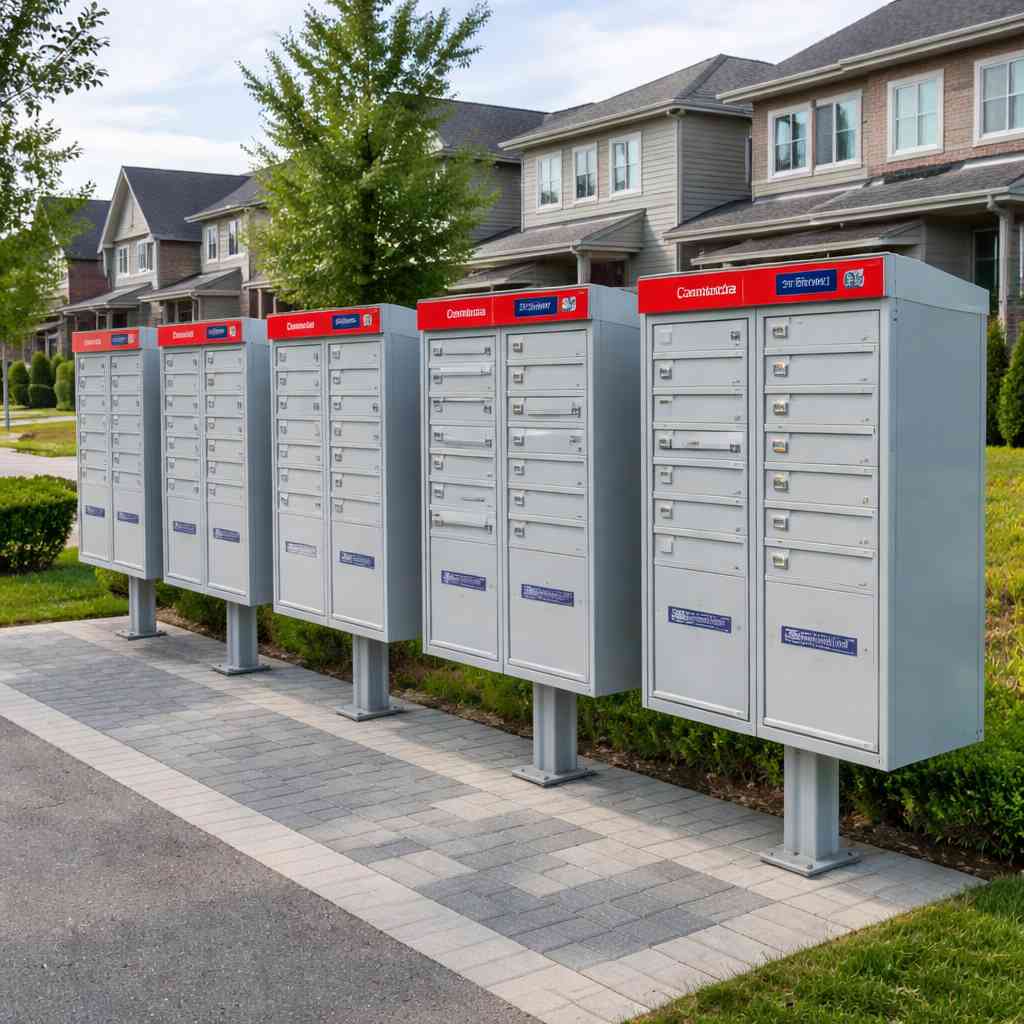

Canada Post is preparing for one of the biggest operational changes in its history, with plans to phase out the remaining door-to-door mail delivery service for around four million Canadian addresses. Instead, households that still receive mail at their front door will gradually transition to community mailboxes as the Crown corporation works to reduce costs and rebuild its financial position.
The proposal forms part of a broader modernization strategy backed by the federal government after years of mounting financial losses. While parcel deliveries will continue to arrive at homes in most cases, standard letter mail in many established neighbourhoods is expected to move to centralized mailbox locations over the coming years.
Why Canada Post is changing its delivery model
Canada Post says the decision is being driven by long-term financial challenges. Letter mail volumes have steadily declined as Canadians increasingly rely on digital communication, while parcel deliveries have become more competitive with private courier companies expanding across the country.
According to the corporation’s financial reports, Canada Post has accumulated billions of dollars in losses since 2018. The situation intensified in 2025, prompting the federal government to call for structural reforms that could place the postal service on a more sustainable path by the end of the decade.
Delivering mail directly to individual homes remains one of the organization’s most expensive services because it requires larger delivery routes, additional labour and higher transportation costs. By expanding community mailboxes and updating its operations, Canada Post hopes to reduce expenses while continuing to meet its universal service obligations.
The financial overhaul reflects a wider effort by governments to modernize essential public services. Similar consumer-focused reforms are being introduced through Australia’s nationwide card surcharge ban, which is designed to simplify everyday transactions and reduce hidden costs.
How the changes will affect Canadian households
The proposal mainly affects older neighbourhoods that still receive traditional doorstep letter delivery. Many newer subdivisions across Canada have already relied on community mailboxes for years, making the system familiar to millions of residents.
For households included in the transition, daily letter delivery will no longer take place at the front door. Instead, residents will collect their mail from secure community mailbox units installed within their neighbourhood. Canada Post has indicated the rollout will happen in stages rather than through a nationwide switch all at once.
Parcel delivery arrangements are expected to continue separately, with larger packages still delivered to homes when appropriate or redirected to nearby pickup locations depending on the shipment.
Consultations will shape the rollout
Before large-scale implementation begins, Canada Post is consulting with labour organizations, municipal governments and other stakeholders. Discussions have continued following labour negotiations that resulted in tentative agreements with postal unions earlier in 2026 after months of uncertainty.
Municipal governments will help determine suitable locations for new community mailbox installations, taking into account accessibility, traffic flow, safety and neighbourhood planning requirements.
Residents are expected to receive advance notification before delivery methods change in their community. Public consultation periods will also allow municipalities to address local concerns before new mailbox sites are finalized.
Job reductions and other operational reforms
The delivery overhaul is only one element of Canada Post’s wider restructuring plan. The corporation has projected that its workforce will gradually shrink through retirements and voluntary departures, with thousands of positions expected to be eliminated over the next decade.
Canada Post is also reviewing delivery standards to lower transportation costs. One proposal would reduce the use of air transportation for non-urgent letter mail in favour of ground transport where practical, a move the corporation estimates could save more than $20 million each year.
Some of these operational changes will require amendments to the Canadian Postal Service Charter, meaning final implementation depends on approval from the federal government.
Modernization extends beyond mail delivery
The transformation strategy reaches beyond community mailboxes. Canada Post is reviewing parts of its retail network following the removal of restrictions that previously limited changes to some rural post offices. The goal is to better align postal services with changing population patterns and customer demand.
The corporation is also investing in technology to improve parcel operations and modernize internal systems. These upgrades are designed to help Canada Post compete more effectively in Canada’s rapidly growing e-commerce market, where parcel shipping has become increasingly important as traditional mail volumes continue to decline.
Large organizations across multiple industries are making similar changes to improve long-term sustainability. Recent Oracle workforce restructuring plans highlight how companies are reducing costs while investing in new technology and digital infrastructure.
For official updates on delivery changes, consultation timelines and postal services, Canadians can visit the Canada Post website.
Canada Post says the transition will be gradual, with individual communities receiving notice before any delivery changes take effect. Exact timelines will vary depending on consultation outcomes, infrastructure planning and regulatory approvals.
The corporation maintains that maintaining reliable postal access in rural, remote and Indigenous communities will remain a priority even as urban and suburban delivery models evolve.
Read More:
- EU Entry/Exit System: Why airport delays are affecting travel across Europe
- ETIAS delayed to 2026: What the €20 EU travel authorisation means for visitors
- Visit the Swikblog homepage for more latest news
For many Canadians, the shift represents the end of a delivery system that has existed for generations. Whether the reforms ultimately restore Canada Post’s long-term financial stability will depend on how successfully the organization balances cost savings, public service obligations and growing demand for parcel delivery in an increasingly digital economy.

Make Swikblog your go-to source on Google for reliable updates, smart insights, and daily trends.