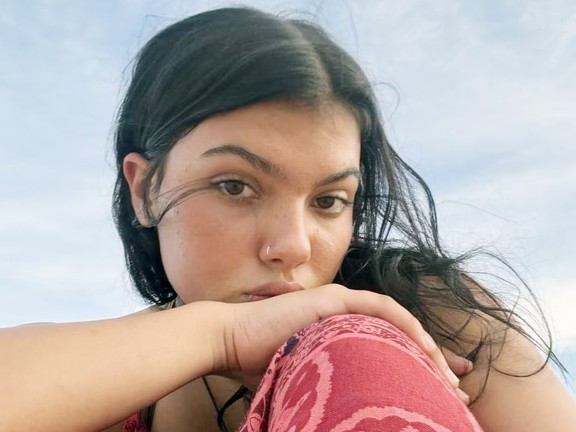

Australian authorities have determined that Piper James, a 19-year-old Canadian tourist from Campbell River, British Columbia, died by drowning after sustaining injuries in a dingo attack on K’gari, the world heritage-listed sand island off the coast of Queensland. Her body was found on January 19, 2026, on a beach roughly 250 kilometres north of Brisbane, in a case that has shocked both Canada and Australia.
According to the Coroners Court of Queensland, Piper died “as a result of drowning in the setting of multiple injuries, due to, or as a consequence of a dingo attack.” The finding followed a forensic review that was accepted by the investigating coroner. The case had drawn intense attention from the beginning because of the disturbing circumstances in which her body was discovered.
Piper James had been travelling across Australia since October 2025 with a friend, also from Campbell River. The pair had found work on K’gari, a destination known for its long beaches, remote landscapes and wild dingo population. The island is one of Australia’s most visited backpacker and tourism spots, but it is also a place where visitors are repeatedly warned about wildlife risks.
When Piper’s body was found, authorities said she was surrounded by a group of about 10 dingoes, a detail that immediately raised fears that the animals had played a direct role in her death.
What the autopsy found
Preliminary autopsy findings released earlier had already pointed toward drowning as the likely cause of death. Those initial results also showed that Piper had suffered both pre-mortem and post-mortem dingo bite marks. That distinction became central to investigators’ understanding of what happened.
The pre-mortem bites indicated that she was attacked while still alive, while the post-mortem injuries showed the animals remained around her body afterward. At the time, officials said the bites sustained before death were not believed to have caused immediate death. Instead, the injuries were considered consistent with a scenario in which she was forced into the water by the attacking pack and then drowned.
The final cause-of-death conclusion now confirms that sequence more clearly. Authorities say the drowning happened in the setting of the attack, making the dingo encounter a direct contributing factor in the tragedy.
What happened to the dingoes
After the incident, wildlife authorities assessed the animals involved and concluded they represented an unacceptable public safety risk. As a result, eight of the 10 dingoes believed to be connected to the incident were euthanized. The move drew attention because dingoes on K’gari are a closely watched wild population and are part of the island’s ecological identity.
K’gari has long had strict visitor safety messaging around dingoes. Travellers are typically warned not to feed them, not to run from them, and not to walk alone in isolated areas, particularly at dawn or dusk. Even with those warnings, the island has seen several aggressive dingo encounters over the years, and this case has renewed scrutiny over how authorities balance wildlife conservation with tourist safety.
A place known for beauty and risk
K’gari is internationally known for its natural beauty, attracting backpackers and holidaymakers from around the world. But the same remote conditions that make the island appealing can also increase danger. Wild dingoes move freely across beaches and inland tracks, and isolated stretches of coastline can leave visitors exposed if something goes wrong.
Officials have not released further public details beyond the confirmed forensic findings, and the investigation into Piper James’s death remains ongoing. The Coroners Court of Queensland has said no additional information is available at this stage.
The case has been deeply felt in Campbell River, where Piper was remembered as a young woman full of life, curiosity and courage. Her death has also resonated more broadly because it highlights the unpredictable risks travellers can face in remote wildlife areas, even in destinations that are widely marketed to tourists and seasonal workers.
More on the official reporting around the case can be read through CBC News’ coverage of the coroner’s findings.

Make Swikblog your go-to source on Google for reliable updates, smart insights, and daily trends.