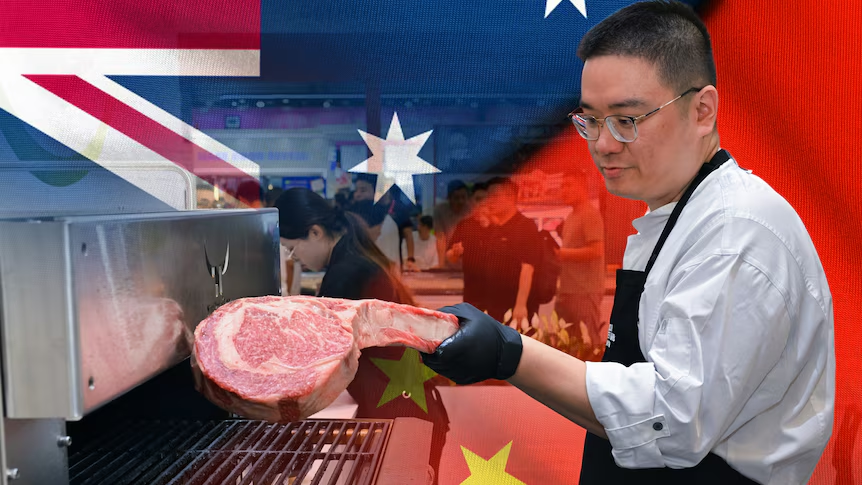

China’s decision to approve 15 additional licences for Australian beef exporters has given the local meat trade a timely lift, but the bigger story is what this move may reveal about changing conditions inside one of the world’s most important beef markets. The approvals expand access for more Australian facilities to ship product into China, including chilled beef, a category that carries higher value and stronger demand from premium buyers.
For Australian processors and exporters, the update is clearly positive. It widens access, improves flexibility, and opens more room in a market that remains central to long-term growth plans. But for industry watchers, the timing matters just as much as the licences themselves. China has been trying to protect its domestic cattle sector, and it already has import quota settings in place for Australian beef. So when new approvals arrive at this point in the year, it naturally raises questions about what is driving the urgency.
What China’s new beef approvals actually mean
The latest changes include two newly approved abattoirs, six cold storage and distribution facilities, and upgrades for 13 already listed export establishments. Those upgrades are especially important because they are understood to expand access from frozen beef into chilled beef, allowing Australian suppliers to target a more profitable and premium segment of the Chinese market.
That matters because chilled beef is not just another product category. It is closely linked to restaurants, higher-end retail channels, and consumers willing to pay more for freshness and quality. Expanding access in that segment can improve returns across the supply chain, especially for exporters with strong processing standards and reliable cold-chain logistics.
Australia already has a strong reputation in overseas protein markets for food safety, traceability, and disease-free production systems. Those strengths become even more valuable when major importing countries face uncertainty over domestic supply or need dependable partners to fill shortfalls. Industry trade data from Meat & Livestock Australia continues to show how important China has become for Australian red meat shipments, particularly when demand for higher-quality cuts improves.
From a market access point of view, this is more than a routine paperwork update. It increases Australia’s operational reach into China and gives processors a better platform to compete in the chilled beef trade, which has historically been harder to access than frozen product channels.
Why the timing is drawing attention
What has surprised many in the industry is that these new approvals come while Australia is still working within China’s safeguard quota arrangements for beef. Earlier in the year, China set a 205,000-tonne quota threshold for Australian beef imports, and market analysts have suggested that pace of trade could see that quota filled by mid-June. Once that threshold is reached, shipments can become far less attractive commercially because of a steep tariff burden.
That creates an obvious contradiction. If quota pressure is already building, why expand access now? The answer may be that China is thinking beyond the immediate quota situation and focusing instead on supply security, especially in premium beef categories.
There is also the possibility that authorities want more supply channels ready in case market conditions tighten further. Trade policy often moves ahead of public explanation, and new approvals can sometimes act as an early signal that a country wants more optionality before a bigger shortage or policy adjustment becomes visible.
Supply concerns are becoming harder to ignore
The strongest reason behind the move may be growing unease around domestic cattle supply in China. In late March, Chinese authorities confirmed foot-and-mouth disease outbreaks in Xinjiang and Gansu, two areas separated by a considerable distance. Official reports indicated infected cattle had been identified and that local authorities responded with culling, cleaning, and disinfection measures.
Even when official case numbers appear limited, foot-and-mouth disease is taken seriously because of how quickly it can disrupt livestock systems. Outbreaks can affect movement, slaughter schedules, market confidence, and fresh supply availability. In a country the size of China, even regional disruptions can have implications far beyond the original outbreak zone.
For Australia, this contrast is important. The country remains free from foot-and-mouth disease, which gives overseas buyers more confidence in consistency and safety. When importers need dependable supply during uncertain periods, Australia’s biosecurity standing becomes a commercial advantage, not just a regulatory talking point.
Some analysts have also pointed to broader pressure in global beef supply chains. If China is facing domestic disruption while also navigating tighter access to beef from other exporters, it makes sense that authorities would look to strengthen supply from a trusted source. In that environment, approving more Australian facilities is not simply about trade diplomacy. It is about ensuring product keeps moving where it is needed most.
Why chilled beef matters more than frozen product
The emphasis on chilled beef deserves special attention because it says something about the type of demand China is trying to satisfy. Frozen beef is important for volume trade, but chilled beef is closely tied to immediate consumption, premium retail, and food-service demand. If China is expanding chilled beef access, it suggests the need is not only for more beef, but for better-quality and faster-moving beef.
That creates a better opportunity for Australian exporters able to meet specifications around handling, shelf life, and distribution. It also benefits companies with strong integrated operations, because chilled export trade depends on precise execution from processing floor to final customer.
For processors, the commercial upside is obvious. For the broader market, it is a sign that China may be trying to strengthen supply in the part of the beef market where shortages are felt most quickly.
What this means for Australian exporters next
In the near term, the new licences should be seen as a meaningful positive for Australia’s beef trade, even if quota limits still cap how much can be shipped without heavy tariffs. Exporters now have more approved pathways into China, stronger access to chilled channels, and an improved position if trade settings change later in the year.
Longer term, the move may prove even more important if it marks the start of broader policy flexibility from China. If quotas are adjusted, if tariff barriers become less restrictive, or if domestic supply issues deepen, Australia could be in a strong position to capture more demand quickly.
That is why this development matters beyond the headline. It is not just another trade update. It is an indicator that China wants more room to source reliable beef, and that Australian exporters remain central to that strategy. For an industry that depends on stable high-value export markets, that is a signal worth watching closely. For more insights on shifting global commodity and trade trends, readers can also explore related market coverage on Swikblog.
You may also like: China-New Zealand Airspace Dispute Explained: What Triggered the Tensions?

Make Swikblog your go-to source on Google for reliable updates, smart insights, and daily trends.