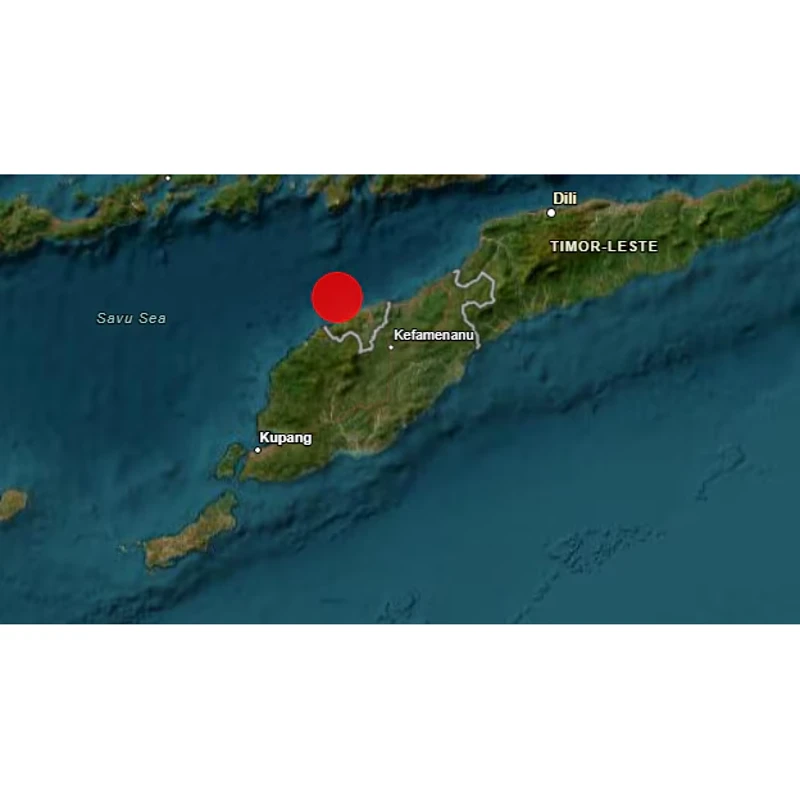

A strong offshore earthquake measuring magnitude 6.0 struck near Indonesia’s Timor Island on Tuesday morning, prompting brief concern across the region before authorities confirmed there was no tsunami danger linked to the tremor. The earthquake was recorded in waters near Timor, with Indonesia’s geophysics agency saying the event occurred at a depth of about 31 kilometres below the surface.
While the magnitude was high enough to be widely noticed, the early official assessment helped calm fears in an area that is no stranger to seismic activity. Indonesia sits on one of the most active earthquake belts in the world, and even when damage is limited, quakes of this size immediately draw public attention because of the country’s long history with undersea seismic events.
According to the preliminary information available, the quake struck at around 11:17 a.m. local time on Tuesday. Regional and international monitoring agencies moved quickly to track the event, though experts cautioned that the exact strength, depth and epicentre could still be adjusted as more data is reviewed. That is standard after a notable earthquake, particularly in offshore zones where seismic readings are refined over several hours.
For residents in eastern Indonesia and communities closer to Timor-Leste, the main question was whether the shaking could trigger a larger coastal emergency. That concern was eased when officials said there was no tsunami risk associated with the earthquake. In practical terms, that meant there was no indication of the kind of seabed movement that would normally push large volumes of water and create dangerous waves.
The difference matters. Not every undersea quake creates a tsunami, and the public often assumes that any sizeable offshore tremor automatically raises that threat. In reality, the depth of the quake, the type of fault movement and the amount of vertical displacement beneath the ocean all play a role. The U.S. Geological Survey notes that tsunami generation depends on the nature of the rupture rather than magnitude alone, which is why some powerful offshore quakes produce little more than shaking while smaller events in different conditions can be more dangerous.
That context is important in understanding Tuesday’s earthquake near Timor Island. A magnitude of 6.0 is significant enough to be felt by many people, and preliminary tracking from VolcanoDiscovery suggested the shaking was likely noticed across a broad area. Still, the absence of abnormal sea activity and the early official statement on tsunami risk meant the event was treated as a serious but contained seismic episode rather than the start of a broader disaster response.
Why the Timor earthquake still matters even without a tsunami warning
Even without reports of major destruction, a quake of this scale is still closely watched because Indonesia’s geological setting leaves little room for complacency. The country sits along the Pacific Ring of Fire, where several tectonic plates interact and generate frequent earthquakes and volcanic activity. Timor and the surrounding eastern islands are part of that wider seismic system, making tremors a recurring reality for people living there.
That is one reason official updates after an earthquake often focus not just on the main event but also on what may follow. Seismologists typically continue monitoring for aftershocks, which can happen minutes or hours later and occasionally unsettle already stressed buildings or infrastructure. There were no immediate signs from the information shared that the Tuesday quake caused serious casualties or large-scale structural damage, but that kind of assessment often takes time, especially in island regions where reports arrive gradually.
The evolving nature of earthquake data also explains why agencies emphasise that their first numbers are preliminary. The European-Mediterranean Seismological Centre said the details could be revised within hours, a routine part of global seismic analysis. For readers following breaking earthquake news, that revision process can sometimes create confusion when one platform shows slightly different figures from another. In most cases, those differences reflect updated readings rather than conflicting events.
Another reason this quake drew attention is the wider sensitivity around seismic news in Indonesia. Past disasters have shaped how quickly both the media and the public respond to reports of offshore earthquakes. That makes clear communication essential. In this case, the message from authorities was firm and direct: the tremor was notable, but it did not pose a tsunami threat. That distinction likely helped prevent unnecessary panic in coastal areas.
There is also a broader lesson in how these events are reported. The most useful coverage does more than repeat the magnitude. Readers want to know where the quake happened, how deep it was, whether it could trigger a tsunami, whether people likely felt it and whether scientists are still revising the data. Those details turn a raw seismic alert into a clearer picture of real-world risk.
Tuesday’s earthquake near Timor Island checked several of those boxes. It was offshore, it was moderately deep, it was strong enough to be felt by many people, and it remained under scientific review in the immediate aftermath. At the same time, the most important public safety takeaway was that officials saw no sign of tsunami danger. In a country as seismically exposed as Indonesia, that single line often determines whether an earthquake remains a tense news update or becomes a major emergency.
For now, the event appears to fall into the first category: a powerful natural jolt, unsettling for communities nearby, but limited in its broader consequences. Monitoring will continue, and updated figures may still emerge, but the early picture suggests a region shaken rather than devastated. For readers tracking similar events across Asia, our latest coverage on earthquake news and seismic updates offers more background on how offshore quakes are assessed and why some trigger warnings while others do not.
You may also like: Japan Earthquake Today: Tsunami Warning Issued as First Waves Arrive

Make Swikblog your go-to source on Google for reliable updates, smart insights, and daily trends.