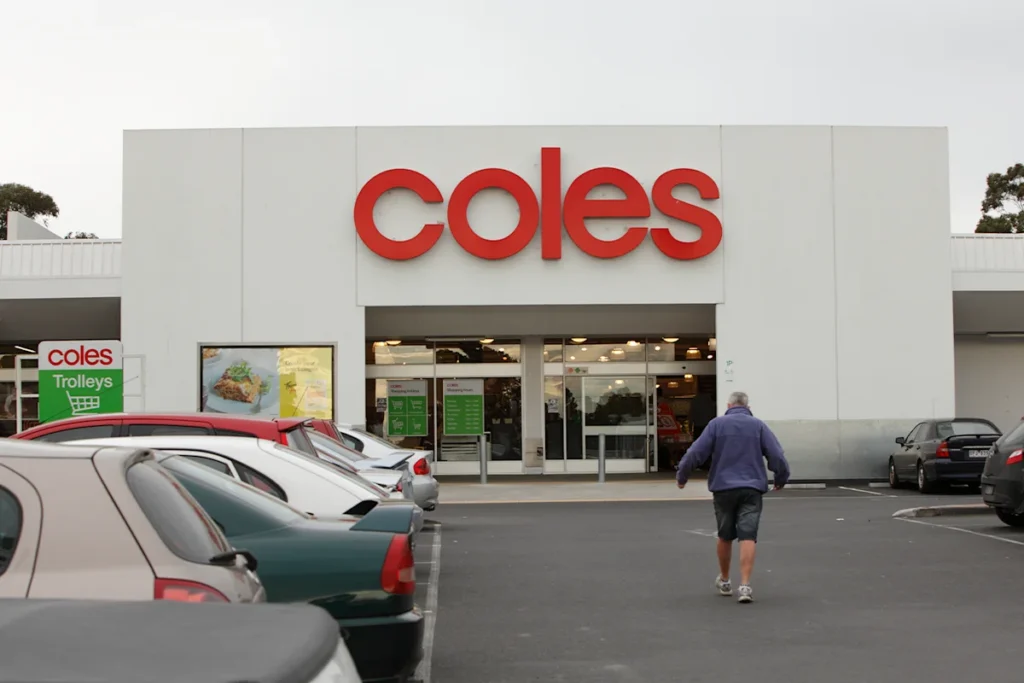

Coles is installing fast electric vehicle chargers at up to 30 supermarkets across Australia, allowing drivers to recharge while buying groceries. The two-year rollout with Evie Networks has started in Melbourne, with more sites planned in Victoria and Queensland before the end of 2026.
The expansion comes as Australian EV sales reach record levels and demand grows for chargers at convenient everyday destinations.
Which Coles stores are getting EV chargers?
The first site is operating at Coles Middle Camberwell in Melbourne’s eastern suburbs. It has four charging bays served by two Kempower dual-plug units.
Four additional locations have been identified:
- Orana Village, Victoria
- Beveridge, Victoria
- Annerley, Queensland
- Milton Village, Queensland
Orana Village, Beveridge and Annerley are linked to new Coles stores, while Milton Village is an existing Queensland location. More sites in both states are expected during the remainder of 2026.
Coles has not released the complete national list. Future locations will be selected partly according to local EV ownership and where more public charging infrastructure is needed.
The announcement covers “up to 30 sites,” so 30 is the maximum planned rollout rather than a guaranteed final number. Planning approvals, electricity connections and car-park suitability may affect individual installations.
How fast are the Coles chargers?
The Middle Camberwell equipment can provide up to 200kW of shared DC power across four bays. This is considerably faster than the lower-powered AC equipment commonly used for overnight home charging.
The 200kW figure is not a guaranteed speed for every vehicle. Actual performance depends on the car’s charging limit, battery temperature, existing charge level and whether another vehicle is sharing the available power.
Coles and Evie have not provided a standard charging time. A compatible EV may add useful range during a grocery visit, although charging usually slows as the battery approaches full capacity.
How much will charging cost?
No dedicated Coles charging price has been announced. There is also no confirmed free-charging period, Flybuys benefit or discount linked to a supermarket purchase.
Evie prices may vary by location and charger type. Drivers should check the rate per kilowatt-hour in the app before connecting. The final cost will depend on that rate and the amount of electricity delivered.
The official Evie charging guide says drivers can use its app to find stations, check availability, select a connector, start charging and manage payment.
How can drivers use the chargers?
Customers should download the Evie app, create an account and add a payment method before visiting. They should also confirm that the selected Coles site is operating and has a connector compatible with their car.
Some supported vehicles may use Evie Autocharge after registration. Many newer Australian EVs use CCS2, while some older models use CHAdeMO. Plug-in hybrids can use DC fast charging only when the model supports it.
The bays are intended for vehicles that are actively charging. They are not general priority spaces for electric cars, and petrol or diesel vehicles should not occupy them. Parking limits, access hours and possible idle fees may vary by location.
Why is Coles expanding charging now?
Australia recorded 103,855 battery-electric vehicle sales between January and June 2026, exceeding the 103,269 sold throughout 2025. Battery EVs represented 23.4% of new-car sales in June, up from 10.3% in June 2025.
Plug-in hybrid sales reached 54,121 during the first half of 2026, also passing the 53,249 recorded across all of 2025.
Higher petrol prices and uncertainty surrounding international fuel supplies have contributed to the acceleration. Conflict involving the United States and Iran, disruption around the Strait of Hormuz and crude prices near US$100 a barrel increased pressure on motorists. The changing market is examined further in this report on Australia’s increase in EV interest and sales.
Greater model choice, improving availability and vehicle-efficiency rules are also influencing demand. Queensland recorded year-to-date EV growth of 65.1%, followed by New South Wales at 63.3% and Victoria at 61.9%.
Read More:
How does Coles compare with Woolworths?
Woolworths has also introduced chargers and tested dedicated EV parking at selected supermarkets. Both retailers recognise that charging availability can influence where electric-car owners decide to shop.
Coles head of energy Jane Mansfield said motorists want charging options at destinations they already visit. Supermarkets suit that model because customers can add range without making a separate charging stop.
Will 30 sites solve the charger shortage?
The Coles program will add useful suburban capacity but will not resolve shortages along highways or in regional areas. Holiday traffic has already produced lengthy waits at busy stations, as detailed in this report on Australia’s EV charging delays and network pressure.
The new facilities may be particularly useful for renters, apartment residents and motorists unable to install charging equipment at home.
Middle Camberwell is available now, while other sites will open progressively during the two-year rollout. Drivers should check the Evie app for confirmed locations, prices, connector details and live bay availability.

Make Swikblog your go-to source on Google for reliable updates, smart insights, and daily trends.