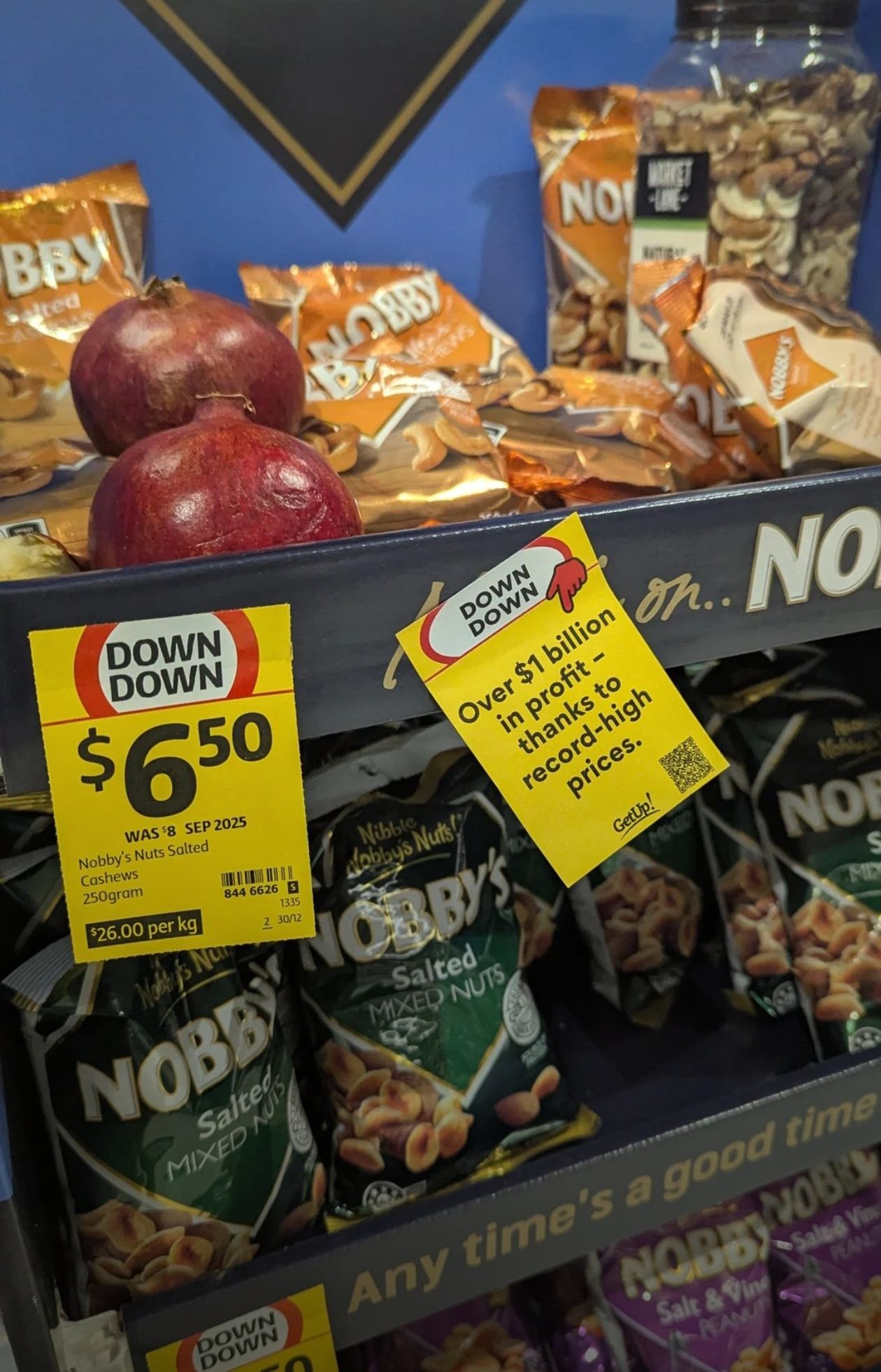
It was a small yellow tag on a Coles shelf — the kind most people stop seeing after years of shopping. Then it hit Reddit and went viral. The photo paired a “Down Down” discount label with a blunt reminder about billion-dollar profits, and Australians piled in with the same complaint: the specials don’t feel like savings anymore. What made it spread wasn’t the cashews. It was the sense that grocery prices keep rising, even when the marketing says “down”.
The Numbers Behind the Frustration
If you want the cleanest explanation for why this keeps happening, start with official inflation data. The Australian Bureau of Statistics said overall CPI rose 3.8% over the year to October 2025 — and food and non-alcoholic beverages rose 3.2% over the same period. In other words: even as inflation debates shift month to month, food is still climbing — and food is the bill Australians can’t avoid. You can see the breakdown in the ABS CPI release here: ABS CPI (latest release).
Within food, the increases aren’t evenly spread — which is why different shoppers feel the squeeze differently. Meat and seafood rose 3.8% over the year to October 2025, with lamb and goat and beef categories highlighted as major drivers in the ABS commentary. Fruit and vegetable prices also lifted year-on-year, and even when produce stabilises, it’s often offset by protein, packaged snacks, coffee, breakfast staples and “little extras” that quietly compound across a week’s shop.
Why “Down Down” Doesn’t Land the Way It Used To
Discount labels work when shoppers believe the baseline price is fair. But the current mood is shaped by a different reality: many Australians feel they’re paying more for the same trolley, with fewer genuine “wins” at the register. A 50-cent drop on one item is psychologically cancelled out if staples are still drifting upward, if pack sizes shrink, or if a “special” looks like a return to last month’s price rather than a true discount.
This is why a single shelf photo can trigger a national argument. It becomes shorthand for a trust gap — between what the supermarket says, and what a household budget feels like.
The 2026 Angle: Why Prices May Not Ease — and Could Rise Again
Here’s the part many shoppers are already bracing for: 2026 may not bring the relief people expect. The Reserve Bank of Australia’s November 2025 outlook said inflation is expected to remain above the 2–3% target range for a while, and it specifically noted headline inflation is expected to increase to around 3.7% by mid-2026 before easing later. That matters because when inflation runs hot, it gives suppliers and retailers more cover to keep lifting prices — especially in categories where consumers can’t simply opt out. The RBA summary is here: RBA Statement on Monetary Policy – Outlook.
Even if wages rise in 2026, households often feel the timing mismatch: grocery prices move fast, while pay rises (if they happen) come later. And in supermarkets, several 2026 cost pressures typically feed into shelf prices: freight and logistics, electricity and refrigeration costs, supplier pricing (especially for meat and imported packaged goods), and labour costs across distribution centres and stores. None of these guarantee a price spike — but together they explain why “prices will come down soon” rarely matches what people see at the checkout.
Who Gets Hit in 2026 — and Who Gains
If you’re a customer: the biggest impact lands on households that can’t “shop around” easily — people without cars, those in areas with fewer competitors, renters already stretched by housing costs, and families buying the same staples every week. When food inflation persists, it doesn’t just change brands; it changes behaviour: fewer fresh add-ons, more private-label switching, more skipping “nice-to-have” items, and more anxiety-driven budgeting.
If you’re a local shopkeeper: higher supermarket prices can cut both ways. Some independent grocers and specialty stores pick up customers who are fed up with the majors — but they also face the same supplier increases, often with less negotiating power. If 2026 brings higher wholesale costs, small operators can be squeezed hardest: raise prices and lose foot traffic, or hold prices and watch margins vanish.
If you’re a supermarket manager: 2026 pressure looks different behind the scenes. Store managers get hit by wage budgets, shrink (theft and waste), supply disruptions, and the daily reality that customers blame the store floor for decisions made far above it. When shoppers are angry, “price perception” becomes operational: more complaints, more confrontations, and more pressure to prove value through specials that may not be fully in the manager’s control.
Who benefits if prices keep rising? Discount chains and bulk retailers tend to gain share when households trade down. Private-label ranges can also win because they look like an immediate solution for a stretched budget. And supermarkets themselves can benefit if customers respond by consolidating shops into one weekly visit — convenience sometimes beats comparison shopping, even when shoppers are unhappy about it.
What the Viral Photo Really Captured
The photo didn’t go viral because it revealed a secret. It spread because it compressed a national feeling into one frame: a discount label on the shelf, and a household reality at the register. If inflation stays sticky into 2026 — as the central bank’s own outlook suggests it may — the same anger will keep resurfacing, not as a one-day pile-on, but as a recurring mood that follows Australians down the aisle.
Related reading: Read more on Swikblog

Make Swikblog your go-to source on Google for reliable updates, smart insights, and daily trends.