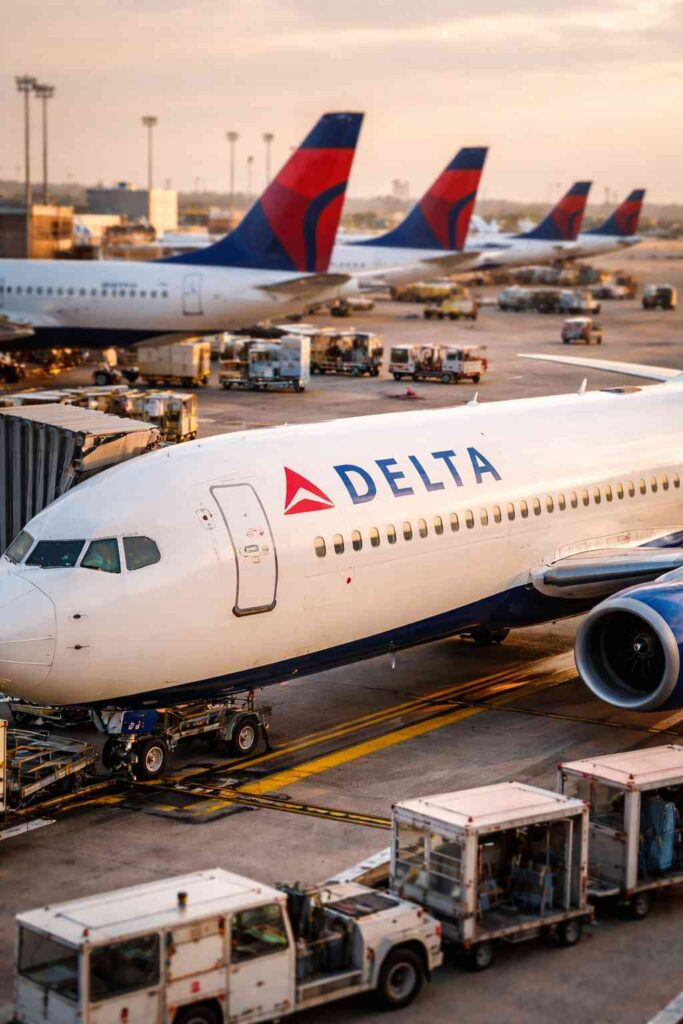

Delta Air Lines is raising the cost of flying again — and this time, the increase is hard to miss. The carrier has lifted its checked baggage fees across the board, pushing the first bag to $45, the second to $55, and the third bag to a steep $200, a $50 jump. The new pricing applies to tickets purchased on or after April 8, 2026, marking Delta’s first domestic baggage fee increase in two years.
The move comes at a time when the airline industry is facing intense cost pressure, and investors reacted cautiously. Delta shares slipped about 1.3% to around $65.89, reflecting concerns that rising expenses — especially fuel — are starting to weigh heavily on profitability despite efforts to boost revenue through fees.
Fuel surge forces airlines to act
The biggest driver behind the price hike is jet fuel. According to industry data, average jet fuel prices have surged to nearly $4.69 per gallon, marking an increase of roughly 88% since late February. The spike has been linked to global supply disruptions and geopolitical tensions that have tightened oil markets.
Fuel is the second-largest cost for airlines after labor, and the recent surge has significantly increased operating expenses. Both Delta and United Airlines executives have already warned that higher fuel prices could add hundreds of millions of dollars in additional costs compared to last year. United’s CEO even estimated that sustained high fuel prices could increase annual costs by as much as $11 billion.
Against that backdrop, Delta’s fee hike looks less like a pricing strategy and more like a defensive move to protect margins.
Industry-wide trend taking shape
Delta is not alone in raising fees. United Airlines and JetBlue have already implemented similar baggage fee increases earlier this year, signaling a broader shift across the airline industry. United, for instance, now charges around $45 for the first checked bag when prepaid, with higher fees for last-minute payments.
This coordinated pricing behavior suggests airlines are increasingly relying on ancillary revenue — such as baggage fees — to offset rising operational costs without sharply increasing base ticket prices.
Still, there is a limit to how much airlines can push fees before it starts affecting demand. Travelers are already dealing with higher airfare, hotel rates, and overall travel expenses, raising concerns that aggressive fee hikes could eventually slow bookings.
Who will still avoid paying?
Not all passengers will feel the impact. Delta confirmed that several categories of travelers will continue to receive complimentary checked bags. These include:
• SkyMiles Medallion members
• Passengers flying in premium cabins such as First Class and Delta One
• Customers holding eligible Delta SkyMiles American Express credit cards
Additionally, the new baggage fees will not apply to long-haul international flights, where airlines typically include baggage allowances in ticket pricing.
What investors are watching next
The timing of the fee increase is critical. Delta is set to report its first-quarter earnings before the market opens on April 8, and fuel costs are expected to dominate discussions with analysts.
While strong travel demand has helped airlines maintain revenue growth, the key question is whether that demand is enough to absorb the sharp rise in fuel expenses. Investors will be closely watching Delta’s guidance to see if the company expects margins to stabilize or remain under pressure.
The broader concern is that if fuel prices remain elevated, airlines may be forced to take further pricing actions — whether through higher fares, additional fees, or capacity adjustments.
For now, the market’s reaction suggests skepticism. Delta’s baggage fee hike may bring in incremental revenue, but it also highlights the scale of cost challenges facing the industry. That’s why the stock is reacting as a fall story, not a growth one.
With airline stocks already under pressure and earnings season underway, the next few days could be crucial for Delta and its peers. Investors looking for clarity on the path ahead can track updates directly through Delta’s official investor relations page here.

Make Swikblog your go-to source on Google for reliable updates, smart insights, and daily trends.