
Disney has officially opened World of Frozen at Disneyland Paris, unveiling one of the biggest investments in the resort’s history and marking a major milestone for the company’s parks business. The new themed land opened as part of the transformation of Walt Disney Studios Park into Disney Adventure World, a redevelopment valued at more than €2 billion. The project is also one of the first major international attractions introduced under Disney CEO Josh D’Amaro, who recently took over leadership of The Walt Disney Company.
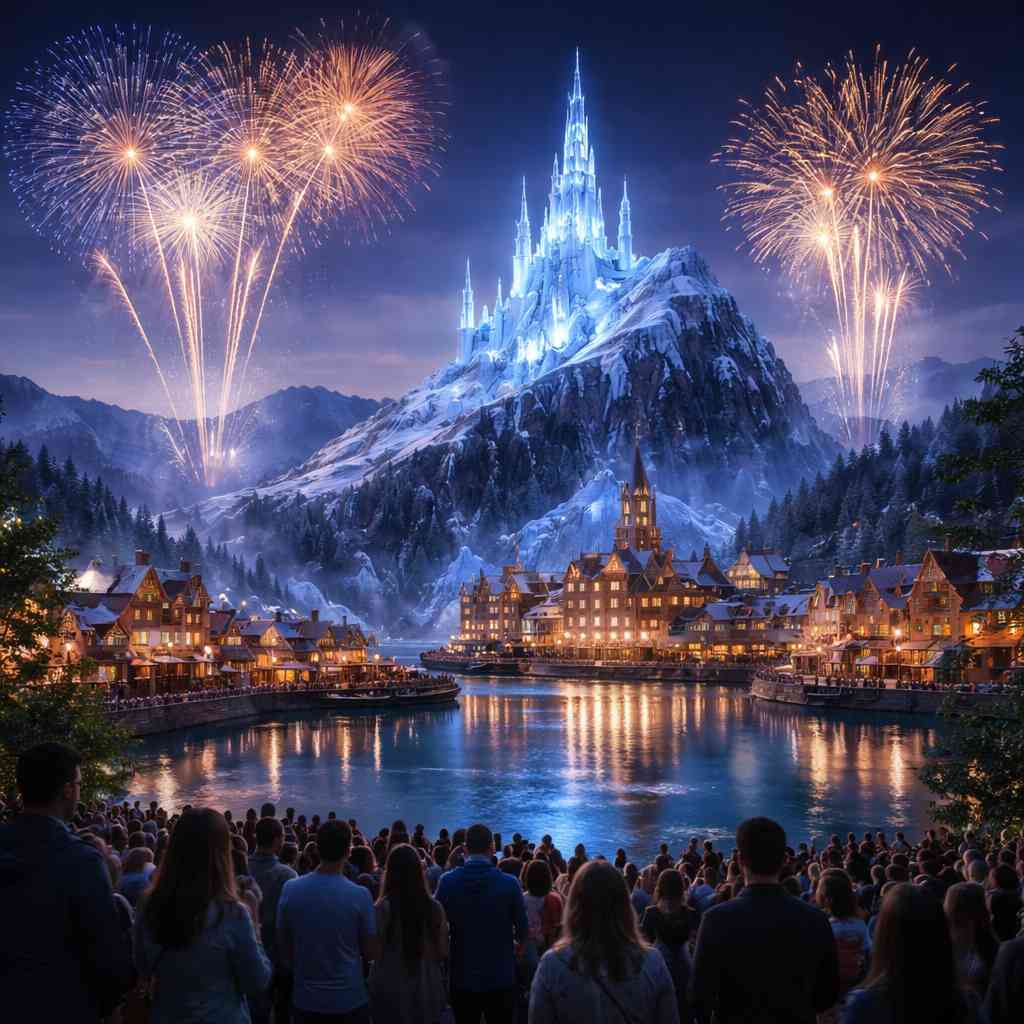
Located in Chessy, just outside Paris, the new land recreates the fictional Kingdom of Arendelle from Disney’s blockbuster Frozen films. A 118-foot North Mountain topped with Elsa’s Ice Palace now dominates the skyline, while guests can explore themed streets, attractions, restaurants and live entertainment inspired by the hit franchise. The opening reflects Disney’s long-term strategy of investing heavily in destination experiences, following other major expansion plans across its global resorts.
Fans planning future Disney vacations can also keep an eye on the latest Disneyland Paris attractions and expansion updates, as more themed lands are already under development.
World of Frozen becomes the heart of Disney Adventure World
The new land is much more than a single attraction. It serves as the centerpiece of Disney Adventure World, the renamed and expanded second gate at Disneyland Paris.
Guests enter a detailed version of Arendelle featuring Scandinavian-inspired architecture, waterfront streets and themed shops. The headline attraction, Frozen Ever After, combines large-scale Audio-Animatronics, projection mapping and special effects as visitors travel through scenes featuring Anna, Elsa, Olaf, Kristoff and Sven.
The experience also includes character meet-and-greets inside Arendelle Castle, interactive moments with Mossy the baby troll, themed restaurants and exclusive merchandise. During the evening, Adventure Bay hosts a nighttime spectacular featuring fountains, music, fireworks and hundreds of synchronized drones.
Josh D’Amaro signals Disney’s long-term priorities
The Paris opening represents one of Josh D’Amaro’s first major international appearances since becoming Disney’s chief executive. Unlike several previous Disney leaders, D’Amaro built his career within the company’s parks and experiences division before moving into the top executive role.
His appearance reinforces Disney’s continued focus on investing in physical destinations alongside streaming, film and consumer products. The company has already committed approximately $60 billion toward expanding parks, cruise ships and resort experiences over the next decade.
Disney has outlined this long-term investment strategy through its official corporate announcements, highlighting future expansion across parks, cruise holidays and destination experiences worldwide. More information is available on The Walt Disney Company.
During the opening celebrations, D’Amaro said storytelling remains central to Disney’s identity, with parks offering guests the opportunity to experience those stories in ways that films and streaming cannot.
Disneyland Paris has become one of Europe’s biggest attractions
The expansion also highlights how far Disneyland Paris has come since opening as Euro Disney in 1992. After facing financial struggles and criticism during its early years, the resort has grown into Europe’s most visited tourist destination.
French President Emmanuel Macron attended the inauguration, describing Disneyland Paris as an important contributor to France’s tourism industry and regional economy. According to Disney, the resort has welcomed more than 445 million visits since opening while supporting tens of thousands of direct and indirect jobs.
The latest expansion is expected to create around 1,000 additional direct positions, further strengthening Disneyland Paris as one of France’s largest private tourism employers.
More expansion is already underway
World of Frozen is only one phase of Disney Adventure World’s redevelopment. Visitors can also explore Adventure Bay and Adventure Way, while a Tangled-inspired family attraction has joined the growing list of experiences inside the park.
Construction continues on a major The Lion King-themed land, which Disney expects to become another flagship attraction in the coming years. Once the redevelopment is complete, the park’s footprint will be roughly double its original size, with most attractions either newly built or completely reimagined.
Disney’s broader entertainment plans continue beyond its parks as well, including upcoming theatrical releases such as the live-action Moana movie, one of the company’s biggest projects scheduled for 2026.
Why Disney continues investing in its parks
Although Disney’s streaming business has moved closer to sustained profitability, the company’s Experiences division remains one of its strongest financial performers. Theme parks generate revenue not only through admission tickets but also hotels, restaurants, retail stores and vacation packages.
Projects like World of Frozen demonstrate Disney’s strategy of turning successful film franchises into destinations that attract visitors for years after a movie leaves cinemas. With more attractions already under construction at Disneyland Paris and additional international projects in development, the company is continuing to place long-term investment behind immersive entertainment experiences.
Read More:
- Food recall Australia: Chickadees snacks recalled over safety concerns
- FDA cheese recall 2026: Clover Hill Dairy products linked to Listeria outbreak
- Visit the Swikblog homepage for more latest news
Official updates on World of Frozen, Disney Adventure World and future resort developments are available through the Disneyland Paris Newsroom.
You may also like this report on a deadly Lansing crash that left one person dead and five others injured in an alleged SUV hit-and-run.

Make Swikblog your go-to source on Google for reliable updates, smart insights, and daily trends.