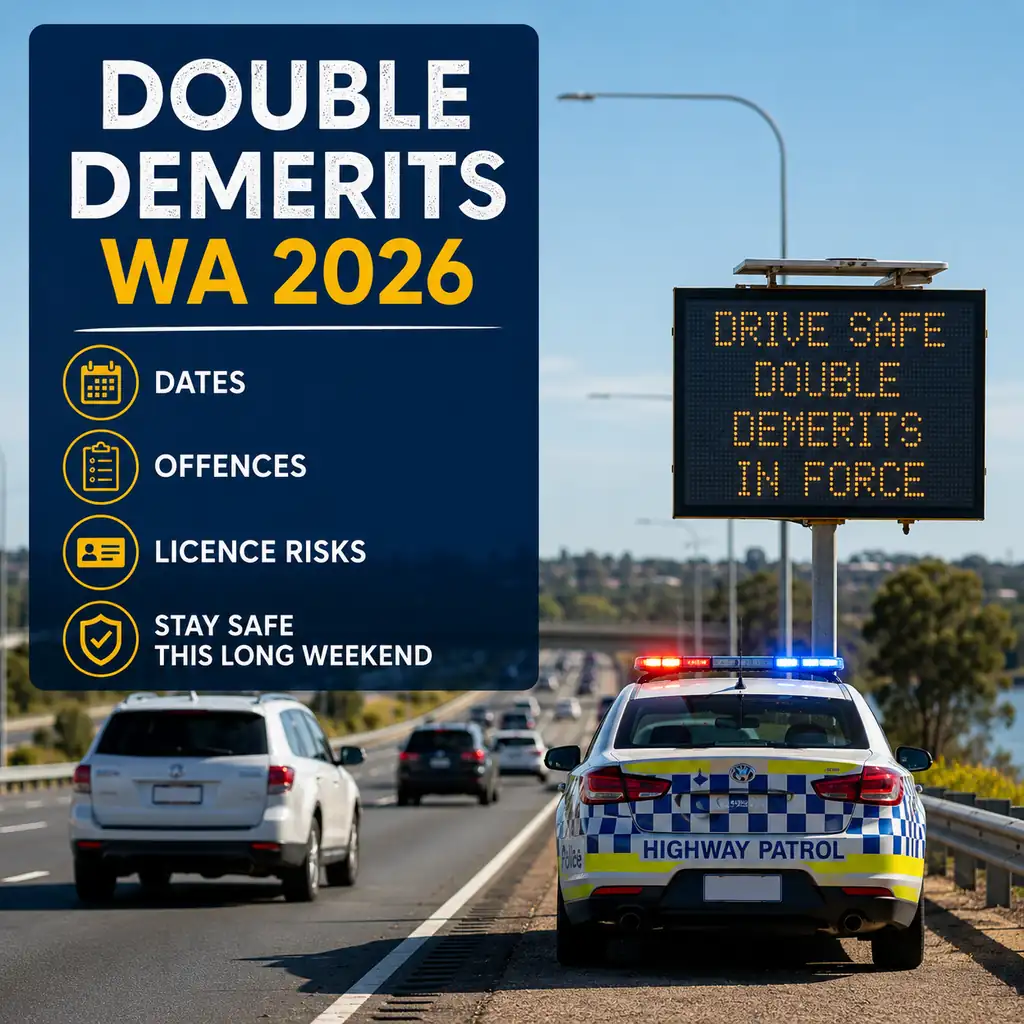

Double demerits are not currently active in Western Australia as of August 1, 2026. The next scheduled period begins on Friday, September 25, ahead of the King’s Birthday public holiday.
The upcoming enforcement window will continue through Monday, September 28. During these four days, selected road offences will attract twice their usual demerit points.
The dates are listed in the WA Government’s official 2026 double-demerit schedule, updated on July 23.
Next WA double-demerit period: Friday, September 25 to Monday, September 28, 2026. An exception applies to the City of Karratha and Town of Port Hedland local government areas for this King’s Birthday period.
Which offences receive double demerit points?
The WA scheme applies to selected high-risk driving offences rather than every traffic infringement.
- Speeding
- Drink or drug driving
- Illegal mobile phone use while driving
- Running a red light
- Failing to wear a seatbelt correctly
- Failing to use an appropriate child restraint
Driving a vehicle fitted with a device intended to avoid speed-camera detection, or driving in a way designed to evade a camera, carries 14 demerit points during an active double-demerit period.
Are traffic fines doubled as well?
Double demerits refer to the points recorded against a driver’s licence. They do not mean every financial penalty is automatically doubled.
A driver may therefore receive the standard fine for an offence while having twice the usual number of points added to their record. This can create an immediate licence risk for someone already close to their applicable limit.
Why the Karratha and Port Hedland exception matters
The September King’s Birthday period does not apply in the City of Karratha and Town of Port Hedland because those local government areas observe the public holiday differently.
Drivers should not assume the exception applies throughout the Pilbara or during every holiday period. Anyone travelling between local government areas should check the official schedule before leaving.
Remaining WA double-demerit dates in 2026
Two scheduled double-demerit periods remain in Western Australia during 2026:
- King’s Birthday: September 25–28, subject to the Karratha and Port Hedland exception.
- Christmas and New Year: December 18, 2026, to January 3, 2027.
The earlier WA Day period ran from May 29 to June 1 and has ended. An offence committed within that window remains subject to the applicable points penalty even if the infringement notice arrives later.
Road conditions can affect holiday journeys
Drivers planning a long-distance trip should check current road conditions and allow extra travel time. Earlier North West Coastal Highway disruption showed how weather damage and access restrictions can alter regional travel plans.
Motorists travelling around Perth should remain alert on major routes as well. A previous Reid Highway closure after a serious crash demonstrated how one incident can cause delays across connecting roads.
How drivers can prepare
Motorists can check their existing points through the WA Department of Transport’s online service using their licence number, date of birth and licence expiry date.
Before travelling, drivers should observe posted speed limits, keep mobile phones out of reach and ensure every passenger is properly restrained. Anyone planning to drink should arrange another way home.
Published dates may change following legislative, regulatory or policy updates. Checking the government schedule shortly before each holiday period is the safest way to confirm whether double demerits apply.

Make Swikblog your go-to source on Google for reliable updates, smart insights, and daily trends.