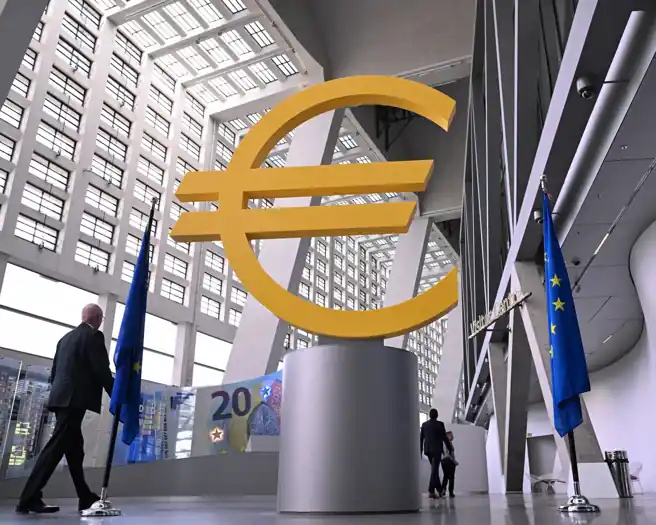

The European Central Bank has raised interest rates for the first time since 2023, signaling a renewed focus on inflation as rising energy prices linked to the Iran war threaten to push costs higher across the eurozone economy.
In a widely anticipated move, the ECB increased its key deposit facility rate by 25 basis points to 2.25%. The central bank also raised its main refinancing rate to 2.40% and the marginal lending facility to 2.65%, with the changes taking effect on June 17.
The decision comes as inflation remains above the ECB’s 2% target and policymakers grow increasingly concerned that higher oil prices could spill over into broader consumer prices. While the rate hike itself was expected, the ECB’s updated economic forecasts suggest Europe may face a difficult period of slower growth and persistent inflation pressure.
Energy Prices Are Driving a New Inflation Challenge
The latest inflation concerns stem largely from the Middle East conflict, which has pushed oil prices above $90 per barrel. Before the war began, crude prices were trading closer to $70, giving households and businesses some relief after previous inflation shocks.
Energy costs influence far more than fuel bills. Higher oil prices increase transportation expenses, manufacturing costs and supply chain spending. Those costs often filter through to supermarket shelves, service providers and consumer goods, creating broader inflation throughout the economy.
Eurozone inflation accelerated to 3.2% in May from 3.0% in April, moving further away from the ECB’s medium-term target. Policymakers now believe the risk of inflation becoming more deeply embedded has increased, particularly if elevated energy costs persist into the second half of the year.
ECB Forecasts Show Inflation Staying Elevated
The central bank’s latest projections highlight why officials felt additional action was necessary. Headline inflation is now expected to average 3.0% in 2026 before slowing to 2.3% in 2027 and returning to the ECB’s target of 2.0% in 2028.
Underlying inflation remains a concern as well. Excluding energy and food, inflation is projected at 2.5% in both 2026 and 2027 before easing to 2.2% in 2028.
These forecasts suggest policymakers are worried that rising energy costs could eventually spread into wages, services and consumer goods. Once inflation expectations become entrenched, central banks often face a much more difficult task bringing prices back under control.
The ECB’s approach mirrors concerns seen in other major economies where policymakers continue to monitor price pressures closely. Similar challenges appeared when the Bank of Canada held rates at 2.25% as oil shock and Iran war inflation risks grew, showing how energy markets continue to shape central bank decisions worldwide.
Growth Outlook Weakens Across the Eurozone
While inflation forecasts moved higher, growth projections moved in the opposite direction. The ECB now expects eurozone economic growth of 0.8% in 2026, 1.2% in 2027 and 1.5% in 2028.
The downward revisions reflect concerns that higher commodity prices, weaker consumer confidence and reduced purchasing power could weigh on economic activity. Households facing higher living costs often spend less, while businesses may delay investment when financing becomes more expensive.
This creates a challenging environment for policymakers. Raising rates can help slow inflation, but it can also reduce economic momentum if borrowing costs rise too quickly.
Lessons From Europe’s Previous Inflation Shock
The latest decision inevitably draws comparisons with the inflation surge that followed Russia’s invasion of Ukraine in 2022. During that period, the ECB faced criticism for moving too slowly as energy-driven inflation spread across the eurozone.
This time, officials appear determined to respond earlier. ECB President Christine Lagarde had already indicated in March that higher borrowing costs might be required if inflation risks intensified.
Rather than waiting for inflation to become more widespread, policymakers are attempting to limit second-round effects before they gain momentum across wages and consumer prices.
What More Rate Hikes Could Mean
Financial markets are already pricing in two additional interest rate increases by next spring. If those expectations prove accurate, the ECB’s deposit rate could move closer to 2.75%.
For consumers, higher rates could translate into increased mortgage payments, more expensive loans and tighter credit conditions. Businesses may face higher financing costs, particularly in sectors that rely heavily on borrowing.
Savers could benefit from improved returns on deposits, while banks may see stronger lending margins. However, sectors such as real estate and consumer discretionary spending often face greater pressure when borrowing costs rise.
The ECB has stressed that future decisions will remain data-dependent rather than following a predetermined path. Inflation trends, wage growth, energy prices and economic activity will all play a role in shaping upcoming policy meetings.
Read More
For investors and households alike, the latest rate increase marks an important shift in Europe’s economic outlook. The central bank is making it clear that controlling inflation remains the priority, even as growth risks continue to build across the eurozone.
For more details on the policy decision and economic projections, readers can review the ECB’s official statement published by the European Central Bank.

Make Swikblog your go-to source on Google for reliable updates, smart insights, and daily trends.