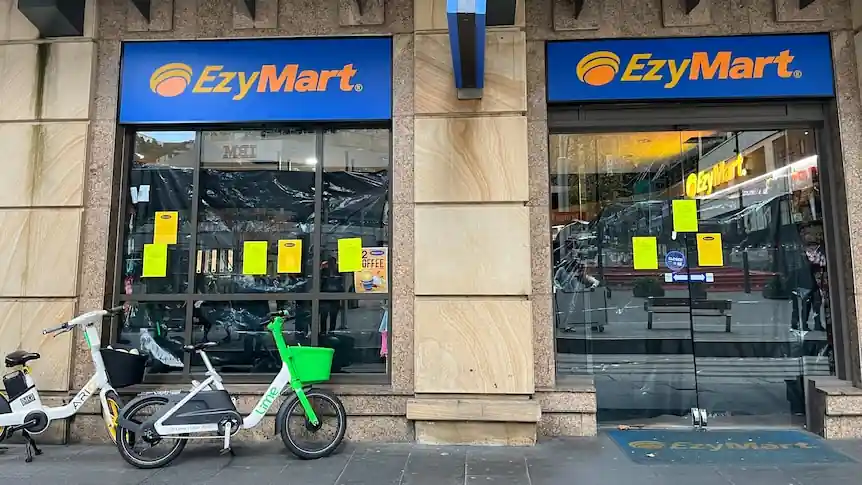

Four EzyMart-branded convenience stores in Sydney have been forced to close for 90 days after NSW Health alleged illegal tobacco and vape products were being sold from the premises.
The action was part of a broader enforcement sweep across Sydney’s CBD, where 17 retailers were issued closure orders by NSW Health officers. The crackdown comes as state authorities increase pressure on shops suspected of selling illicit cigarettes, disposable vapes and other non-compliant nicotine products.
EzyMart, a major convenience retail brand with more than 490 stores across Australia, said the Sydney stores involved were run by an independent operator rather than directly managed by the company.
Notices displayed on the closed shopfronts said EzyMart was terminating its contract with that operator. The company also said it supported the NSW Health action and did not tolerate illegal product sales under any circumstances.
The closures have put renewed focus on how large retail brands monitor independently operated stores, particularly in a sector where tobacco and vape compliance has become a major regulatory risk.
Why NSW is moving harder on illegal tobacco retailers
NSW Health has been using stronger enforcement tools against businesses accused of selling illegal tobacco or vape products. Under NSW rules, temporary closure orders can be issued for up to 90 days where authorities believe a premises has been involved in illegal tobacco or vape activity. More serious action can also be pursued through the courts, according to NSW Health guidance on tobacco closure orders.
NSW Health Minister Ryan Park said the state government has several ongoing investigations into the illegal tobacco trade. He also warned that where enforcement teams detect signs of wider criminal activity, NSW Police may be brought into the investigation.
The Sydney closures are not only a retail compliance story. They also expose a deeper policy fight over Australia’s tobacco excise and whether high legal cigarette prices are pushing some smokers toward the black market.
Australia has some of the highest cigarette prices in the world, with taxes making up roughly three-quarters of the retail price. The federal tobacco excise was sharply lifted in 2010 with a 25 per cent increase, and the government later announced additional annual 5 per cent rises for three years from September 2023.
The public health argument behind the tax is clear: higher cigarette prices are intended to reduce smoking and encourage people to quit. But critics say the gap between legal and illegal prices has become so wide that organised sellers can undercut licensed retailers and still make large profits.
Read More
Theo Foukkare, chief executive of the Australian Association of Convenience Stores, has argued that illegal tobacco has grown from about 25 per cent of the market five years ago to more than 60 per cent. He also claimed that 97 per cent of vaping consumption is happening outside Australia’s prescription model.
Foukkare said governments have committed around $1 billion to illegal tobacco and vape enforcement, but the black market has continued to expand. He has called for a 50 per cent reduction in tobacco excise, saying cheaper legal products would reduce demand for illicit supply.
Federal Treasurer Jim Chalmers has previously defended tobacco excise as an important public health measure designed to help reduce smoking rates.
The NSW action follows similar enforcement moves in other states. Swikblog recently reported on Western Australia’s rapid crackdown on illegal tobacco sellers, where authorities closed multiple stores under tougher laws. Read more: WA Shuts Down 6 Tobacco Stores Within 72 Hours Under Tough New Crackdown.
For EzyMart, the immediate damage is reputational, even though the company has moved to distance itself from the independent operator. For smaller retailers, the message is sharper: illegal tobacco and vape allegations can now lead to fast business closures, not just warnings or fines.
The larger question is whether enforcement alone can slow Australia’s illegal nicotine market. As long as legal cigarettes remain far more expensive than illicit alternatives, state governments may keep shutting stores while the black market searches for new shopfronts.

Make Swikblog your go-to source on Google for reliable updates, smart insights, and daily trends.