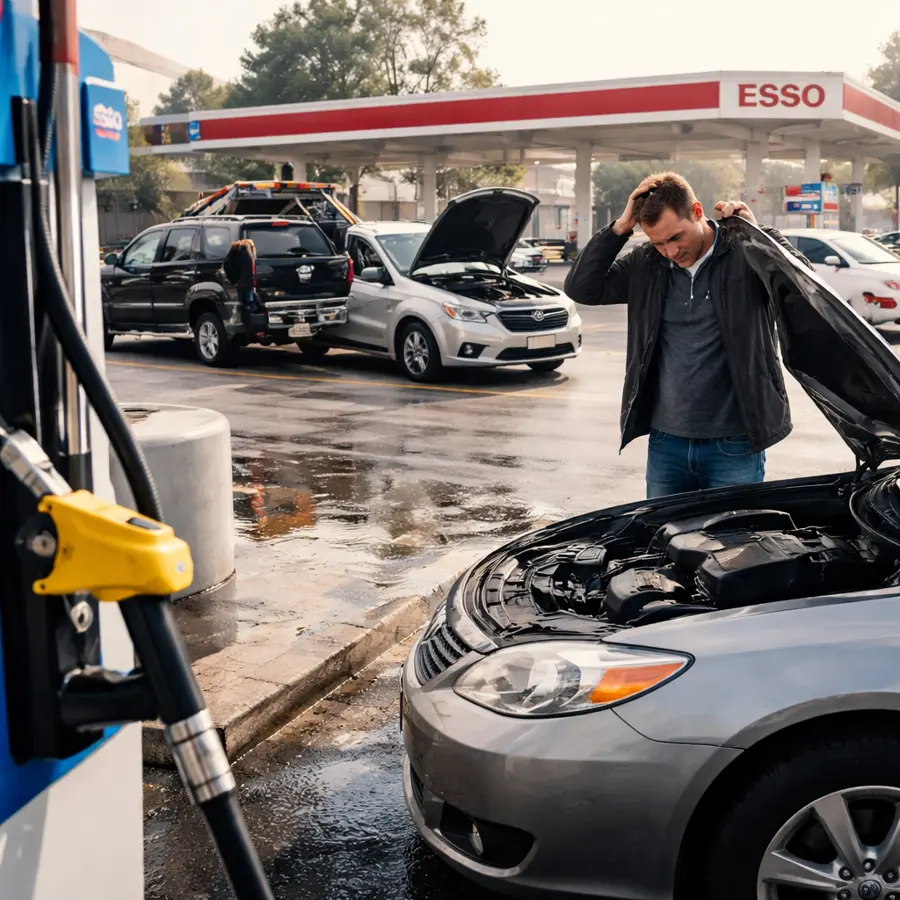

It started like any routine fuel stop — and ended with engines failing, vehicles stranded, and growing panic among drivers in Ontario.
A gas station near Wasaga Beach is now at the center of a serious fuel contamination incident after more than 10 drivers reported vehicle breakdowns linked to water in gasoline. The Esso station, located at Highway 92 and Crossland Road in Elmvale, has had both of its underground fuel storage tanks shut down following multiple complaints and an official inspection.
For many affected drivers, the issue surfaced almost immediately after refueling. Vehicles that had been running without issue suddenly stalled, refused to start, or broke down within a short distance — turning a simple fill-up into an unexpected and costly ordeal.
Drivers report sudden breakdowns after refueling
The complaints began circulating locally and quickly gained attention on social media. Tiny Township resident Lindsay Fitzgerald said she and her husband filled up at the station, only to find their car wouldn’t start the very next day. It was only after seeing posts online from other drivers that they suspected contaminated fuel.
Another driver, Jeremy Nadeau, described an even more immediate impact. After filling up his work truck at the same location, he managed to drive only about 10 kilometres before the vehicle broke down completely and had to be towed.
Stories like these were not isolated. Local mechanics confirmed a noticeable spike in vehicles arriving with the same issue — water contamination inside fuel tanks. Jeff Whiteside, owner of Jeff Auto Repair, said multiple customers came in over the past week with identical symptoms, pointing to a common source.
Regulator steps in, both tanks shut down
The Technical Standards and Safety Authority (TSSA), Ontario’s fuel safety regulator, confirmed it received at least three formal complaints related to contaminated fuel from the station. Inspectors visited the site and made a critical discovery: water had leaked into the underground fuel storage tanks.
Following the inspection, the TSSA ordered the second tank to be taken out of service, effectively shutting down all fuel supply at the station.
Officials stated that both tanks will remain offline until the station resolves issues with its leak detection and monitoring systems and meets all regulatory safety standards. The authority has also confirmed it will return for a follow-up inspection before allowing operations to resume.
At this stage, it remains unclear exactly how the water entered the fuel system. Investigators have not yet identified whether the cause was equipment failure, groundwater intrusion, or a malfunction in monitoring systems.
Why water in fuel is a serious problem
Water contamination in fuel is not just a minor quality issue — it can have immediate and damaging effects on vehicles. Unlike gasoline, water does not combust properly, which disrupts the engine’s operation.
Even small amounts of water can lead to engine misfires, stalling, corrosion, and in severe cases, complete engine failure. For drivers, this often means expensive repairs, including draining the fuel tank, replacing filters, and inspecting fuel injectors and pumps.
Automotive experts have long warned that contaminated fuel can quickly escalate into a major mechanical issue. According to guidance from AAA, water in fuel systems can lead to sudden engine shutdowns and long-term damage if not addressed immediately.
Real cost for drivers and growing concern
Beyond the inconvenience of being stranded, the financial impact on drivers can be significant. Repairs linked to fuel contamination can cost hundreds or even thousands of dollars, depending on the extent of damage.
For many affected individuals, the situation is further complicated by uncertainty around liability. Without clear confirmation of how long the contamination issue existed, drivers are left wondering whether they may be eligible for compensation or forced to absorb the costs themselves.
The rapid spread of complaints — both through word of mouth and online — has also intensified concern in the local community. What began as a few isolated incidents quickly turned into a broader pattern, raising questions about how long the problem may have gone undetected.
Fuel safety under scrutiny
This incident is likely to bring renewed attention to fuel station maintenance and regulatory oversight, particularly when it comes to underground storage systems. These systems rely heavily on proper sealing, monitoring, and leak detection technology to prevent contamination.
When those systems fail, the consequences can reach consumers almost immediately, as seen in this case.
Authorities have not yet confirmed how long the contamination was present before drivers began reporting issues. That timeline could become a key factor in understanding both the scale of the problem and the effectiveness of monitoring systems in place.
Consumers seeking more information or looking to report fuel-related issues can refer to resources provided by the Technical Standards and Safety Authority.
For now, both storage tanks at the Elmvale gas station remain shut down, and operations will not resume until all safety concerns are fully addressed. Attempts to contact the station owner and corporate office have so far gone unanswered.
For drivers across Ontario and beyond, the incident serves as a stark reminder: even something as routine as filling up your tank can carry unexpected risks when fuel quality is compromised.

Make Swikblog your go-to source on Google for reliable updates, smart insights, and daily trends.