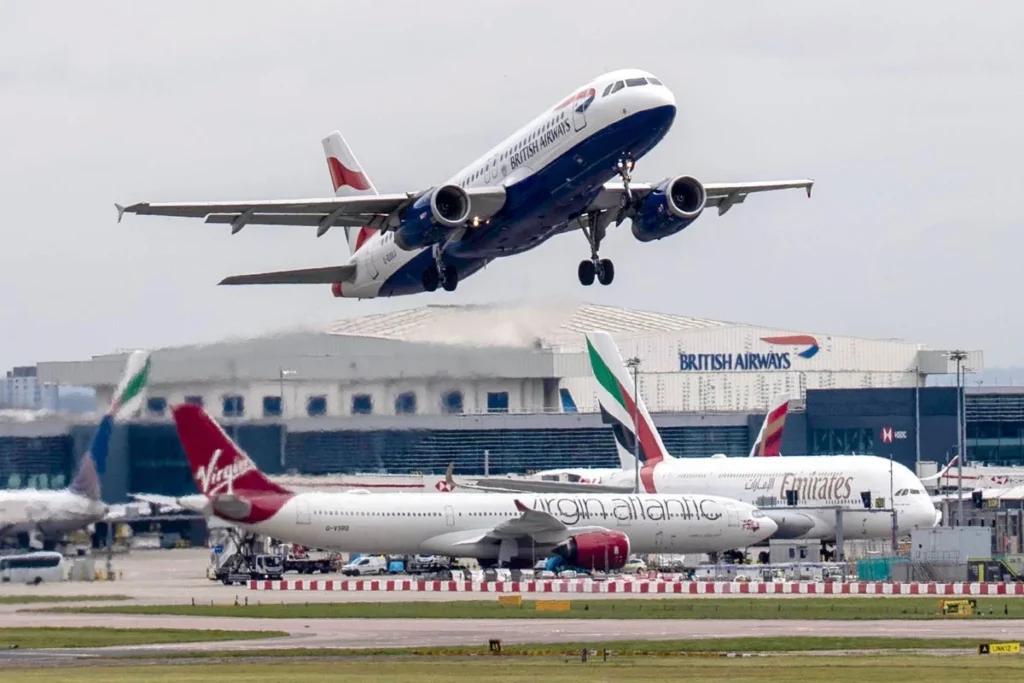

Heathrow passengers could see slightly higher airfares from 2028 after the Civil Aviation Authority allowed the airport to recover up to £320 million spent developing its third-runway proposal.
The costs will be collected through charges paid by airlines, which may pass them to customers through ticket prices. Recovery is expected to continue for 20 to 25 years, meaning passengers could contribute towards Heathrow’s early expansion work for decades.
How much will Heathrow passengers pay?
The CAA estimates that the decision will add approximately 15p to Heathrow’s maximum airport charge per passenger in 2028. The expansion-related addition is projected to rise to around 30p per passenger in subsequent years.
This is not a separate fee collected when passengers book a flight. Heathrow charges airlines for using the airport, and each carrier decides whether and how to include those costs in its fares.
Tickets will therefore not automatically increase by exactly 15p or 30p. Fuel prices, taxes, passenger demand and airline operating expenses will continue to have a much greater effect on the final fare. Those wider pressures have already affected UK aviation, including London flight cancellations linked to higher fuel costs.
Travellers can also see how another UK carrier responded to industry cost pressures in the Jet2 summer 2026 passenger update.
The final impact will be determined through the CAA’s H8 price-control review, which will establish the maximum regulated charges Heathrow can impose.
What does the £320 million cover?
The permitted amount covers eligible planning, engineering and design expenses incurred by Heathrow Airport Limited during 2025 and 2026. This includes work needed to create a credible expansion scheme and prepare documents for a future Development Consent Order application.
A Development Consent Order, or DCO, is the formal planning permission required for major infrastructure projects in England. Heathrow remains in the pre-application stage and plans to hold another public consultation later in 2026.
The £320 million is a cap stated in 2024 prices, not an automatic payment or unrestricted spending allowance. The CAA’s final Heathrow early-cost decision requires independent scrutiny, continuing cost reports and a retrospective efficiency review.
Heathrow must demonstrate that its expenditure was reasonable and that it took steps to prevent unnecessary duplication. The regulator can reopen the arrangements if circumstances change materially.
Heathrow West can recover £4.14 million
Heathrow West, the competing expansion scheme led by property businessman Surinder Arora, has also been allowed to recover approximately £4.14 million.
The amount covers eligible development work completed before November 25, 2025, when the government selected Heathrow Airport Limited’s northwest-runway proposal as the preferred basis for expansion planning.
The CAA said permitting limited recovery for the rival proposal was consistent with its responsibility to promote competition where appropriate. Costs incurred by Heathrow West during 2026 will be considered separately.
Has Heathrow’s third runway been approved?
No. The CAA decision only determines how early development costs may be recovered. It does not grant permission to build the runway or guarantee that construction will begin.
The government launched a consultation on a revised Heathrow Expansion National Policy Statement in June 2026. It sets the framework for assessing the project against four central tests: economic growth, climate change, air quality and noise.
The consultation runs until September 1, 2026. The government previously said it was working towards a final planning decision in 2029, but Heathrow must first prepare its full proposal and complete the DCO examination process.
What would Heathrow expansion include?
Heathrow’s preferred proposal includes a northwest runway of up to 3,500 metres, new or reconfigured terminal facilities and extensive supporting infrastructure.
Part of the M25 would need to be rerouted through new tunnels and bridges. Heathrow’s project estimate places the motorway work at about £1.5 billion, while the main expansion scheme is expected to cost approximately £33 billion.
The airport says the project would be privately financed and would not require taxpayer funding. Its plans could increase Heathrow’s annual capacity to about 756,000 flights and 150 million passengers.
The government has said expansion could create more than 60,000 local jobs and deliver economic benefits of up to £42 billion. Heathrow argues that additional capacity would offer passengers more destinations, greater airline competition and improved resilience at an airport that frequently operates close to its limits.
However, those figures remain projections. The design, total cost, financing structure and completion timetable could change during planning and regulatory scrutiny.
Read More:
Why British Airways and other airlines object
British Airways, Heathrow’s largest airline, has warned that allowing early cost recovery could make expansion less affordable for consumers and weaken the project’s economic case.
Airlines have long complained that Heathrow is already one of the world’s most expensive major hub airports. Their broader concern is that the initial 15p increase could be followed by much larger charges as planning, construction and financing expenses accumulate.
They also question whether passengers should pay for development work before the third runway receives final approval. If the project is delayed, redesigned or abandoned, some approved early costs may still have been incurred and recovered.
The CAA maintains that its cap, independent examination and efficiency reviews will help ensure that passengers fund only expenditure that is justified.
Can the CAA decision be appealed?
Heathrow Airport Limited and airlines operating at the airport have six weeks from the July 29 decision to lodge an appeal with the Competition and Markets Authority.
The regulator will also consult later in 2026 on arrangements for costs incurred from 2027 onwards. That separate process means the eventual passenger contribution could extend beyond the amounts approved so far, although further spending will require regulatory assessment.
Political uncertainty remains
Before the change in government, then-chancellor Rachel Reeves backed starting construction during the previous Parliament and targeted completion by 2035.
Prime Minister Andy Burnham has previously questioned whether Heathrow expansion would concentrate infrastructure spending in London at the expense of northern England. His position introduces uncertainty over the project’s political timetable, even as the existing consultation and planning processes continue.
For passengers, no expansion-related increase applies immediately. The first estimated addition is expected in 2028, and it is small compared with the current airport charge. The more important long-term question is how much further planning and construction expenditure will ultimately be allowed into Heathrow’s regulated charges.

Make Swikblog your go-to source on Google for reliable updates, smart insights, and daily trends.