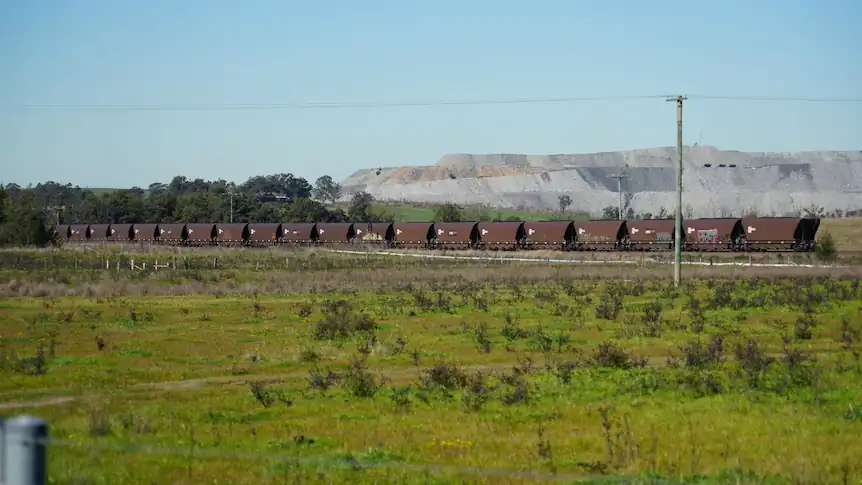

A fully loaded Pacific National coal train travelled unmanned for several kilometres through the NSW Hunter Valley after rolling downhill during a crew change. The incident began shortly after midnight on Saturday, July 25, 2026, at Camberwell, between Singleton and Muswellbrook.
The train passed through at least one level crossing and reportedly exceeded the 60km/h safe operating speed before stopping near Glennies Creek. No one was injured, and there was no collision, derailment or reported coal spill.
What happened to the Hunter Valley coal train?
The Pacific National service reportedly began moving independently while its crew was being changed at Camberwell. With no one aboard, the loaded train continued downhill for several kilometres.
Pacific National has not confirmed the exact distance, maximum speed, number of wagons or total weight. ABC News reported that it travelled faster than the 60km/h safe operating speed for that section.
How did the unmanned train stop?
Authorities have not officially explained what brought the train to a standstill. University of Sydney transport management specialist Geoffrey Clifton said a change in the track gradient may have slowed it, although this remains an expert assessment rather than an investigation finding.
There is no confirmed evidence that railway workers boarded the moving train or that an emergency braking system stopped it. Recorded data and signalling records are expected to help investigators establish what happened.
Were anyone injured or any damage reported?
No Pacific National employee or member of the public was injured. The train did not hit another service or leave the tracks.
The Australian Rail Track Corporation, which manages the Hunter Valley network, said one locomotive sustained significant wheel damage. It has not explained when the damage occurred or whether it was related to the reported speed.
Mechanical defects can create serious transport risks when they are not identified quickly. A separate Toyota HiLux recall involving possible steering failure similarly required inspections to protect vehicle occupants and other road users.
Why were services disrupted for 36 hours?
Passenger and coal movements were suspended while the train was secured, the locomotive was assessed and evidence was preserved. The line reopened shortly after midday on Sunday, July 26.
Rail services can remain affected after the immediate danger has passed because trains, crews and timetables must be repositioned. Timely public warnings are therefore important during major disruptions, as highlighted by the recent nationwide AusAlert mobile warning test.
Read More:
What is ONRSR investigating?
The Office of the National Rail Safety Regulator issued a Non-Disturbance Notice and deployed rail-safety officers, investigators and rolling-stock specialists.
The inquiry may examine train-securing procedures, the crew handover, braking equipment, recorded speed and communication with ARTC network control. These are possible areas of examination, not confirmed causes.
Pacific National said it was cooperating with the regulator. No date has been announced for the findings, so claims that brake failure or human error caused the incident remain unverified. Updates can be checked through the Office of the National Rail Safety Regulator.

Make Swikblog your go-to source on Google for reliable updates, smart insights, and daily trends.