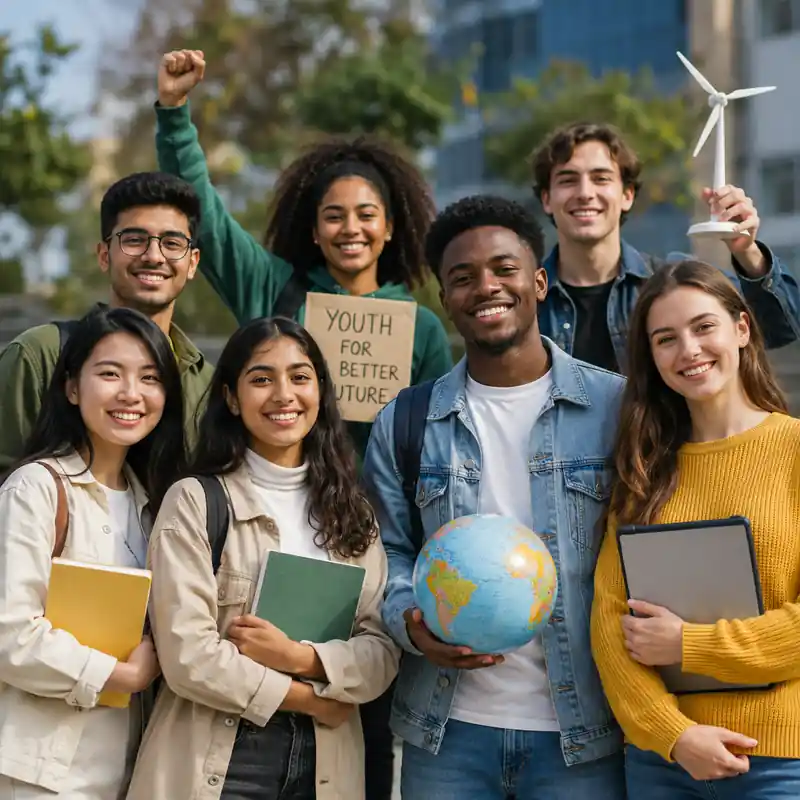

International Youth Day 2026 will be observed on Wednesday, 12 August, but this year’s message is less about a single celebration and more about a global contradiction: young people often want the same things, even when the opportunities around them are very different.
The United Nations has chosen “Different Contexts, Common Aspirations” as the official theme for 2026. It reflects the fact that education, decent work, good health, dignity, participation and a sustainable future remain common goals across borders, while the path to achieving them can depend heavily on geography, income, digital access and local institutions.
Why this year’s theme feels different
The 2026 focus gives particular attention to young people living in Least Developed Countries, Landlocked Developing Countries and Small Island Developing States. These places can face overlapping pressures such as poverty, climate exposure, isolation and weaker access to infrastructure or technology.
That makes the theme more practical than it first appears. It is not simply saying that young people have dreams. It asks whether systems are creating fair enough conditions for those ambitions to become realistic.
The UN has grouped the 2026 conversation around three ideas: global solidarity, shared challenges and youth innovation. The emphasis on innovation matters because young people are increasingly involved in climate projects, digital entrepreneurship, community campaigns and local problem-solving rather than waiting for institutions to act first.
India’s National Youth Day 2026 approaches youth empowerment from a different national tradition, but the overlap is clear: both observances place leadership, opportunity and participation at the centre of the youth debate.
From a UN resolution to a global observance
International Youth Day did not begin as a marketing campaign or social-media event. Its roots go back to international youth policy discussions in the 1990s.
At the 1991 World Youth Forum of the United Nations System in Vienna, young participants proposed the idea of an international day for youth. In 1998, the World Conference of Ministers Responsible for Youth in Lisbon recommended 12 August as the date.
The United Nations General Assembly endorsed the proposal in 1999 through Resolution 54/120, and the first International Youth Day was observed on 12 August 2000. Since then, the day has been used to bring attention to education, employment, participation, health and sustainable development.
The UN DESA explanation of the 2026 theme notes that young people in very different settings often share the same ambitions, even when climate risks, poverty or limited resources make those goals harder to reach.
The real issue is access, not ambition
There are about 1.2 billion people aged 15 to 24 worldwide, roughly 16% of the global population. That makes youth development a long-term economic issue as much as a social one.
A country can have a large, ambitious young population and still lose potential if schools, skills training, internet access or job creation fail to keep pace. The digital economy makes this gap especially visible. Online education and remote work can widen opportunity for some young people while excluding others who lack reliable connectivity or relevant skills.
Climate pressure adds another layer. Young people in vulnerable regions may be expected to lead adaptation and innovation while also living with the direct effects of extreme weather, migration pressures and limited local employment.
Practical programmes can make a difference when they move beyond slogans. The UK’s £132.5 million Every Child Can programme, for example, is designed to expand access to sport, arts, STEM and community activities, showing how youth policy can translate into specific opportunities.
International Students’ Day 2025: Stories, Challenges and a New Global Future
International Day of Living Together in Peace 2026: Theme, Meaning and Importance
What 12 August 2026 should put under the spotlight
The value of International Youth Day will not be measured by how many messages are posted on 12 August. A more useful test is whether young people can see real routes into education, work, leadership and decision-making after the campaigns end.
“Different Contexts, Common Aspirations” works because it avoids pretending that every young person starts from the same place. At the same time, it rejects the idea that location or income should define how much opportunity someone deserves.
For policymakers, schools, employers and communities, that is the central challenge behind International Youth Day 2026: understand the differences in young people’s lives without lowering the expectations for what they should be able to achieve.

Make Swikblog your go-to source on Google for reliable updates, smart insights, and daily trends.