
McDonald’s has won another important round in its long-running trademark dispute with Irish fast-food chain Supermac’s after the European Union Intellectual Property Office rejected Supermac’s latest appeal. The ruling means Supermac’s cannot secure the EU-wide trademark registration it sought because officials found a likelihood of confusion with McDonald’s well-known Big Mac trademark.
The decision does not stop Supermac’s from trading in Ireland, where it has operated for decades. Instead, it affects the company’s ability to secure broader trademark protection across the European Union, which could matter if it expands further into European markets.
Why Supermac’s lost its appeal
The EUIPO Board of Appeal concluded that the Supermac’s branding at issue was too close to the earlier Big Mac trademark for some English- and German-speaking consumers.
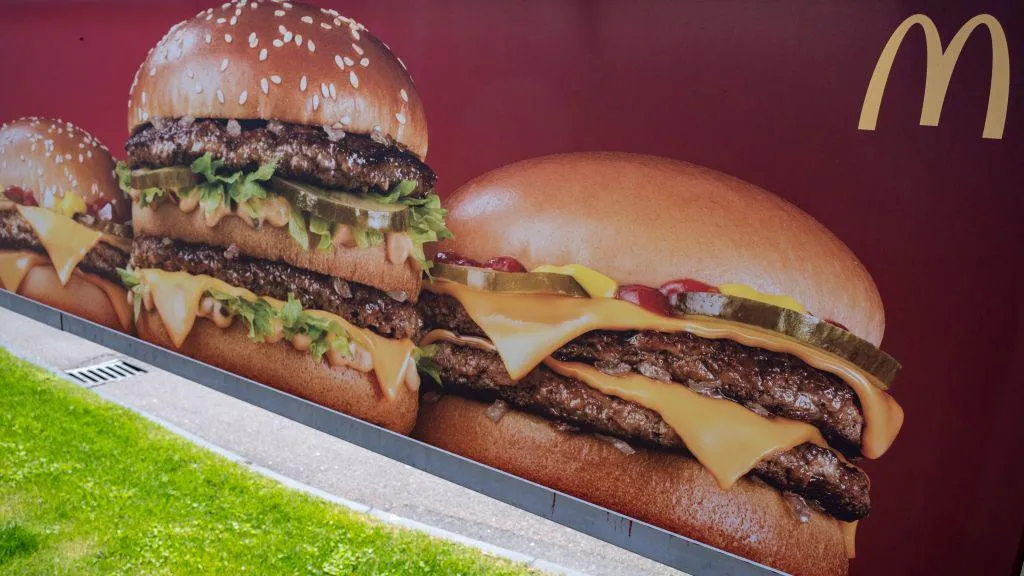
A key factor was the strength of the Big Mac name. The EUIPO found that Big Mac enjoys a very high level of public awareness and has gained an “enhanced degree of distinctiveness” through extensive use and recognition across the EU.
That matters because highly distinctive trademarks generally receive broader protection. The EUIPO said it could not rule out the possibility that consumers might interpret Supermac’s as a sub-brand, variation or another line of meat sandwiches linked to Big Mac.
The European Union Intellectual Property Office’s Boards of Appeal handles appeals involving EU trademark decisions.
What Supermac’s argued
Supermac’s said the two businesses had coexisted in Ireland for around 40 years without evidence of significant customer confusion.
The Irish chain argued that consumers understand Supermac’s is a restaurant business while Big Mac is a McDonald’s burger. It maintained that a reasonable customer would not enter a Supermac’s restaurant expecting to buy a Big Mac.
Supermac’s also argued that McDonald’s own evidence about the strong recognition of Big Mac worked against the confusion claim. If consumers associate Big Mac so closely with McDonald’s, it said, they should also understand that Supermac’s is a separate company.
Why McDonald’s said Ireland was not enough
McDonald’s argued that the legal question concerned potential conflict across the entire European Union, not just Ireland.
The company also said consumers do not always draw a clear distinction between restaurant names and food product names. According to McDonald’s, the boundaries between a restaurant brand and its menu products can be blurred in the minds of consumers.
The EUIPO agreed that evidence of peaceful coexistence in one member state was not enough to eliminate the possibility of confusion elsewhere in the EU.
Does Supermac’s have to change its name?
No. The ruling does not require Supermac’s to change its name or stop operating in Ireland.
The dispute concerns its attempt to obtain EU-wide trademark registration and whether that registration conflicts with McDonald’s earlier rights. Supermac’s can continue trading under its established name in Ireland.
How the trademark battle developed
Supermac’s was founded by Pat McDonagh in Galway in 1978. McDonald’s Big Mac trademark has been registered in the EU for meat sandwiches since December 1998.
Supermac’s applied for EU trademark protection in May 2016, but McDonald’s opposed the application.
- 1978: Supermac’s is founded in Galway.
- 1998: Big Mac receives EU trademark protection for meat sandwiches.
- 2016: Supermac’s applies for an EU trademark.
- 2024: Supermac’s wins a separate case limiting some Big Mac trademark rights.
- 2025: Its trademark application suffers another setback.
- 2026: The EUIPO Board of Appeal rejects its latest appeal.
McDonald’s Chained Worker Photo Investigation: What Officials and Fact-Checkers Found
Subway Closes 729 U.S. Restaurants as McDonald’s Intensifies the Fast-Food Battle
Visit the homepage for the latest restaurant news, fast-food updates and consumer stories
Why the 2024 Supermac’s victory was different
In 2024, Supermac’s won an important case at the Court of Justice of the European Union involving McDonald’s Big Mac trademark.
The court found that McDonald’s had not demonstrated sufficient genuine use of the Big Mac trademark for certain chicken products. McDonald’s therefore lost part of its exclusive protection in that category.
That ruling did not cancel Big Mac protection for the classic beef burger. The latest case deals with a different issue: whether Supermac’s own proposed trademark can coexist with McDonald’s earlier rights.
The dispute reflects broader questions about how major companies protect familiar brand names, similar to a trademark dispute involving Google and Hindware in India.
What the ruling means for expansion
An EU trademark gives a business a single layer of protection across member states. That can help when opening restaurants, licensing a brand, signing franchise agreements or challenging similar names.
Without the registration it sought, Supermac’s could face a more complicated trademark landscape if it expands further into Europe.
For McDonald’s, the decision strengthens protection around one of its best-known products while the company continues investing in other parts of its restaurant business, including an AI-powered drive-thru system developed with Google.
The case also shows that decades of coexistence in one country do not automatically guarantee EU-wide trademark rights. Consumer perception, language, product categories and the reputation of an earlier mark can all influence the outcome.

Make Swikblog your go-to source on Google for reliable updates, smart insights, and daily trends.