Japan’s equity market opened the week with a decisive relief rally, pushing the Nikkei 225 sharply higher as investors reacted to a snap-election outcome that delivered Prime Minister Sanae Takaichi’s governing bloc a stronger grip on power. The move was about more than a single day’s price action: it signaled a market repricing of political risk after weeks in which Japan’s fiscal debate had started to spill into bond volatility and currency nerves.
By late morning in Tokyo, the Nikkei 225 was up about 4.7% at 56,788.85 after briefly topping the 57,000 level earlier in the session. Traders framed it as a classic “uncertainty discount” unwinding: a clear mandate tends to reduce the risk premium, especially in a market that has been sensitive to policy headlines. In practical terms, investors saw fewer near-term obstacles to budget and growth measures, and less likelihood of last-minute parliamentary bargaining that can dilute or delay fiscal plans.
The election math mattered. Japan’s lower house has 465 seats, and the threshold for a two-thirds supermajority is 310. Early vote counts indicated the Liberal Democratic Party (LDP) alone secured 316 seats, and the governing coalition cleared the two-thirds line overall, giving the administration more room to move legislation through the chamber. For markets, that kind of margin can be as important as the headline win because it reduces the chance that key economic bills become hostage to small factions or procedural delays.
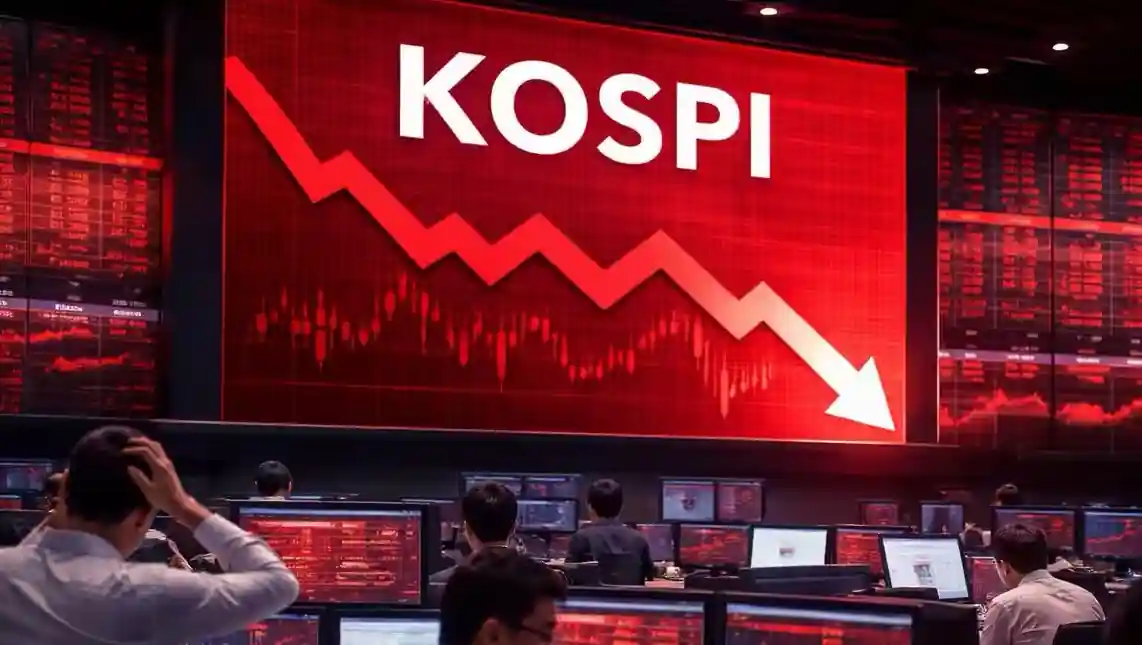
Asia broadly joined the rally. South Korea’s Kospi surged about 4.3% to 5,308.84, while Hong Kong’s Hang Seng rose about 1.5% to 26,963.25 and China’s Shanghai Composite gained roughly 1.2% to 4,112.92. Australia’s S&P/ASX 200 climbed around 1.9% to 8,873.60. The synchronized jump suggested a “risk-on” tone across the region, helped by a strong rebound in U.S. equities at the end of last week and a renewed bid for large-cap technology.
Market snapshot
| Benchmark | Level | Move | What stood out |
|---|---|---|---|
| Nikkei 225 | 56,788.85 | ~+4.7% | Briefly topped 57,000; record-setting surge |
| Kospi | 5,308.84 | ~+4.3% | Regional risk-on wave |
| Hang Seng | 26,963.25 | ~+1.5% | Follow-through from global rebound |
| Shanghai Composite | 4,112.92 | ~+1.2% | Steady gains across mainland China |
| S&P/ASX 200 | 8,873.60 | ~+1.9% | Broad risk appetite improved |
Currency and rates added texture to the story. The U.S. dollar eased slightly against the yen, trading around 156.85 per dollar versus about 157.19 late in the prior session. That move wasn’t dramatic, but it fit the broader theme of calmer pricing as political uncertainty receded. In Japan, the interplay between stocks, the yen, and long-dated government bonds has been unusually tight because markets have been weighing the costs of any new fiscal promises against the reality of Japan’s towering public-debt load.
Those concerns surfaced sharply in late January when Japan’s bond market saw an historic sell-off. The 40-year government bond yield pushed above 4% for the first time since 2007, while the 30-year yield jumped by nearly 30 basis points in a single session to around 3.9%. The catalyst wasn’t an earnings report or a sudden inflation print; it was politics—specifically, the snap-election call and talk of tax relief that investors feared could widen the fiscal gap.
The government’s proposals were sizable. The promised two-year suspension of an 8% consumption tax on food carried an estimated annual revenue hit of roughly ¥5 trillion, while a separate spending package was floated at about ¥21.5 trillion. Japan can finance ambitious programs, but the bond market has become increasingly sensitive to whether new measures are funded, phased, or paired with credible medium-term discipline—especially with debt-to-GDP hovering near 240%, a figure that continues to shape global investor perceptions.
Quick visual: what markets were watching
Long-dated Japan bond yields (recent spike levels)
Investors saw the election as a hinge moment: either fiscal policy would look more coherent, or concerns about debt and unfunded measures could re-ignite bond-market pressure.
The Bank of Japan’s stance has been part of the backdrop as well. After raising its key interest rate to 0.75% in December to continue normalizing policy, the central bank subsequently held steady, giving the economy time to absorb tighter settings while officials assessed the market’s reaction. Updated growth expectations also nudged higher, with projections around 0.9% for 2025 and 1% for the current fiscal year—figures that help explain why equity investors can stay constructive even as bond investors demand more compensation for duration risk.
For equity investors, the election result stitched these threads together into a single trade: political clarity, a steadier policy runway, and a reduced chance that near-term budgeting gets stuck. That doesn’t erase the hard questions. Japan’s fiscal arithmetic remains unforgiving, and any attempt to boost households through tax relief or stimulus will be judged by how it is financed, how temporary it is, and how it interacts with inflation and wage dynamics. But markets don’t wait for perfect certainty; they reprice on the margin, and Monday’s surge showed how quickly sentiment can shift when the biggest unknown is removed.
Looking ahead, the immediate test is execution: the government’s ability to translate an enlarged mandate into a coherent budget path that supports growth without spooking the bond market again. If long-dated yields remain volatile, the yen and equity leadership could swing quickly, particularly in sectors most sensitive to rates and currency moves. For now, the Nikkei’s leap captured a simple message from traders: the market prefers a clear winner to a fragile compromise.
Read the full market wrap and election-driven trading details in this report from The Associated Press .
For more global market coverage, visit Swikblog.

Make Swikblog your go-to source on Google for reliable updates, smart insights, and daily trends.