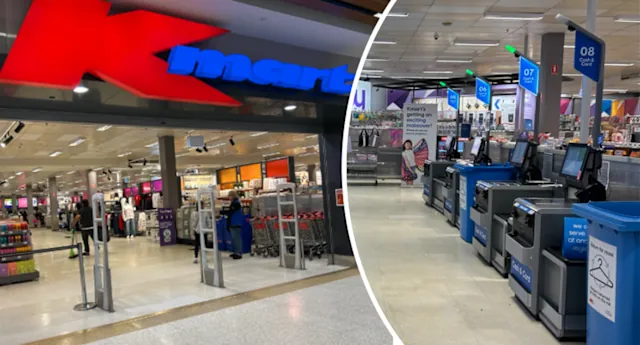

Kmart is bringing front registers back to more Australian stores, reversing a checkout strategy that shaped the retailer’s shopping experience for more than a decade. The change marks a notable shift for one of Australia’s biggest discount chains and comes as Kmart pushes ahead with store upgrades, homewares expansion, international growth and new digital shopping tools.
The retailer first began moving checkouts from the front entrance to the centre of stores in 2012. The layout was designed to reduce congestion near exits and improve the flow of customers through the store. By 2018, the format had become common across much of Kmart’s network. While the idea was built around efficiency, many shoppers felt the centre-checkout model made leaving the store less convenient after paying.
Kmart is now changing direction through its newer “Plan C+” format. The updated layout brings registers closer to the front of stores and adds entry and exit gates, while also changing how departments are presented. The format is designed to improve store navigation, make product displays more visible and create a stronger shopping experience across categories such as beauty, home and everyday essentials.
The shift is already being tested across the retailer’s network. Kmart has converted 16 stores to the new format and plans to expand the rollout to 40 stores by the end of the 2026-27 financial year. With about 300 Kmart stores across Australia, the rollout is still selective, but it shows the company is taking the results seriously.
Kmart Group managing director Aleksandra Spaseska told analysts the redesigned format is delivering higher sales, stronger cross-shopping between departments, more items per basket and better engagement from younger customers. That makes the checkout reversal more than a customer-service decision. It is also a commercial move aimed at making each store more productive.
The change reflects a wider retail trend where store layouts are being shaped around customer behaviour as much as operational efficiency. A checkout location can influence how shoppers move through a store, how long they browse, what extra products they notice and how easy the final part of the shopping trip feels. For Kmart, returning registers to the front may help remove one of the biggest friction points in its store experience.
The redesign also comes as Kmart tests new ways to grow beyond its standard discount-store model. One major example is the K Home store opening in Melbourne’s Box Hill, a standalone concept focused on furniture, décor and homewares. The format is designed to showcase room-style displays and larger product ranges that are harder to present inside a traditional Kmart store.
Homewares has become an important category for value retailers as shoppers look for affordable ways to improve their living spaces. A dedicated K Home format gives Kmart a chance to compete more directly in furniture and home styling while strengthening the Anko brand across higher-consideration purchases.
Kmart is also expanding Anko internationally. Five standalone Anko stores have already opened in the Philippines, with another five planned by the end of the 2026-27 financial year. The expansion gives Kmart a way to test whether its private-label, value-focused product model can gain traction outside Australia.
Technology is another part of the retailer’s growth plan. Kmart recently introduced Joy, an AI-powered shopping assistant for online customers. The tool is designed to help shoppers discover products, try fashion items virtually and visualise home products in their own space before buying.
Read More
Kmart’s latest initiatives were outlined during Wesfarmers’ 2026 Strategy Briefing Day, where the group discussed store upgrades, digital investment and growth opportunities across its retail businesses. Further company material is available through Wesfarmers investor presentations.
For shoppers, the most obvious change will be simple: checkouts returning closer to the exit. For Kmart, the bigger question is whether the Plan C+ format can keep delivering stronger sales and larger basket sizes as it moves into more stores.
The reversal shows that even a long-running retail layout can be changed when customer feedback and performance data point in another direction. Kmart is not only bringing back front registers; it is reshaping how its stores, homewares strategy, international brand expansion and online shopping tools work together.

Make Swikblog your go-to source on Google for reliable updates, smart insights, and daily trends.