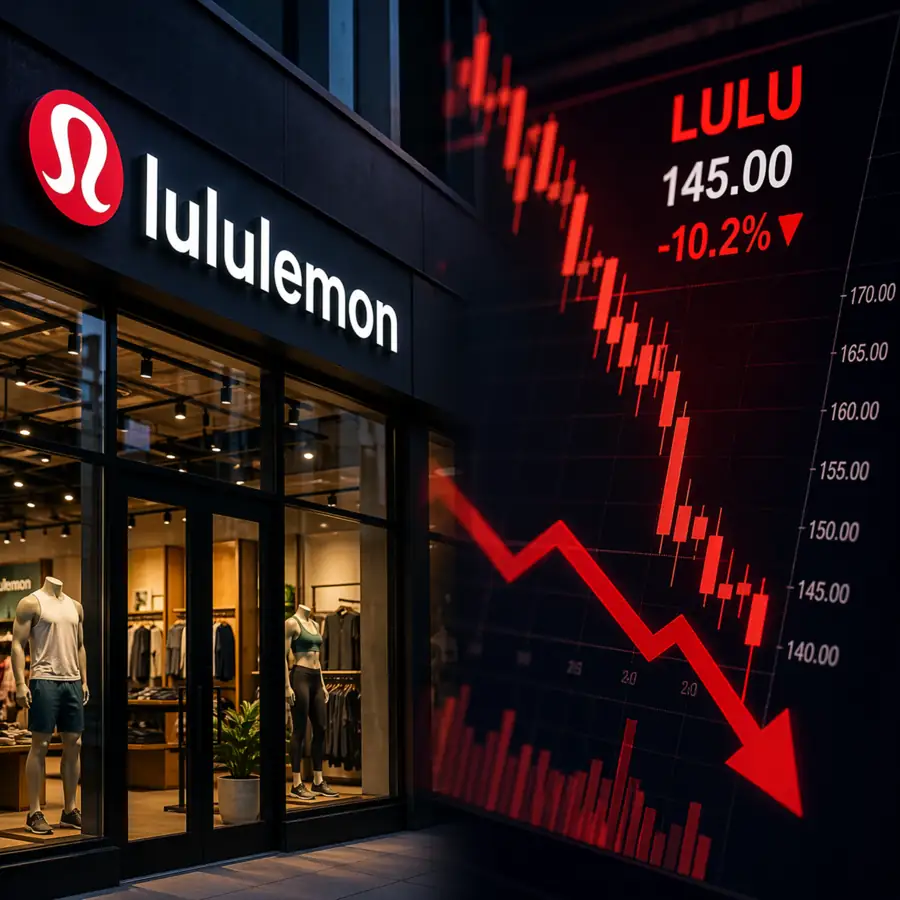

Lululemon (NASDAQ: LULU) stock plunged sharply, dropping around 10% to near $145 after the company announced a new CEO, triggering one of its most aggressive single-day selloffs in recent months. The reaction was immediate and decisive, highlighting how fragile investor confidence has become around the premium athleisure brand.
The stock opened near $151.59 but quickly lost momentum, sliding to an intraday low of approximately $143 before stabilizing slightly. At last check, shares were trading around $144–$145, representing a decline of roughly 11%+ on the day. This move pushes LULU further into a prolonged downtrend, with the stock already down more than 30% in 2026 and nearly 40% over the past year. :contentReference[oaicite:0]{index=0}
Key Market Snapshot
Current Price: ~$144.29
Daily Drop: ~10%–12%
Day Range: $143 – $157
YTD Decline: ~30%+
1-Year Decline: ~40%
Market Cap: ~$17B
The sharp decline followed lululemon’s announcement that Heidi O’Neill, a longtime Nike executive with over three decades of experience, will take over as CEO starting September 8, 2026. While the appointment brings deep industry expertise, investors reacted negatively to both the timing and uncertainty surrounding the transition.
One key concern is the delay. With O’Neill not taking charge until September, lululemon will continue operating under interim leadership for several more months. In a company already dealing with slowing momentum, that gap is being viewed as a risk rather than a stabilizing factor. Analysts also flagged that O’Neill has no prior CEO experience, which adds another layer of execution uncertainty at a critical time for the business. :contentReference[oaicite:1]{index=1}
The leadership change comes after former CEO Calvin McDonald stepped down earlier this year, following increasing pressure from investors and the company’s founder. The brand has been navigating a complex mix of internal and external challenges, including governance disputes, activist investor involvement, and growing competition from emerging athleisure players. :contentReference[oaicite:2]{index=2}
Underneath the leadership headlines, lululemon’s fundamentals tell a mixed story. The company’s most recent results showed that it remains profitable but is losing momentum in key markets. For the fourth quarter of fiscal 2025, lululemon reported revenue of $3.6 billion, up just 1% year over year, with diluted earnings per share of $5.01. Full-year revenue reached $11.1 billion, with EPS of $13.26. :contentReference[oaicite:3]{index=3}
However, the underlying trends raised concerns. North America — historically lululemon’s strongest market — saw revenue decline by around 4%, while international growth of roughly 17% helped offset some of the weakness. :contentReference[oaicite:4]{index=4} This divergence has become a central issue for investors, as the company struggles to maintain its dominance in the U.S. while expanding globally.
Margins have also come under pressure. Gross profit declined 8%, and operating income fell more than 20%, reflecting rising costs, inventory challenges, and weaker pricing power. :contentReference[oaicite:5]{index=5} These trends suggest that lululemon is transitioning from a high-growth premium brand into a more mature, competitive retail story.
Beyond financials, broader brand concerns are starting to weigh heavily on sentiment. Analysts have pointed to issues around product relevance, quality concerns, and intensifying competition from brands like Vuori and Alo Yoga. At the same time, criticism from founder Chip Wilson and pressure from activist investors have added governance uncertainty into the mix. :contentReference[oaicite:6]{index=6}
This combination of factors is reflected in the stock’s valuation reset. LULU now trades at a significantly lower multiple compared to its historical premium, with earnings growth slowing and investor expectations being recalibrated. While the company still generates strong cash flow and maintains a globally recognized brand, the market is clearly demanding clearer signs of recovery before re-rating the stock.
For bullish investors, the argument is that lululemon remains fundamentally strong. The brand still commands pricing power, has a loyal customer base, and continues to expand internationally. If the new leadership can stabilize North American sales and reinvigorate product innovation, the current valuation could offer long-term upside.
For now, however, the market’s message is clear. The CEO announcement alone was not enough to restore confidence. Instead, it reinforced the view that lululemon is still in the middle of a broader transition — one that will require execution, not just leadership changes, to turn sentiment around.
Investors will now be watching closely for upcoming earnings updates, guidance revisions, and early signals from the incoming CEO. Until then, LULU remains a stock driven less by its past success and more by whether it can prove that its next chapter will deliver growth again.
For official financial results and updates, visit lululemon’s investor relations page.
You May Also Like
- Netflix Stock Gains on Nasdaq as NFLX Backs $25B Buyback Plan
- More Stock Market News and Finance Updates on Swikblog

Make Swikblog your go-to source on Google for reliable updates, smart insights, and daily trends.