
Written by: Andrés Villamizar , Latin America political analyst
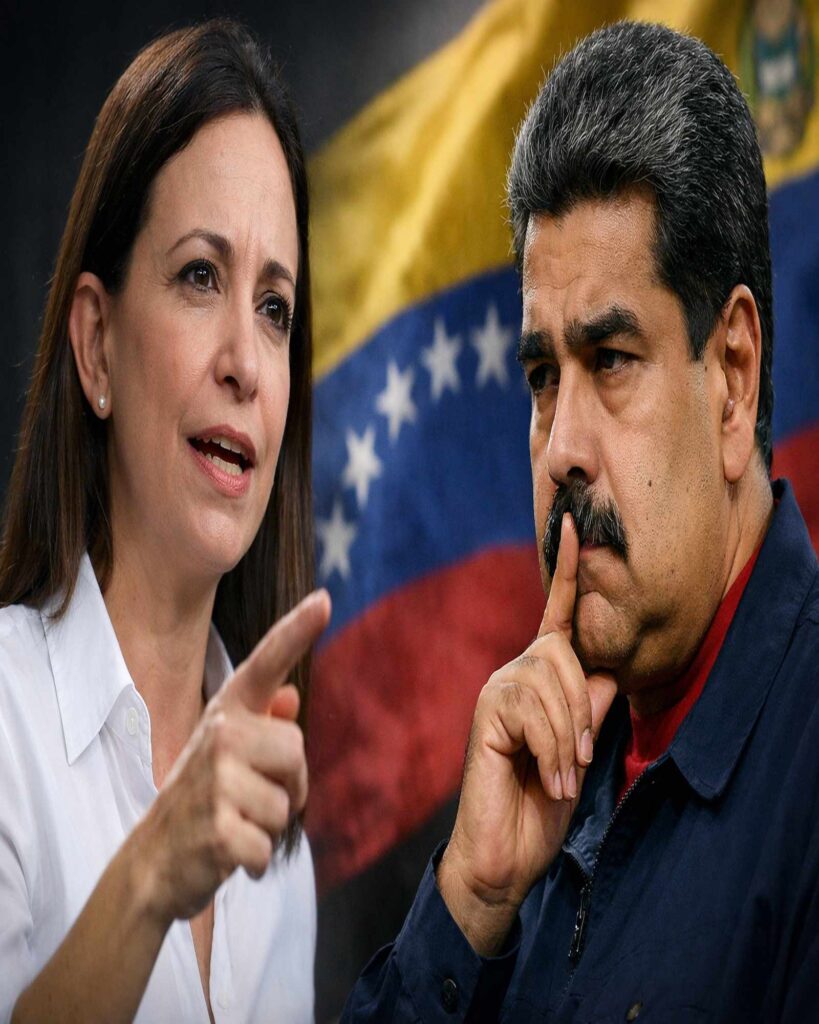
Donald Trump’s claim that Venezuelan president Nicolás Maduro and members of his family were captured following an attack on Venezuela has jolted a political landscape long defined by stalemate. The claim has not been independently verified, but its political impact has been immediate, reopening with unusual force the question of who could lead Venezuela if Maduro’s grip on power is broken.
At the centre of that discussion stands María Corina Machado, the opposition figure who commands the widest domestic mobilisation and international recognition. For years, Machado’s challenge to Maduro has been constrained not by lack of support but by institutional barriers designed to keep her out of office. Trump’s remarks, echoed rapidly across diplomatic and media circles, have suddenly made those constraints appear less immovable.
“Even the perception that Maduro could be removed alters the internal balance,” said Michael Shifter, president emeritus of the Inter-American Dialogue. “Venezuela’s system depends on cohesion more than legality. Once uncertainty enters, loyalties are reassessed.”
That uncertainty, however, does not translate automatically into a transfer of power. Machado remains formally barred from holding public office under rulings upheld by Venezuela’s top court — decisions criticised by international observers but still enforced by state institutions. Those institutions, from the armed forces to the intelligence services, have outlasted individual leaders before.
If Maduro were genuinely neutralised or sidelined, the most immediate outcome would likely be an effort by senior officials and military commanders to preserve continuity. An interim authority could emerge, justified as a stabilising necessity. In such a scenario, Machado would not step directly into the presidency, but she would almost certainly become the central civilian reference point shaping both domestic expectations and international calculations.
For some analysts, that influence could prove decisive even without formal office. “Transitions don’t begin with elections; they begin with legitimacy,” said Cynthia Arnson, former director of the Wilson Center’s Latin America Program. “Machado already has a mandate in the eyes of many Venezuelans and foreign governments. The unresolved question is whether institutions follow.”
A more ambitious possibility is that Trump’s claim accelerates negotiations that have repeatedly stalled in the past. Under pressure from elite fractures, economic exhaustion or diplomatic isolation, parts of the current system could accept a transition pact. Such agreements often include guarantees for outgoing powerholders and the lifting of political bans — a prerequisite for Machado to compete openly for leadership.
Related: Maduro ‘Inner Circle’ and Family Captured? What We Know So Far About the Claim | Caracas Explosions and Live Reactions: Venezuela in Crisis
History, however, argues for caution. The same security structures that have protected Maduro could survive his absence, recalibrating rather than collapsing. Machado would then remain outside the state, leading politically but not institutionally, while the regime adapts under new figures.
There is also the risk of fragmentation. An abrupt removal of Maduro without a clear succession framework could produce competing claims to authority, with interim administrators, opposition leaders and foreign governments advancing rival visions of legitimacy. In such circumstances, Machado’s international standing could carry as much weight as control over ministries or barracks.
What Trump’s claim has undeniably done is unsettle the assumption that Venezuela’s future is indefinitely frozen. For Machado, this moment represents neither accession nor resolution, but an opening — shaped less by law than by power, loyalty and timing. Whether she emerges as president, transition architect or the enduring voice of opposition will depend on who controls the institutions when uncertainty hardens into reality.

Make Swikblog your go-to source on Google for reliable updates, smart insights, and daily trends.