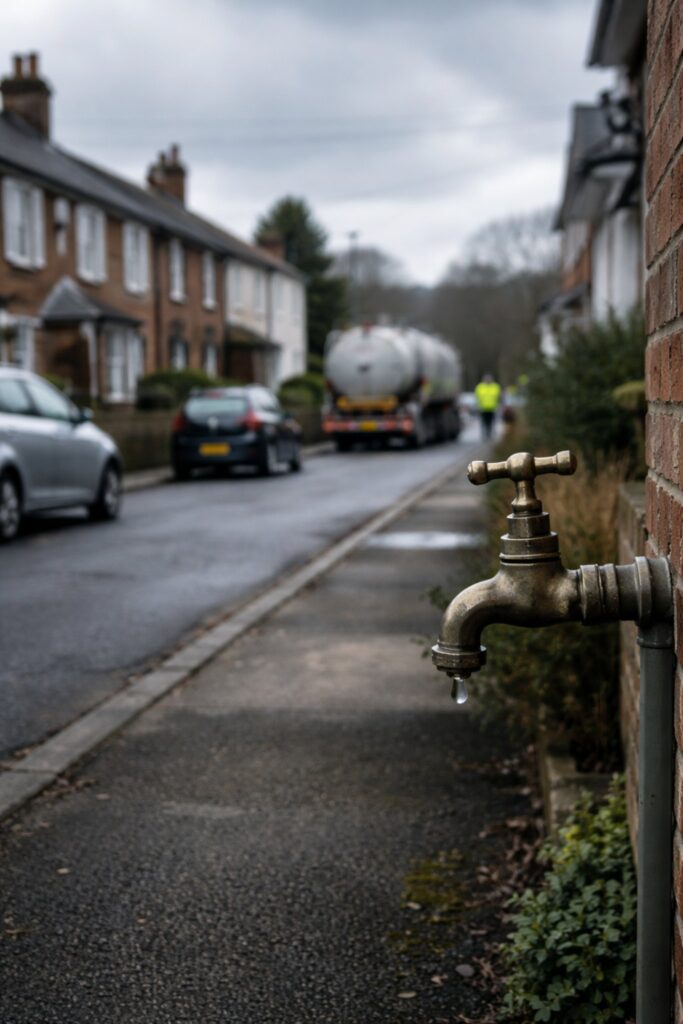

Thousands of households across Kent and Sussex have been left without running water after a major incident was declared, triggering emergency measures and fresh scrutiny of South East England’s water infrastructure.
Large parts of the South East woke up to dry taps after widespread supply failures led Sky News and the BBC to report that tens of thousands of properties were affected. The disruption has hit homes, schools, care facilities and businesses, with some residents reporting they had been without water for days.
What happened?
The incident centres on operational problems within the network operated by South East Water, which supplies drinking water to more than two million customers across Kent, Sussex and parts of Surrey and Hampshire.
The company confirmed that a combination of infrastructure failures and system pressure led to significant drops in water supply, prompting local resilience forums to declare a major incident. Emergency response plans were activated as engineers worked to stabilise the system and restore service.
Water tankers and bottled water distribution points were deployed in the worst-affected areas, with priority given to vulnerable residents, hospitals and care homes.
Areas affected
While the situation has been changing hour by hour, significant disruption has been reported across parts of Kent and East and West Sussex, including towns and villages where water pressure dropped to near zero.
Local councils urged residents to check official updates before travelling to collection points and warned that restoration times could vary depending on location.
Impact on residents and services
For many households, the lack of running water has made basic daily tasks impossible. Residents described being unable to cook, wash or flush toilets, while parents raised concerns about school closures and childcare disruption.
Businesses such as cafés, hairdressers and small retailers were also forced to shut temporarily, adding to the economic impact of the outage.
Emergency planners stressed that while bottled water was being supplied, the situation highlighted how quickly modern life is affected when essential utilities fail.
Response from South East Water
South East Water said engineers were working around the clock to bring the system back online and restore pressure safely. The company apologised for the disruption and acknowledged the frustration felt by customers.
It warned that restarting large sections of the network must be done carefully to avoid further damage or contamination, meaning some areas could experience intermittent supply before full restoration.
Customers were advised to keep taps turned off until supplies returned and to check for leaks or discoloured water once service resumed.
Regulators and political reaction
The scale of the outage has drawn the attention of regulators and politicians. The water industry watchdog Ofwat said it was monitoring the situation closely and would assess whether the company had met its obligations to customers.
Local MPs demanded answers over how such a large-scale failure could occur and called for assurances that lessons would be learned to prevent a repeat.
Consumer groups also renewed calls for greater investment in ageing water infrastructure, arguing that repeated incidents risk undermining public trust.
Is this part of a bigger problem?
The South East Water incident comes amid growing concern about the resilience of the UK’s water network, particularly in regions facing population growth, climate pressure and ageing pipes.
Industry experts have warned that prolonged dry weather, sudden demand spikes and historic under-investment have increased the risk of major failures, especially during winter cold snaps or summer heatwaves.
While water companies insist billions are being spent on upgrades, critics argue that progress has been too slow — and that customers are paying the price.
What residents should do now
Residents in affected areas are advised to:
- Check official updates from South East Water and local councils
- Use bottled water sparingly and prioritise drinking and hygiene
- Assist vulnerable neighbours where possible
- Report ongoing issues once supplies are expected to have returned
Anyone experiencing prolonged disruption or property damage may also be entitled to compensation under guaranteed standards schemes.
What happens next?
As supplies gradually return, attention is likely to shift toward accountability and long-term solutions. Regulators are expected to review the incident in detail, while local leaders push for clearer answers on infrastructure resilience.
For thousands of families across Kent and Sussex, the priority remains simple: getting reliable, safe water back into their homes — and reassurance that a crisis of this scale will not happen again.
Related: How infrastructure failures disrupt daily life across the UK

Make Swikblog your go-to source on Google for reliable updates, smart insights, and daily trends.