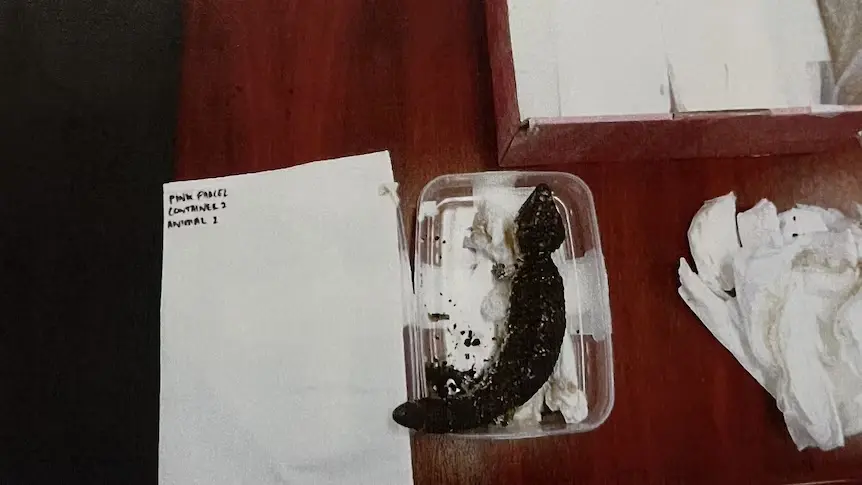

A New South Wales man has been fined $31,000 after attempting to mail 65 wild reptiles from Western Australia in two parcels. Four animals died and another 51 were euthanised because of their poor condition, leaving only 10 able to be rehomed.
Nicholas Thomas Havet, 28, was found guilty of six charges of exporting fauna without lawful authority. Northam Magistrates Court heard he travelled to WA twice in 2023, captured reptiles from the wild and tried to send them to NSW for financial gain.
Which reptiles were found?
Australia Post intercepted the parcels at Perth Airport. Wildlife officers found bobtail lizards, western blue-tongue lizards, thorny devils, ornate crevice dragons, geckos and variegated dtellas.
Almost 85 per cent of the seized animals either died or required euthanasia. Magistrate Sarah Wisbey said Havet exposed the reptiles to “cruel and inhumane treatment”.
How the operation unfolded
Prosecutors said Havet travelled from NSW to Western Australia twice between March and April 2023. He rented a vehicle in Perth and travelled through regional areas, including the Wheatbelt and the state’s north-west.
CCTV showed Havet buying two parcels at a post office in Narembeen, about 290 kilometres east of Perth. He then lodged the reptile-filled packages in Merredin, approximately 70 kilometres away.
The court heard he had been in WA for four days when authorities apprehended him at Port Hedland Post Office, roughly 1,500 kilometres north of Merredin. He was waiting to collect a delivery at the time.
What investigators found
A search of Havet’s rental vehicle uncovered plastic containers with air holes drilled into them, an endoscope camera and two mobile phones.
Prosecutors also said he had previously lodged five parcels suspected of containing lizards. Those packages were successfully delivered, but the court report did not disclose how many animals they may have contained or what happened to them.
Why were the reptiles valued so highly?
Prosecutors estimated the reptiles’ potential black-market value at between $65,000 and $1.3 million. The range does not mean Havet earned that amount.
Illegal prices can vary according to species, age, sex, rarity, condition and destination. Australian reptiles may command substantially higher prices in overseas exotic-pet markets. However, authorities did not allege that these two parcels were being exported internationally; their intended destination was NSW.
The case reflects the profits associated with restricted animals and wildlife products. Australian authorities have previously made other unusual seizures, including 100,000 illegally imported cockroaches valued at AU$200,000.
What penalty did Havet receive?
Havet was convicted in absentia after failing to attend a July court hearing. He was also absent from his sentencing.
Each of the six charges carried a maximum fine of $50,000, creating a possible combined maximum of $300,000. The court instead imposed total fines of $31,000. No prison sentence was reported.
Magistrate Wisbey described the activity as an “illegal operation for profit”. The convictions concerned the unauthorised export of fauna from Western Australia.
Why were 51 reptiles euthanised?
Authorities said the animals were euthanised because of their poor condition but did not release individual veterinary findings.
Ordinary postal packaging cannot provide the carefully controlled temperature, ventilation, hydration and separation reptiles may require. Parcels can also be stacked, moved repeatedly and exposed to changing temperatures. Such conditions create risks of dehydration, crushing, injury and prolonged stress.
The decision to rehome 10 reptiles shows that the animals were assessed according to their condition rather than all being automatically destroyed after seizure.
Read More:
Can native reptiles legally be mailed interstate?
Native reptiles cannot simply be captured in WA and sent to another state. Taking animals from the wild, possessing them and exporting them from Western Australia are separately regulated activities that may require specific licences or lawful authority.
The WA fauna licensing guidelines place reptiles such as bobtails, western blue-tongues and variegated dtellas in regulated pet-keeping categories. A pet-keeper licence does not provide unrestricted permission to collect wild animals or transport them interstate.
Why this case matters
The immediate toll was 55 lost reptiles, but illegal collection can also reduce wildlife populations and remove animals from their natural habitats.
Australian controls can apply to live animals and wildlife products. In another enforcement case, an alligator skin was seized at an Australian airport despite being declared, because declaration does not replace required permits.
The Havet investigation demonstrates how postal screening, CCTV, rental-vehicle searches and travel records can expose suspected wildlife trafficking across large distances.

Make Swikblog your go-to source on Google for reliable updates, smart insights, and daily trends.