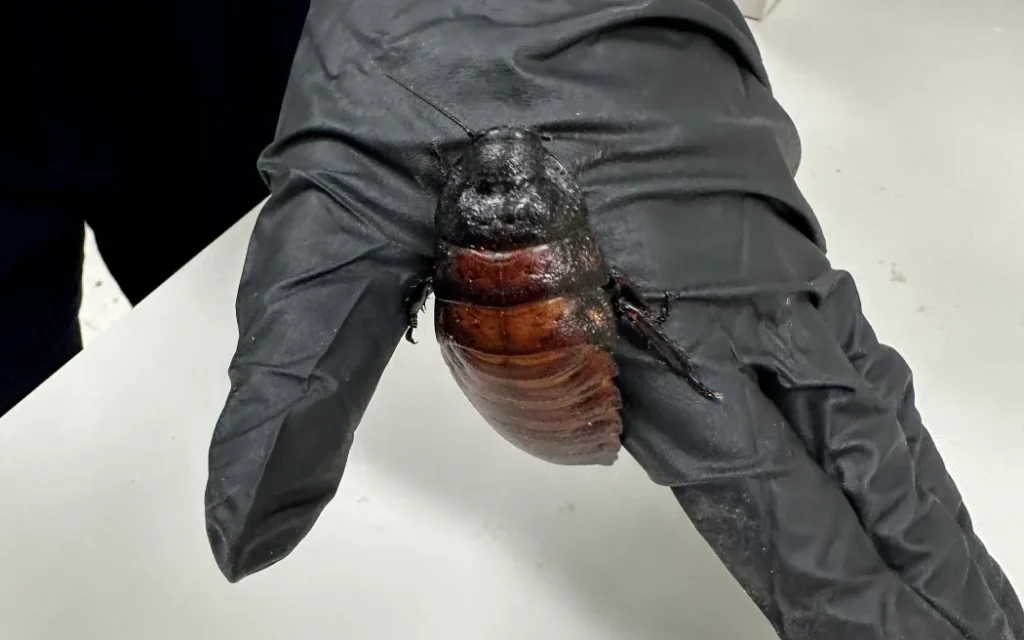

Australian authorities have uncovered a sprawling illegal insect-breeding operation after seizing more than 100,000 exotic cockroaches from a commercial property in Bathurst, west of Sydney. The insects, valued at an estimated AU$200,000 (US$140,000), were allegedly being bred and traded outside Australia’s strict environmental regulations, prompting a fresh warning from wildlife officials about the risks posed by the growing exotic pet trade.
The raid, carried out by officers from the Department of Climate Change, Energy, Environment and Water (DCCEEW), revealed a large collection of Madagascar hissing cockroaches and dubia cockroaches. While neither species is native to Australia, both have become increasingly popular among exotic pet owners, collectors and reptile enthusiasts around the world.
Madagascar hissing cockroaches are among the largest cockroach species on the planet and are known for the distinctive hissing sound they make when threatened. Images released by authorities showed the remarkable size of some specimens, including one insect that was nearly large enough to cover an adult’s hand. Dubia cockroaches, meanwhile, are commonly bred as feeder insects for pet reptiles and amphibians due to their high nutritional value.
Although the discovery has attracted widespread attention because of its unusual nature, environmental officials say the issue extends far beyond the insects themselves. Australia’s biosecurity system is designed to prevent non-native species from entering and establishing populations that could threaten local ecosystems, agriculture and native wildlife.
Biosecurity Concerns Drive Enforcement Efforts
Officials said the seizure reflects growing concern over illegal breeding and trading networks that operate within the exotic animal market. While reptiles, birds and mammals often receive the most attention, insects can present similar environmental risks if they escape captivity or are intentionally released.
“We take our job protecting Australia’s unique biodiversity and breaches of national environment law very seriously,” an environment department spokesperson said.
The department also warned that authorities are seeing continued cases involving the unauthorized breeding and sale of exotic cockroach species, placing both pet businesses and private owners under increased scrutiny.
Australia’s strict approach to invasive species stems from decades of experience dealing with environmental damage caused by introduced animals and pests. Experts have repeatedly noted that prevention is often more effective and less costly than attempting to control invasive populations after they become established.
Protecting biodiversity requires not only preserving threatened native species but also preventing new ecological threats from emerging. That challenge has become increasingly important as researchers recently confirmed a new population of the critically endangered night parrot in Queensland, highlighting ongoing efforts to safeguard some of Australia’s rarest wildlife.
According to the Department of Climate Change, Energy, Environment and Water, invasive species remain one of the most significant pressures on Australia’s natural environment. As a result, authorities closely monitor the importation, breeding and movement of non-native animals and insects.
Read More
Officials confirmed the seized cockroaches will be euthanized to eliminate any possibility of accidental release. The decision may disappoint insect enthusiasts, but authorities say it is necessary to protect Australia’s unique biodiversity and prevent future ecological risks.
The Bathurst case serves as a reminder that wildlife crime is not limited to high-profile animal trafficking operations. As demand for unusual pets and specialty feeder insects continues to grow, regulators are increasingly focused on ensuring that breeding operations comply with environmental laws designed to protect one of the world’s most distinctive ecosystems.

Make Swikblog your go-to source on Google for reliable updates, smart insights, and daily trends.