
Residents of a modern housing estate in the New South Wales Hunter Valley are demanding action after receiving $330 fines for parking vehicles in driveways outside their own homes. The dispute has exposed confusion over where private property ends and the council-controlled road reserve begins.
The fines involve Cliftleigh Meadows, an estate of about 1,000 properties completed in 2022 within the Cessnock local government area. Residents say narrow streets, short driveways, limited parking and missing footpaths have made the rules difficult to follow.
Why residents received $330 fines
James Keysell said he had been fined three times since moving to Cliftleigh Meadows about two years ago.
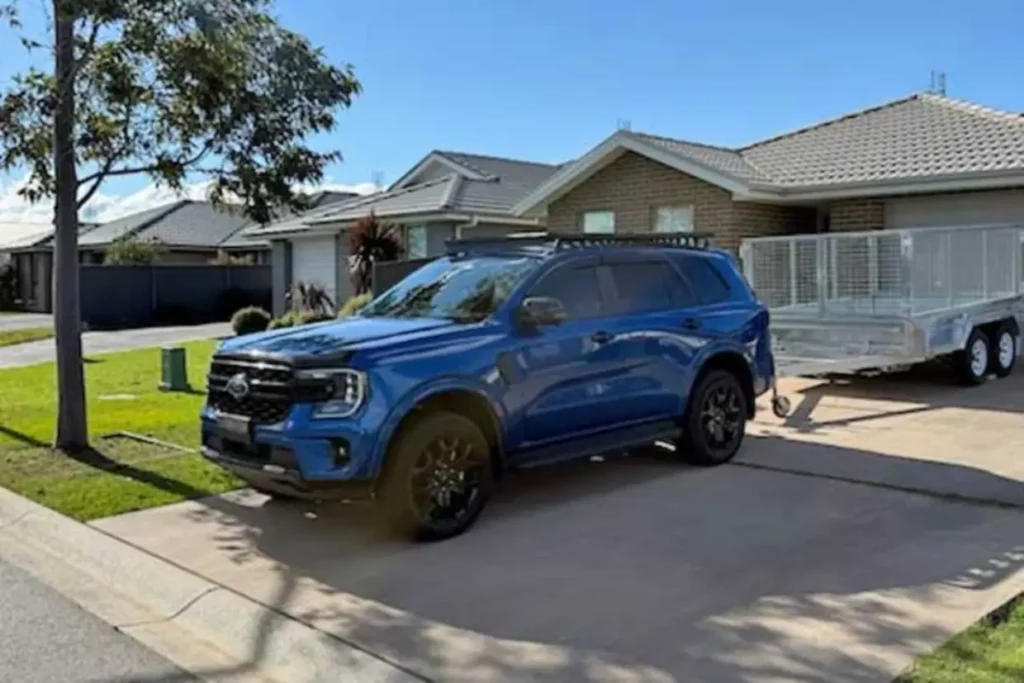
Two $330 penalties were reportedly issued on consecutive days while he was helping his father move house. A trailer was backed towards his garage, with his car parked in front of it on the concrete driveway.
Keysell believed the vehicle was on his land because it remained on the driveway. After complaining to Cessnock City Council, he said he was told the area beyond his letterbox was council land.
Resident Kaicy Rolfe said her husband had also received two fines since the couple moved in approximately 18 months ago. The first was issued on moving day after a vehicle was parked near the gutter and grass.
The second followed when their car was in the driveway but extended about one metre past the letterbox. Rolfe said she had not known that the lower part of the driveway could be subject to public parking rules.
Another resident commenting on a community petition said she had received three fines involving parking on a lawn, an unregistered vehicle and parking at the bottom of a driveway. Those incidents may involve different offences and would need to be assessed individually.
Is everything past the letterbox council land?
A letterbox is not automatically a legal boundary marker. The precise property line is established by the registered deposited plan, survey marks or a licensed surveyor.
A residential driveway can cross two legally different areas. The section inside the property boundary is private, while the section connecting it to the road is generally called a vehicle access crossing or driveway crossover.
The crossover may run through a public road reserve containing the verge, nature strip, gutter or footpath area. It can remain council-controlled even when it is covered with the same concrete as the private driveway.
A car can therefore appear to be parked entirely in a driveway while part of it remains on public land. Owning the adjoining house does not automatically allow the road-reserve section to be used as a parking space.
What the NSW rule says
Under NSW Road Rule 197, drivers generally must not stop on a nature strip, footpath, dividing strip or similar public area unless an exception applies.
The restriction can apply without a “No Parking” sign. It may also apply when the verge is paved instead of grassed or when only part of a vehicle extends into the restricted area.
The exact offence and amount should be checked on each notice. Receiving penalties on consecutive days does not automatically invalidate the second notice if a separate offence is recorded later.
Residents blame narrow streets and unclear boundaries
Residents say some streets become effectively single-lane when cars are parked on both sides. Keysell said he believed moving his vehicle onto the driveway was helping to keep the road clear.
The lack of footpaths in parts of Cliftleigh Meadows also removes an obvious visual separation between private property and the public verge. Residents want clearer signs, marked boundaries and a review of whether the estate provides enough legal parking.
Similar questions about vehicle access and enforcement have emerged in NSW neighbourhoods dealing with repeated parking problems, although different rules apply to private land, strata common property and public road reserves.
Petition calls for changes
Residents have begun posting warnings in a local Facebook group when council rangers are seen in the estate.
Local resident Ashley Holmes has also launched a Change.org petition that had collected more than 200 signatures. It argues that narrow roads, inadequate signs and unclear parking areas are causing residents to breach rules inadvertently.
Holmes described the enforcement as bordering on harassment. Residents want the council to address the estate’s design through clearer boundary information, designated parking and community education instead of relying only on fines.
What Cessnock City Council says
Cessnock City Council said motorists must comply with NSW Road Rules at all times. As the parking enforcement authority for local and regional roads within its area, it issues infringement notices when breaches are identified.
The council said motorists who believe an error occurred can seek an independent review. Residents argue that individual appeals will not resolve the broader confusion or shortage of practical parking.
Read More:
How residents can challenge a fine
Affected drivers should check the offence written on the notice and obtain the ranger’s photographs. Helpful evidence may include pictures of the vehicle’s position, a deposited plan or survey, correspondence with the council and proof that boundaries were unclear.
NSW reforms introduced on July 1, 2025 generally require parking officers to leave a physical notification and take photographs where it is safe. If an allowed exception prevents a notice being attached, the fine generally must be sent within seven days.
The official NSW parking fine system guidance explains the notification and review process. A review should be lodged before the due date, placing the fine on hold while it is considered.
Parking disputes elsewhere demonstrate why notices should be checked carefully. Eligible Victorian motorists recently received refunds for overcharged council parking fines, although that case involved different laws and does not determine the validity of the Cliftleigh penalties.
Until a local solution is introduced, Cliftleigh Meadows residents may need to confirm their registered boundaries and keep every part of a parked vehicle behind the property line.

Make Swikblog your go-to source on Google for reliable updates, smart insights, and daily trends.