
Miami’s skyline changed dramatically on Sunday as the former Mandarin Oriental hotel on Brickell Key was demolished in a controlled implosion, bringing down a 23-storey waterfront landmark in less than 20 seconds and clearing space for a major ultra-luxury redevelopment project.
The blast took place at around 8:30 a.m., marking the largest building implosion in Miami in more than a decade. Within moments, the structure — which had stood for roughly 25 years — collapsed inward following a rapid sequence of charges, sending dust across the surrounding area as spectators watched from a safe distance.
The demolition quickly drew attention across social media and news platforms, not only for its speed and scale but for what it represents: the transformation of one of Miami’s most exclusive locations into a new generation of high-end residential and hospitality development.
Located on Brickell Key, a man-made island at the mouth of the Miami River, the hotel had long been associated with luxury and privacy, sitting just across from downtown Miami. Its removal signals a decisive shift in how prime waterfront land is being reimagined in the city’s booming real estate market.
Carefully planned demolition with strict safety measures
Authorities implemented strict precautions ahead of the implosion. Residents living within approximately 800 feet (244 meters) of the building were instructed to remain indoors during the blast, keeping windows and doors shut. Some onlookers who gathered along the Biscayne Bay waterfront wore face masks as they left the area following the dust cloud.
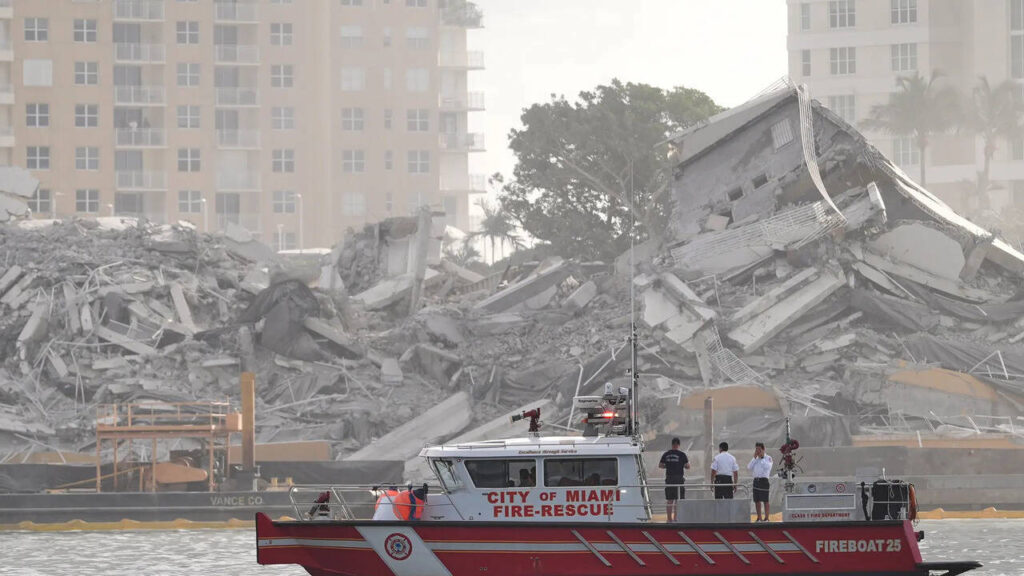
Emergency services, including Miami Fire-Rescue crews, were stationed nearby, with boats patrolling the waters around Brickell Key to monitor the situation. No evacuations were ordered, but access to the island was restricted, with the main entrance closed for several hours to ensure public safety.
The operation followed nearly two years of planning and coordination between developers, city officials and specialized demolition contractors. Developers said implosion was chosen as the safest and most efficient method to complete the demolition while minimizing disruption and keeping the redevelopment timeline on track.
Moments before the collapse, what appeared to be blue- and pink-tinted pyrotechnics were visible near the top of the building, followed by a series of rapid explosions that caused the structure to fold inward in a controlled sequence.
End of a landmark, beginning of a larger luxury vision
The site is now set to make way for The Residences at Mandarin Oriental, Miami — a two-tower ultra-luxury hotel and residential development scheduled for completion in 2030. The project reflects a broader trend in Miami, where older standalone luxury properties are increasingly being replaced with larger, mixed-use developments designed to attract global wealth.
For many residents, the demolition carried emotional weight. The Mandarin Oriental had been part of Brickell Key’s identity for decades, with some locals describing it as a familiar and defining feature of the waterfront. In the hours leading up to the implosion, people gathered to take photos of the building one last time.
Yet the decision to replace the hotel underscores the economic forces reshaping Miami. Rising demand for branded residences, combined with limited waterfront land, has driven developers to maximize value through large-scale projects that blend hospitality with private living spaces.
Across the city, similar redevelopment efforts are accelerating, reinforcing Miami’s status as a global hub for luxury real estate. Projects like this are not just altering the skyline but redefining how space is used, who it is built for, and how the city positions itself internationally, according to ongoing urban development trends tracked by Miami-Dade County’s economic development initiatives.
The implosion, though over in seconds, represents years of planning and billions in future investment — a reminder that in Miami, even long-standing landmarks can quickly give way to the next phase of growth.
You may also like: Justin Trudeau’s surprise Coachella 2026 appearance with Katy Perry and Justin Bieber sparks buzz online.

Make Swikblog your go-to source on Google for reliable updates, smart insights, and daily trends.