
Washington, DC is bracing for one of its biggest annual winter gatherings — with downtown streets restricted, a major rally on the National Mall, and high-profile political and religious attention focused on the city.
Friday, Jan. 23, 2026 • Washington, DC
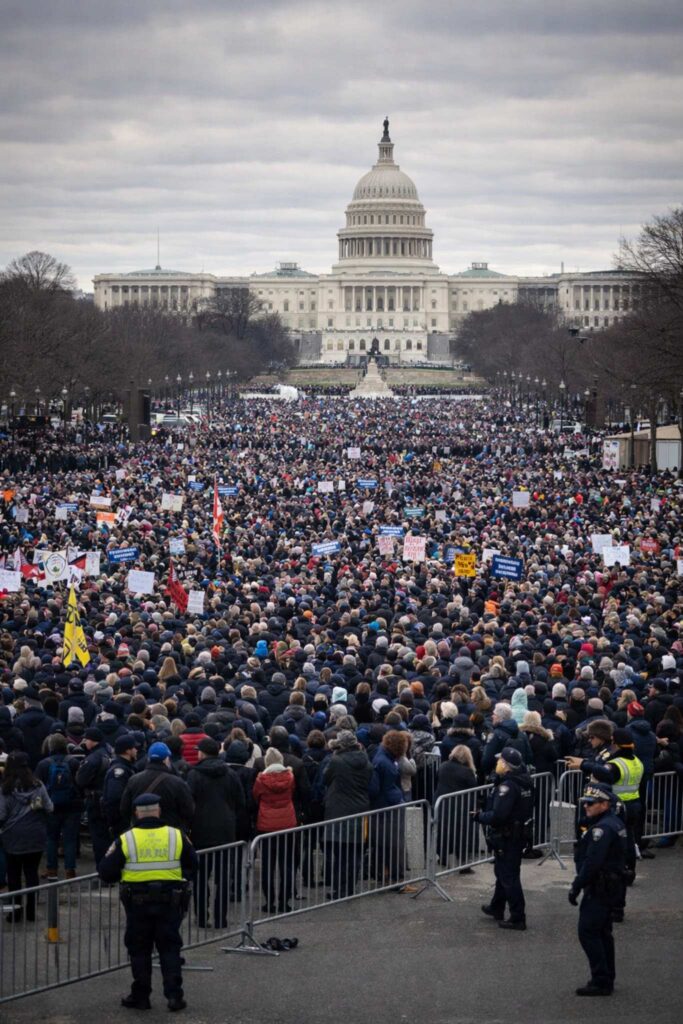
Tens of thousands of people are expected in Washington today for the National March for Life, the long-running demonstration that brings anti-abortion rights advocates to the capital each year. For residents and visitors, the most immediate effect is practical: a wide zone of traffic limits, security perimeters and rolling closures across the Mall and the Capitol area.
This year’s gathering also lands in a post-Roe political landscape that continues to sharpen lines across state legislatures and in Congress. That’s why the speaker lineup — and the sheer scale of the crowd — is drawing extra attention beyond the usual travel advisories.
If you’re heading into the city: The safest plan is to avoid driving into the core of downtown and the National Mall area during the late morning and afternoon. Expect delays, detours, and sudden stop-and-go traffic as police shift closures in real time to manage crowd movement.
Where the road closures are concentrated
Most restrictions cluster between the White House area, the National Mall, and the Capitol complex, where crowds gather before marching toward the Supreme Court. Major routes and cross streets near Constitution Avenue, Pennsylvania Avenue, Independence Avenue, and several north-south connectors are typically affected.
Officials have listed closures that can include stretches of:
- Constitution Avenue NW through the central Mall corridor
- Pennsylvania Avenue NW near federal buildings and parade routes
- Independence Avenue SW near the Mall and Smithsonian area
- Key north-south streets feeding into the Mall, plus select tunnels and ramps
Because the footprint changes as crowds move, the best source for street-by-street restrictions is the city’s official traffic advisory, which is updated for event operations and public safety: DC police traffic advisory for the 2026 March for Life.
What the schedule looks like
While exact timing can shift depending on weather and crowd flow, the day usually follows a predictable rhythm: attendees gather late morning on or near the National Mall; the rally program runs around midday; then the march proceeds toward the US Supreme Court in the early afternoon.
That means the most intense pressure on roads and sidewalks often hits between late morning and mid-afternoon — especially around the Mall’s central corridors, nearby Metro stations, and the streets leading toward Capitol Hill.
Who’s speaking, and why it matters
The 2026 rally is expected to feature prominent conservative political figures, including Vice President JD Vance and House Speaker Mike Johnson. Their appearances matter for two reasons: they elevate the rally from an annual demonstration to a national political stage, and they signal how central abortion policy remains to Republican coalition politics heading into the next round of federal and state battles.
Organizers are also promoting a faith-centered message this year. In a message carried by Vatican outlets, Pope Leo XIV offered encouragement to participants and framed the gathering around protecting life at every stage. The effect, in media terms, is to widen the day’s focus beyond Washington — drawing attention from religious audiences worldwide as well as US political watchers.
What you’ll see on the ground
Expect heavy police presence, security checkpoints in certain areas, and long lines near major viewing points. The March for Life typically includes large groups traveling by bus from across the country, many of them church and school delegations. At the same time, DC often sees counter-demonstrations and advocacy events nearby, which can add to congestion and amplify the sense of a city operating in “event mode.”
For commuters, the practical advice is simple: if you can shift travel times, do it. If you must travel, build extra time into every leg of your day, assume some streets will be blocked even if your map says otherwise, and consider Metro or walking for the final stretch into downtown.
Why today’s march is trending nationwide
Part of it is scale: Washington transforms when tens of thousands converge in a compact area. But this year the story is also trending because it sits at the intersection of three powerful currents — politics, religion and public life in the capital. Road closures make it real for locals; the speaker list makes it national; and the global attention makes it feel larger than a single day’s rally.
More US news updates on Swikblog.

Make Swikblog your go-to source on Google for reliable updates, smart insights, and daily trends.