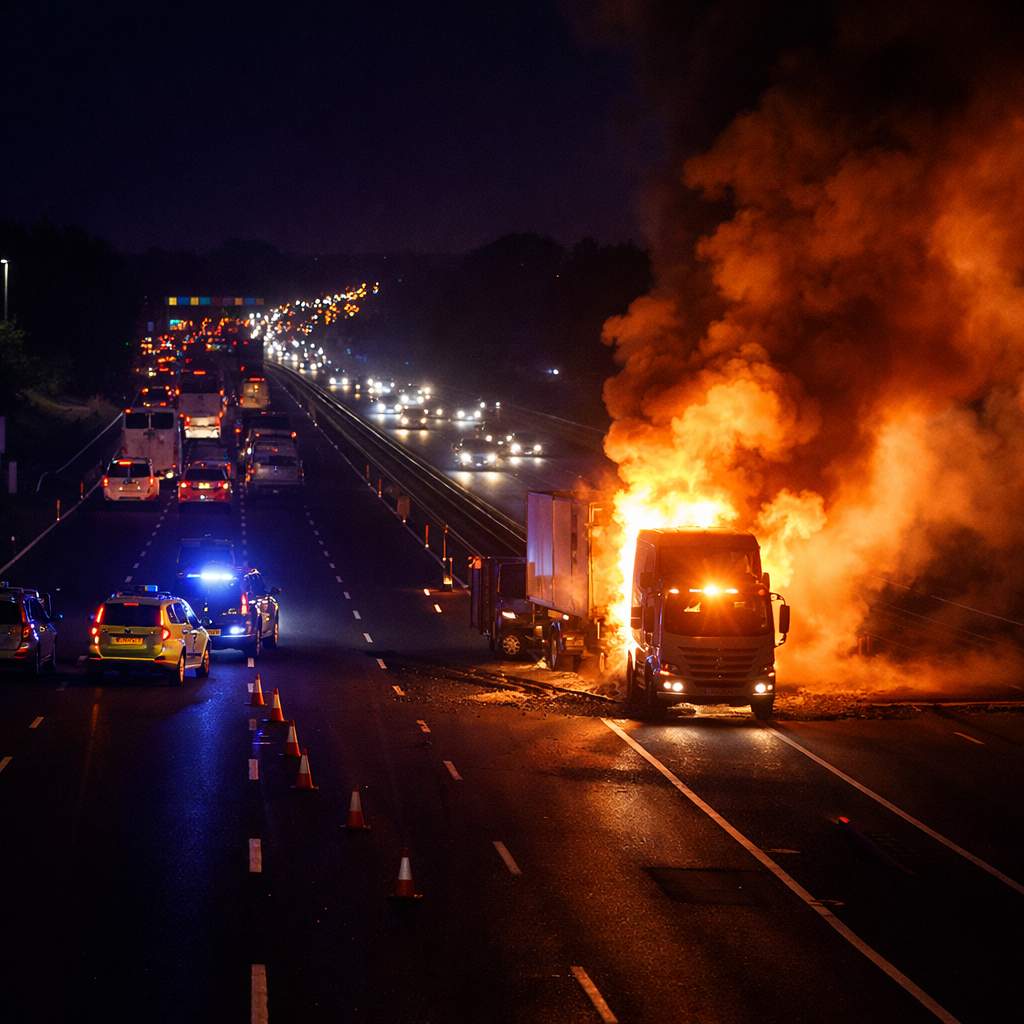

Massive disruption hit one of the UK’s busiest motorways early Wednesday morning after a lorry carrying pallets burst into flames, forcing a complete shutdown of the M5 southbound in Gloucestershire. The incident, which began around 2:00–2:25 AM, quickly escalated into a major traffic crisis, leaving commuters stuck in queues stretching over 10 miles.
The closure affects the stretch between Junction 13 (Stroud) and Junction 14 (Thornbury/Falfield), with authorities confirming that all three lanes remain shut while recovery and safety operations continue. Drivers heading south have been warned to expect long delays as emergency teams work to clear the scene.
What caused the M5 shutdown
According to updates from BBC News, the incident involved a heavy goods vehicle (HGV) transporting pallets that caught fire in the early hours. Dramatic footage from the scene showed a huge fireball engulfing the lorry, with thick smoke rising into the night sky.
Emergency services, including Gloucestershire Fire and Rescue, responded quickly and managed to extinguish the blaze. Officials confirmed that the lorry’s load was not hazardous, reducing the risk of wider environmental or chemical danger. However, the intensity of the fire caused significant damage to the vehicle and potentially to the motorway surface itself.
Even after the flames were brought under control, the situation remained critical due to the need for a full recovery operation. Burnt wreckage, debris, and possible structural damage to the road meant that reopening the motorway could not happen immediately.
10+ mile traffic chaos across Gloucestershire
The biggest impact of the incident has been the severe traffic congestion that followed. Traffic monitoring service INRIX reported queues stretching back to Junction 12 (Quedgeley), with some updates suggesting delays reaching as far as Junction 11.
This has created a 10+ mile tailback on the M5, turning a key transport route into a standstill for hours. Commuters heading to work, logistics operators, and long-distance travelers have all been affected, with journey times increasing dramatically.
Local roads have also been heavily impacted. The A38, which has been designated as the main diversion route, quickly became congested as thousands of vehicles attempted to bypass the closure. Reports also indicate pressure on connecting routes including the A419 and B4509, making alternative travel routes far from smooth.
Diversion routes and travel advice
National Highways has put official diversion routes in place to help manage traffic flow. Drivers heading southbound are being redirected via the A38 from Whitminster to Falfield, where they can rejoin the motorway at Junction 14.
In addition, some diversion guidance includes following solid circle symbols via the A419 and B4509, depending on location and traffic conditions. However, authorities have warned that these routes are also experiencing heavy delays due to the volume of diverted vehicles.
For real-time updates and route changes, drivers are advised to check National Highways, which is providing live traffic alerts and recovery progress.
Why the motorway is still closed
Although the fire has been extinguished, the motorway remains closed due to ongoing recovery and safety checks. National Highways has confirmed that several critical steps must be completed before reopening:
- Removal of the burnt-out lorry and debris
- Inspection of the road surface for fire damage
- Safety clearance from emergency services
A spokesperson stated that once fire crews complete their operations, engineers must assess whether the road surface is safe for vehicles. High temperatures from vehicle fires can weaken tarmac and pose serious risks if not properly inspected.
Authorities are working closely with emergency services to reopen lanes “at the earliest safe opportunity,” but no exact reopening time has been confirmed.
Emergency response and ongoing situation
Gloucestershire Police and traffic officers remain at the scene managing the closure and ensuring safety. While fire crews have now left after successfully tackling the blaze, recovery teams continue to work on clearing the wreckage.
The incident has been ongoing since around 2 AM, meaning disruption has lasted for several hours and continues to affect peak morning traffic. Officials have urged drivers to remain cautious, follow diversion signs, and allow significantly more time for their journeys.
Impact on commuters and businesses
The M5 is a major transport artery in the South West, and disruptions of this scale have widespread effects. Long delays can impact supply chains, delay deliveries, and cause missed appointments for thousands of people.
For commuters, the incident has meant extended travel times, increased fuel consumption, and significant stress. Businesses relying on timely logistics have also been affected, especially those dependent on motorway freight routes.
Final takeaway
The M5 lorry fire highlights how a single early-morning incident can quickly escalate into a full-scale traffic crisis. With over 10 miles of congestion, major diversion delays, and ongoing recovery work, the disruption has affected thousands across Gloucestershire and beyond.
Until the motorway fully reopens, drivers are strongly advised to plan ahead, monitor live updates, and consider delaying non-essential travel. As recovery continues, traffic conditions are expected to remain challenging throughout the day.

Make Swikblog your go-to source on Google for reliable updates, smart insights, and daily trends.