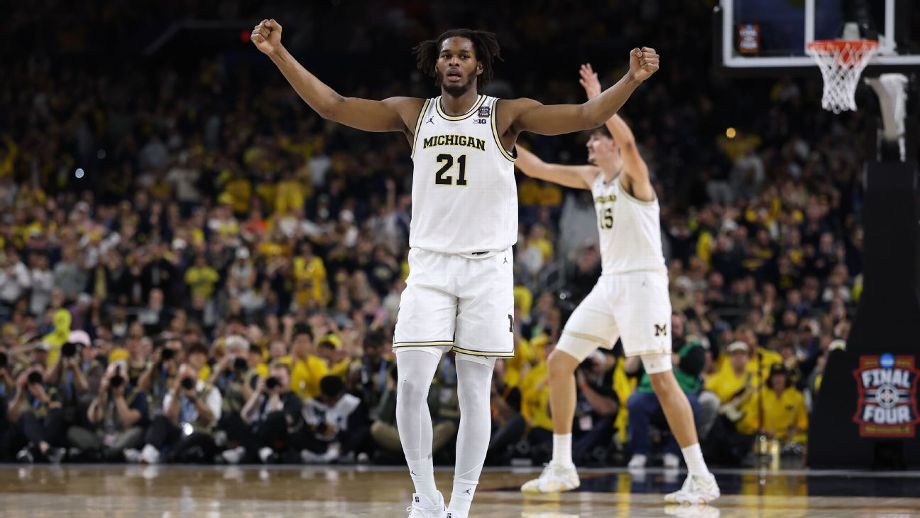

Michigan finally has its moment again. In a tense, defense-heavy national championship game that never allowed either team to fully breathe, the Wolverines held off UConn 69-63 on April 6 in Indianapolis to win the NCAA men’s basketball title, ending a 37-year drought and rewriting the program’s modern history.
This was not a game defined by highlight-reel offense. It was about control, discipline, and composure under pressure. Michigan, the No. 1 seed, came into the final as one of the most dominant teams in the country, averaging nearly 88 points per game. But against UConn, nothing came easy — and that is exactly how they won.
Defense defines Michigan’s championship moment
Michigan’s offense never fully clicked. The Wolverines shot just 21-for-55 (38%) from the field and struggled badly from beyond the arc, finishing 2-for-15 from three-point range. In most games, those numbers would spell trouble. In a national championship, they could have been fatal.
Instead, Michigan leaned on what had quietly made them the most complete team in college basketball all season — their No. 1 ranked defense.
UConn was held to just 31% shooting (21-for-68), repeatedly forced into contested looks, and never found consistent rhythm. Even when the Huskies fought hard on the offensive glass, grabbing 22 offensive rebounds, Michigan’s interior presence and shot-blocking kept them from converting those chances into decisive runs.
At one point, UConn missed 13 straight three-pointers, a stretch that summed up their frustrating night. Every time it looked like they might build momentum, Michigan shut the door.
“This was a game we had to grind out,” Michigan players said afterward, and it showed. The Wolverines blocked shots, challenged drives, and made every possession uncomfortable.
Cadeau leads, McKenney delivers the dagger
While Michigan’s defense set the tone, junior guard Elliot Cadeau provided the offensive stability the team needed. He finished with 19 points and controlled the pace, stepping up whenever the Wolverines needed a composed decision or timely basket.
Even more impressive was the resilience of All-American forward Yaxel Lendeborg. Battling knee and ankle injuries suffered in the Final Four, he was clearly not at full strength but still contributed 13 points in 37 minutes. His shooting struggles (4-for-13, 0-for-5 from three) reflected the physical toll, but his presence remained critical.
The decisive moment came late in the game.
With Michigan clinging to a narrow lead and under two minutes remaining, freshman Trey McKenney delivered the play that will be remembered for years. After a broken transition sequence, he knocked down a right-wing three-pointer to push Michigan ahead 65-56 with 1:49 left — only the team’s second three of the night.
That shot effectively sealed the championship.
UConn had one final chance, trailing 67-63 with under 25 seconds remaining, but Alex Karaban’s three-point attempt fell short. Moments later, McKenney was fouled, and Michigan closed it out at the free-throw line.
A historic win for Michigan and the Big Ten
The significance of this victory goes far beyond a single game.
Michigan’s win marks its first national championship since 1989 and just the second in program history. The Wolverines, now 2-6 in national title games, had previously fallen short in four straight championship appearances (1992, 1993, 2013, 2018). This time, they finished the job.
It also ended a long drought for the Big Ten, which had not produced a men’s national champion since Michigan State in 2000. For a conference often criticized for falling short in March, this victory carries added weight.
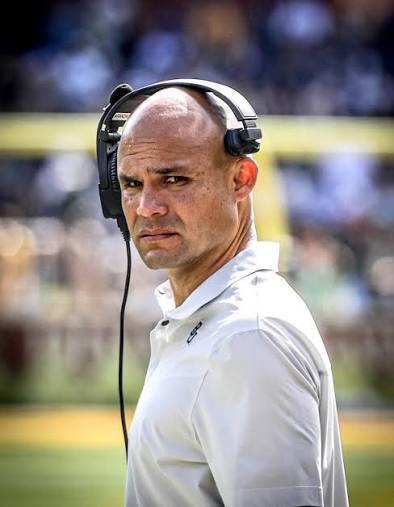
Under head coach Dusty May, in just his second season, Michigan completed a remarkable 37-3 campaign. The team entered the tournament on a dominant run, winning its first five games by double digits, and carried that confidence into the final.
Even on an off shooting night, they proved they could adapt — a trait that defined their championship run.
UConn, meanwhile, fell short in its bid for another title, finishing 34-6. Karaban led the Huskies with 17 points, but the team never found enough offensive consistency to overcome Michigan’s defense.
For fans following the latest March Madness updates, this game will stand out as one of the most physical and hard-fought finals in recent memory.
In the end, this championship was not about perfection. It was about persistence.
Michigan did not need a flawless performance to win. They needed toughness, belief, and one defining moment — and they found all three. After 37 years of waiting, the Wolverines are champions again, and this time, there is no doubt about it.
You may like: Vandenberg 3 Rocket Launches Set for April 2026 as SpaceX and Northrop Prepare Missions

Make Swikblog your go-to source on Google for reliable updates, smart insights, and daily trends.