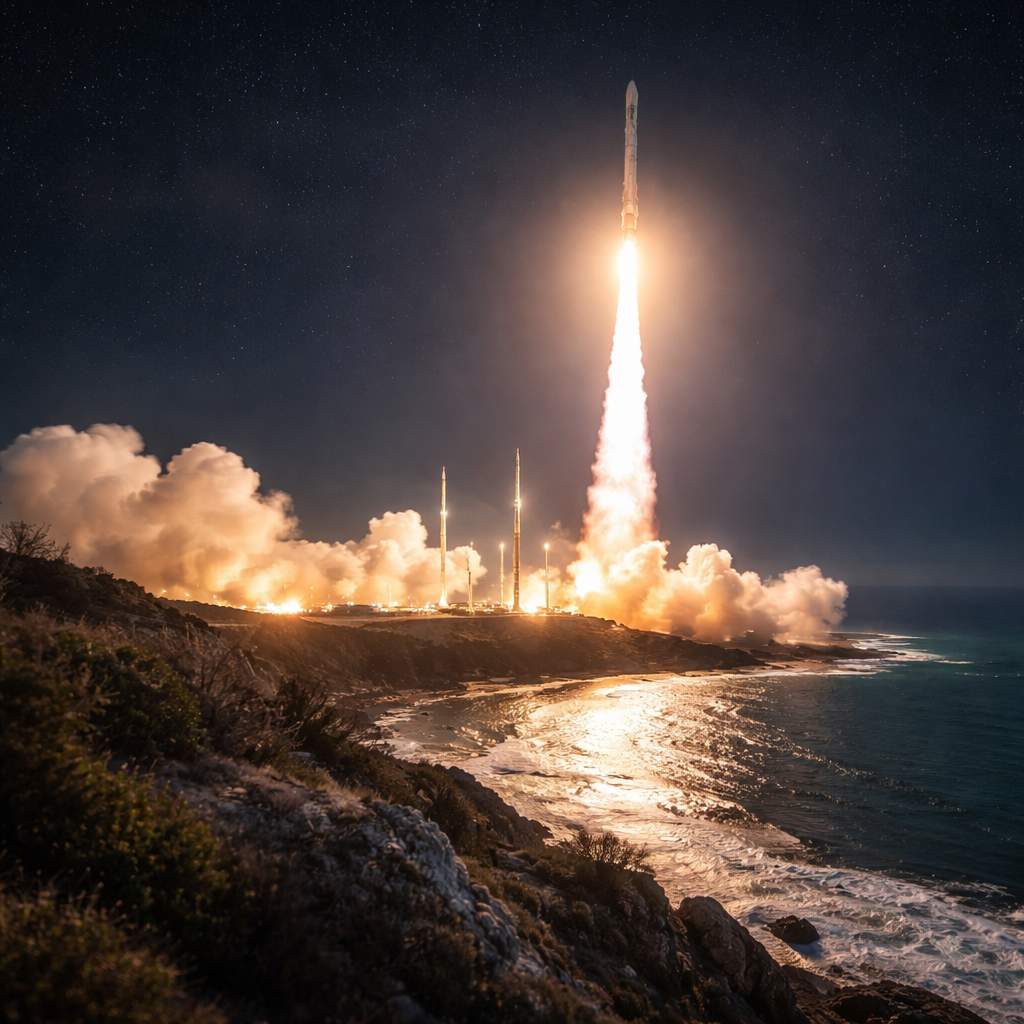

Vandenberg Space Force Base is heading into one of its busiest stretches this month, with three rocket launches scheduled within days, combining commercial satellite expansion and a key national defense mission. The packed schedule includes two SpaceX Falcon 9 launches for Starlink satellites and a Northrop Grumman Minotaur IV mission carrying multiple small payloads for the Pentagon.
The activity highlights how rapidly launch operations are scaling on the U.S. West Coast, with Vandenberg increasingly serving as a critical hub for both commercial and military space missions. For residents across California — and even parts of neighboring states — this week could bring multiple chances to witness rocket launches streaking across the sky.
The first mission already kicked off the sequence, with SpaceX launching its Starlink 17-35 mission from Space Launch Complex 4 East. The Falcon 9 rocket carried 25 Starlink satellites into low-Earth orbit, continuing the steady expansion of the company’s global broadband network. Falcon 9, a 230-foot reusable two-stage rocket, has become the backbone of SpaceX’s operations, capable of lifting more than 50,000 pounds into orbit.
As with many recent SpaceX missions, the first-stage booster was scheduled to land on the company’s drone ship, “Of Course I Still Love You,” positioned in the Pacific Ocean. This recovery process is central to SpaceX’s cost-saving model and has allowed the company to significantly increase its launch frequency.
The focus now shifts to Tuesday, April 7, when Northrop Grumman is set to launch the STP-S29A mission using a Minotaur IV rocket from Space Launch Complex 8. The launch window opens at 4:30 a.m. and runs through 8:45 a.m. Pacific Time. Unlike the Starlink missions, this flight is tied to the Pentagon’s Space Test Program and will deploy multiple small satellites, often referred to as cubesats, into low-Earth orbit.
The Minotaur IV is a 78-foot, four-stage rocket designed for smaller payloads, capable of carrying up to 3,814 pounds into orbit. Missions like STP-S29A are often used to test new technologies, sensors, and experimental systems in real space conditions, making them an important part of future defense and space capabilities.
The final launch of the week is scheduled for Thursday, April 9, when SpaceX returns to the pad with another Falcon 9 mission, Starlink 17-21. This launch will once again take place from Space Launch Complex 4 East, with a window opening at 7:39 p.m. and extending until 11:39 p.m. Pacific Time. Like the earlier Starlink mission, it will deploy 25 satellites into low-Earth orbit.
Details for the mission can be followed directly on SpaceX’s official launch page, where updates are typically provided as launch windows approach and countdowns begin.
Why this launch schedule matters
Three launches in such a short span is not just a busy week — it reflects a larger shift in how space operations are evolving. Vandenberg Space Force Base has transformed into a high-tempo launch site, particularly for missions heading into polar and sun-synchronous orbits over the Pacific Ocean. This trajectory is ideal for Earth observation satellites and large constellations like Starlink.
SpaceX’s role in this shift is especially visible. Starlink has grown into the world’s largest satellite constellation, with thousands of satellites operating at roughly 550 kilometers above Earth. The system is designed to deliver broadband internet capable of supporting streaming, gaming, and video communication, even in remote or underserved regions.
At the same time, the Northrop Grumman mission highlights another side of the modern space landscape — one driven by national security and technological experimentation. The Space Test Program allows the U.S. military to validate new systems in orbit, often using smaller, more flexible satellite platforms.
Together, these missions show how commercial innovation and defense priorities are now operating side by side, often sharing the same launch infrastructure.
What viewers should expect
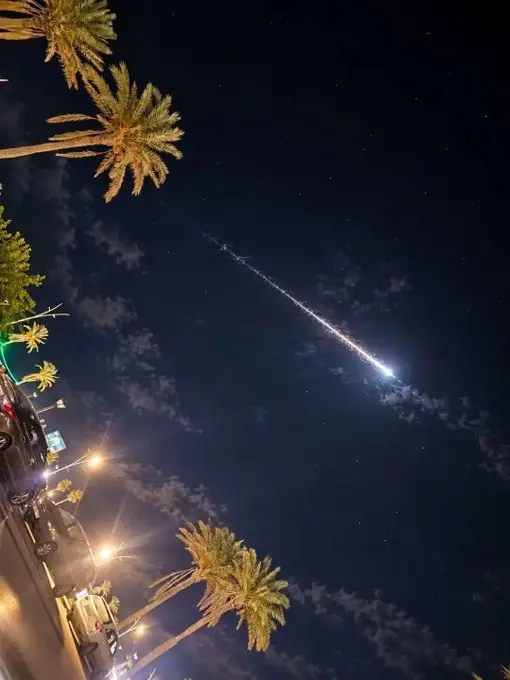
Rocket launches from Vandenberg have become a familiar sight across parts of California, especially during evening or early morning windows. Under the right conditions, launches can create bright trails across the sky, sometimes visible hundreds of miles away. The Falcon 9 launches scheduled for this week, particularly the Thursday night mission, could offer one of those moments if skies remain clear.
However, launch schedules are rarely final until liftoff. Weather conditions, technical checks, and range availability can all lead to delays or rescheduling. Anyone planning to watch should keep an eye on updates as launch windows approach.
Even with that uncertainty, the message from this week’s schedule is clear: Vandenberg is operating at full pace. With SpaceX pushing frequent Starlink missions and Northrop Grumman supporting defense objectives, the base is becoming one of the most active launch sites in the country — and one of the most visible to the public.
You may like: Lotto Max Odds Change in Canada: $90M Jackpot and Ticket Price Increase Explained

Make Swikblog your go-to source on Google for reliable updates, smart insights, and daily trends.