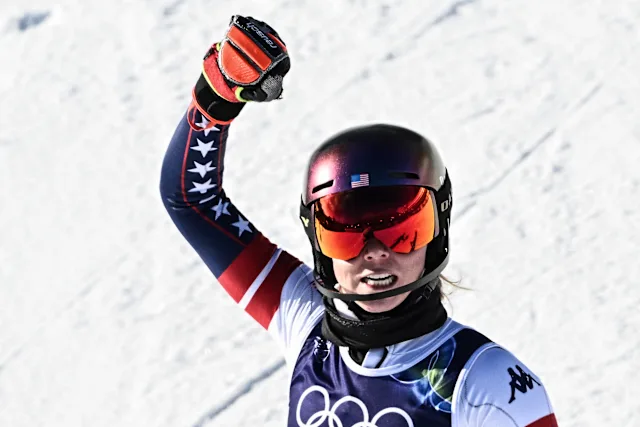

Mikaela Shiffrin won women’s slalom gold at the Milano Cortina 2026 Winter Olympics on February 18, 2026, delivering a commanding performance at the Tofane Alpine Skiing Centre in Cortina d’Ampezzo, Italy.
The American alpine skier finished with a combined time of 1:39.10 and won by 1.50 seconds, turning a strong first-run lead into one of the clearest statements of the Games.
The victory gave Shiffrin her third Olympic gold medal and ended an eight-year Olympic medal drought dating back to PyeongChang 2018. It also made her the first American alpine skier to win three Olympic golds.
Shiffrin delivered when the Olympic pressure was highest
Shiffrin began the second run with a 0.82-second advantage, but the race had already shown how quickly slalom can punish even elite skiers.
Several medal contenders lost their chance before Shiffrin made her final run, turning the moment into a test of nerve as much as speed. Instead of skiing only to protect her lead, she attacked the course and widened the gap.
That margin mattered. Olympic slalom races are often decided by fractions of a second, so a 1.50-second victory reflected both technical control and confidence under pressure.
For more Winter Games context, see this related update on Milano Cortina 2026 news and results.
A gold medal shaped by Beijing and recovery
This win carried extra weight because of what came before it. At the Beijing 2022 Winter Olympics, Shiffrin left without a medal after a series of painful early exits, a rare setback for one of alpine skiing’s most successful athletes.
She also returned to the Olympic spotlight after a difficult stretch that included injury concerns and the mental strain that comes with years of expectation. In Cortina, the performance looked less like a comeback attempt and more like a reset.
Shiffrin was already the most successful World Cup skier in history, but Olympic results often shape public memory in a different way. This slalom gold strengthened her Olympic legacy and connected her long-term dominance with another defining Games moment.
Complete official results and event coverage are available through the official Milano Cortina 2026 Olympics website.
For the United States team, Shiffrin’s win was one of the biggest alpine highlights of the Games. For Shiffrin, it was something more personal: a performance that answered past Olympic disappointment with speed, precision and control.
The final result was not just another medal. It was a clear reminder that Shiffrin remains one of winter sport’s defining figures, capable of turning the heaviest pressure into her sharpest skiing.

Make Swikblog your go-to source on Google for reliable updates, smart insights, and daily trends.