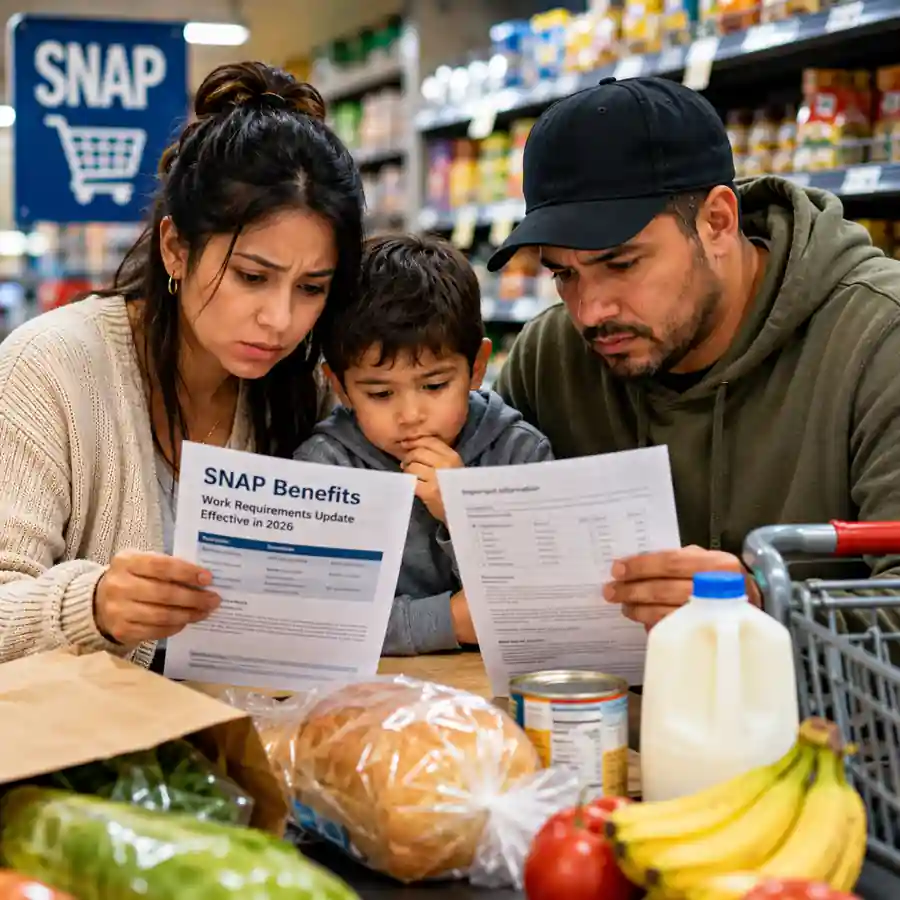

Millions of Americans who rely on SNAP benefits could face stricter eligibility checks in 2026 as expanded federal work requirements begin affecting more recipients across several states.
The Supplemental Nutrition Assistance Program, widely known as SNAP or food stamps, helps low-income households buy groceries through monthly benefits loaded onto EBT cards. The program supports nearly 42 million Americans, including children, older adults, people with disabilities and working families. But the latest rule changes focus on adults classified as Able-Bodied Adults Without Dependents, or ABAWDs.
Under USDA SNAP work requirement guidance, some adults can receive benefits for only three months in a three-year period unless they meet work rules or qualify for an exemption. The new 2026 rollout expands who may fall under those rules, making it one of the most important SNAP eligibility changes for low-income households this year.
What changed in the SNAP work rules?
The biggest change is the age limit. Work requirements now apply to many adults aged 18 to 65, compared with the previous upper age limit of 55. The dependent child rule has also tightened. Previously, many adults with children under 18 were exempt. Now, the exemption generally applies only when a dependent child is under 14.
That means more parents, older adults and low-income workers may have to prove they are meeting monthly work-related activity rules. Some groups that previously had broader protections, including veterans, unhoused individuals and young adults aged 24 or under who recently aged out of foster care, may also be required to comply unless they qualify under another exemption.
The standard requirement is 80 hours per month, or about 20 hours per week. Recipients may meet it through paid work, approved education, job training, SNAP Employment and Training, unpaid work, community service, volunteering or certain drug and alcohol treatment programs. In some states, community service hours are calculated by dividing a person’s SNAP benefit amount by the state minimum wage.
The changes follow the 2025 “One Big Beautiful Bill,” which included major SNAP spending reductions. A Congressional Budget Office analysis reviewed how Public Law 119-21 would affect SNAP participation and benefits, while estimates cited in national reporting put SNAP reductions at about $186 billion through 2034.
States were given time to put the rules into effect. In several large states, including New York and California, June 1 became an important enforcement deadline, meaning some recipients may now face benefit reductions or loss of assistance if they do not meet the new standards.
Who may still qualify for an exemption?
Not every SNAP recipient is subject to the expanded work rules. Exemptions may still apply to people with physical or mental health limitations, pregnant individuals, certain caregivers, people receiving qualifying assistance from other programs and members of some specified Indian groups.
Even so, recipients should not assume they are automatically protected. State agencies may ask for proof of an exemption, work hours, training participation or volunteer activity. For people in gig work, seasonal jobs, unstable part-time roles or housing insecurity, the paperwork burden can be as difficult as the work requirement itself.
The pressure on SNAP households is also arriving alongside other food assistance changes. Some states are moving ahead with new limits on eligible purchases, including restrictions on soda, candy and certain prepared foods, a shift explained in this guide to SNAP food bans taking effect in 2026.
SNAP also became a major concern during recent federal funding fights, when families and local agencies warned that delays could quickly affect grocery budgets. The wider risk to food aid and public services was clear during the 2025 U.S. shutdown and its impact on health programs.
Read More
For recipients, the most important step is to act before benefits are interrupted. Anyone receiving SNAP should read state notices carefully, confirm whether ABAWD rules apply, keep records of work or training hours and ask about exemptions early. People with medical conditions, pregnancy, caregiving duties, housing instability or other hardships should report those circumstances to their caseworker as soon as possible.
The 2026 SNAP work requirement expansion is more than a paperwork change. For millions of low-income Americans, it could decide whether grocery assistance continues without disruption at a time when food, rent and basic household costs remain difficult to manage.

Make Swikblog your go-to source on Google for reliable updates, smart insights, and daily trends.