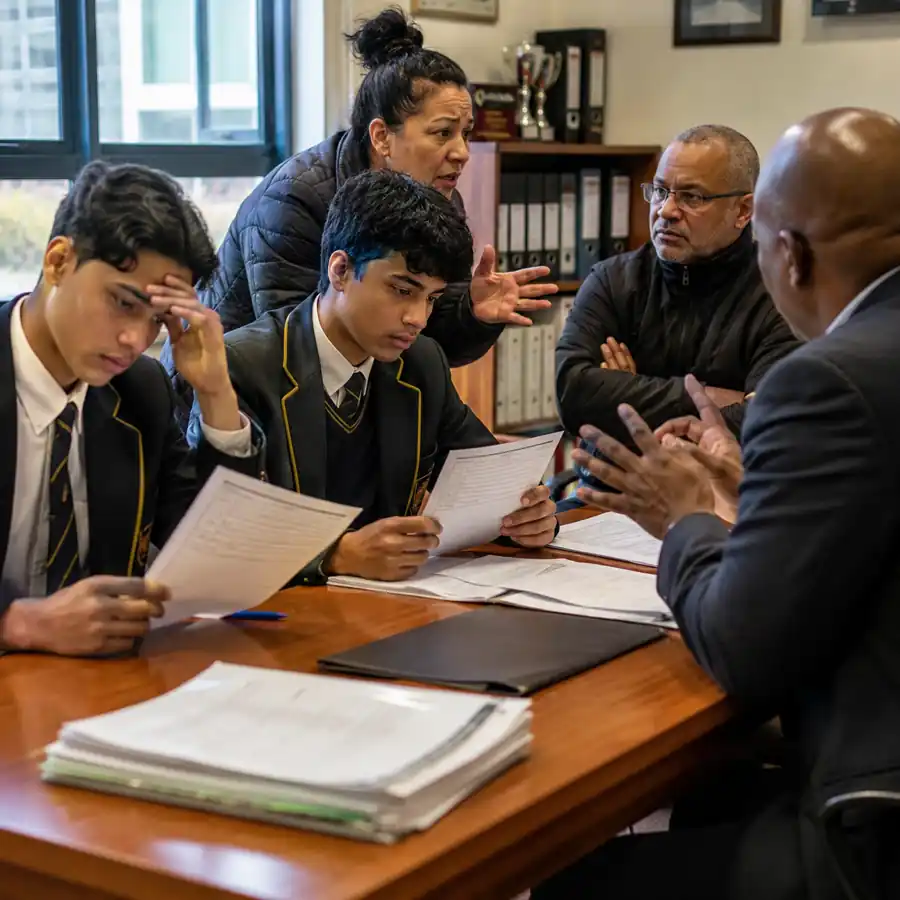

Two former Mondeor High School matric pupils are still waiting for clarity over their final Visual Arts marks, months after the release of South Africa’s matric results, in a case that has now raised serious questions about accountability, learner rights, and the handling of school-based assessments.
The matter involves Aiden Arendse and Ayush Maharaj, who completed matric but were left without final results for Visual Arts. Their families say the missing marks have blocked the pupils from moving ahead with their academic plans and left them facing uncertainty at a stage when many of their classmates have already started university or other post-school opportunities.
According to the families, the learners completed the necessary practical work for the subject. They also claim there is proof that the Practical Assessment Task, commonly known as the PAT, was submitted and moderated. The Department of Education, however, has reportedly maintained that the practical component was not completed, creating a dispute that has left the two young men caught between the school, provincial officials, and the national department.
The delay has been especially painful because matric results are not just symbolic. For many South African learners, they determine university admission, bursary eligibility, career options, and the ability to move into adulthood with confidence. When a final certificate is incomplete, the impact can be immediate and deeply personal.
Missing Marks Leave Families Searching for Answers
Arendse, who is also a national karate champion, said the missing result initially made him fear he had failed matric. He later discovered that the Visual Arts mark had not been captured at all. His mother, Anthea Arendse, said the family approached the teacher, who was reportedly also surprised because the required submissions had allegedly been sent more than once.
Maharaj said the matter has affected his motivation and future plans. He had hoped to study law at the University of Johannesburg, but without a complete matric certificate, that goal has been thrown into doubt. His family says the uncertainty has placed his life on hold at a time when he should have been preparing for the next chapter.
The situation escalated after the families were reportedly informed that the pupils may need to rewrite. That suggestion has angered relatives, who argue that the learners should not be punished if the problem was caused by an administrative failure after work had already been completed and submitted.
For parents, the issue is no longer only about two missing marks. It is about whether the education system has clear safeguards when assessment records go missing, and whether learners have a fair route to challenge decisions that could delay their futures by an entire year.
Read More
Why This Case Matters Beyond One School
The Mondeor High School dispute has touched a wider concern in South Africa’s education system: what happens when paperwork, moderation records, or assessment data fail at the final stage?
Practical subjects such as Visual Arts rely on both examination performance and coursework-based assessment. That makes accurate recording and moderation essential. If a PAT mark is missing or disputed, the consequences can be severe because the final matric record may remain incomplete until the issue is resolved.
The Gauteng Education Department has said the matter is being handled by the National Department of Basic Education. The families, meanwhile, are considering legal action as they push for accountability and a final outcome that allows the learners to move forward.
The case also highlights the emotional cost of unresolved administrative disputes. Learners who worked through the pressure of matric expect their results to reflect the work they completed. When that does not happen, the stress can affect confidence, motivation, and future planning.
South Africa’s Department of Basic Education provides information on examinations, certification, and learner support through its official education portal, but families in cases like this often want more than general guidance. They want direct answers, a clear timeline, and assurance that learners will not be forced to carry the cost of mistakes outside their control.
For now, Arendse and Maharaj remain in limbo. Their families say they will continue demanding answers until the missing Visual Arts results are properly explained and resolved. The outcome could determine not only the next step for two former pupils, but also how seriously education authorities respond when administrative decisions threaten a learner’s future.

Make Swikblog your go-to source on Google for reliable updates, smart insights, and daily trends.