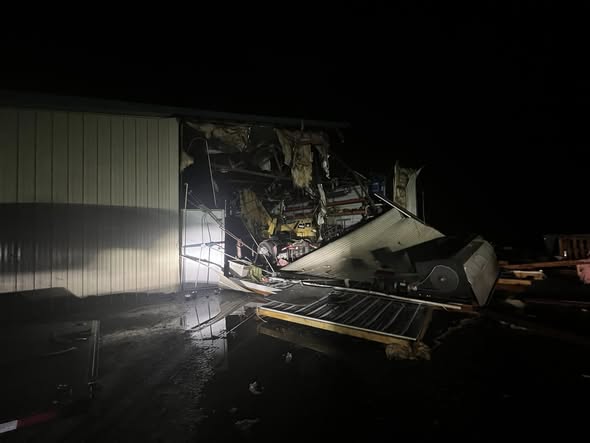

Missouri residents faced a dangerous mix of power outages, flooded roads and storm damage after severe weather swept through St. Charles County, turning parts of the region into a safety concern for drivers, homeowners and emergency crews.
The storms moved across the area on Monday, April 27, bringing heavy rain and strong winds that knocked down power lines in Rivers Township. Local police urged motorists to stay away from affected roads after floodwater covered streets and damaged electrical equipment created a serious hazard.
The St. Charles County Police Department released footage showing water across roadways and fallen lines in the area. Officials advised drivers to choose alternate routes rather than risk crossing flooded streets or approaching damaged utility lines.
Downed power lines are among the most dangerous storm-related hazards because they may still be energized even if they appear inactive. Residents should never touch a fallen wire, drive over it or attempt to move tree branches or debris that may be in contact with electrical equipment.
The severe weather arrived as forecasters warned that the St. Louis region could see a powerful combination of large hail, damaging winds and tornado threats. The National Weather Service in St. Louis had warned of strong thunderstorms through the afternoon and evening, with a tornado watch issued until 9 pm for the area.
For St. Charles County, the biggest immediate concern was the combination of flooding and power disruption. When roads become impassable and power lines fall at the same time, emergency crews often have to secure electrical hazards before cleanup and repairs can move forward. That can slow restoration work, especially if storms continue nearby.
Power outages can also create problems far beyond dark homes. Traffic lights may stop working, businesses can lose payment systems and refrigeration, and families relying on medical equipment or refrigerated medication may face added risk. Officials generally recommend keeping phones charged, using flashlights instead of candles and reporting outages through utility channels whenever possible.
The Missouri damage was part of a wider severe weather pattern affecting the central United States. A multi-day storm outbreak has brought tornado reports, damaging winds, flooding and widespread power interruptions across several states. More than 300,000 customers were without electricity across impacted areas early Tuesday, according to PowerOutage.us.
The storm system also produced damage outside Missouri. In Illinois, a tornado moved through parts of Clinton County, including Germantown and Carlyle, damaging homes, knocking down trees and blocking roads. Emergency officials said damage assessments were expected to continue as crews worked through affected neighborhoods.
In Arkansas, authorities reported damage after a destructive tornado moved through parts of Stone County late Monday. Homes, vehicles, trees and power lines were damaged as emergency crews responded overnight. The storm was strong enough to prompt a particularly dangerous tornado warning from the National Weather Service.
The outbreak has also turned deadly. In western Michigan, a 39-year-old man was killed after a tree fell during strong winds. Officials said parts of the region saw downed trees and power lines, while other areas reported structural damage caused by falling trees.
Weather experts say spring storm systems in the Midwest can intensify quickly when warm, humid air collides with stronger upper-level winds. That setup can support severe thunderstorms capable of producing hail, strong straight-line winds and tornadoes. Even when a tornado does not touch down, wind and flooding can still cause major disruption.
Flooding remains one of the most underestimated storm dangers. Water covering a road may be deeper than it looks, and the pavement underneath may be damaged or washed out. Drivers are urged to turn around rather than attempt to cross flooded areas, especially at night or during heavy rain.
Residents in storm-hit areas should continue monitoring local alerts, avoid unnecessary travel and keep distance from any damaged utility equipment. Anyone who sees a downed line should assume it is live and contact emergency services or the local utility provider immediately.
The St. Charles storm shows how quickly severe weather can shift from a forecast concern to a community emergency. With flooding, power outages and fallen lines reported in the same area, officials are urging caution until crews finish clearing roads and restoring damaged infrastructure.
For more weather updates and developing US news, visit Swikblog.
You may also like: St. Louis Level 4 Storm Risk Forces School Closures Amid Tornado Threat

Make Swikblog your go-to source on Google for reliable updates, smart insights, and daily trends.