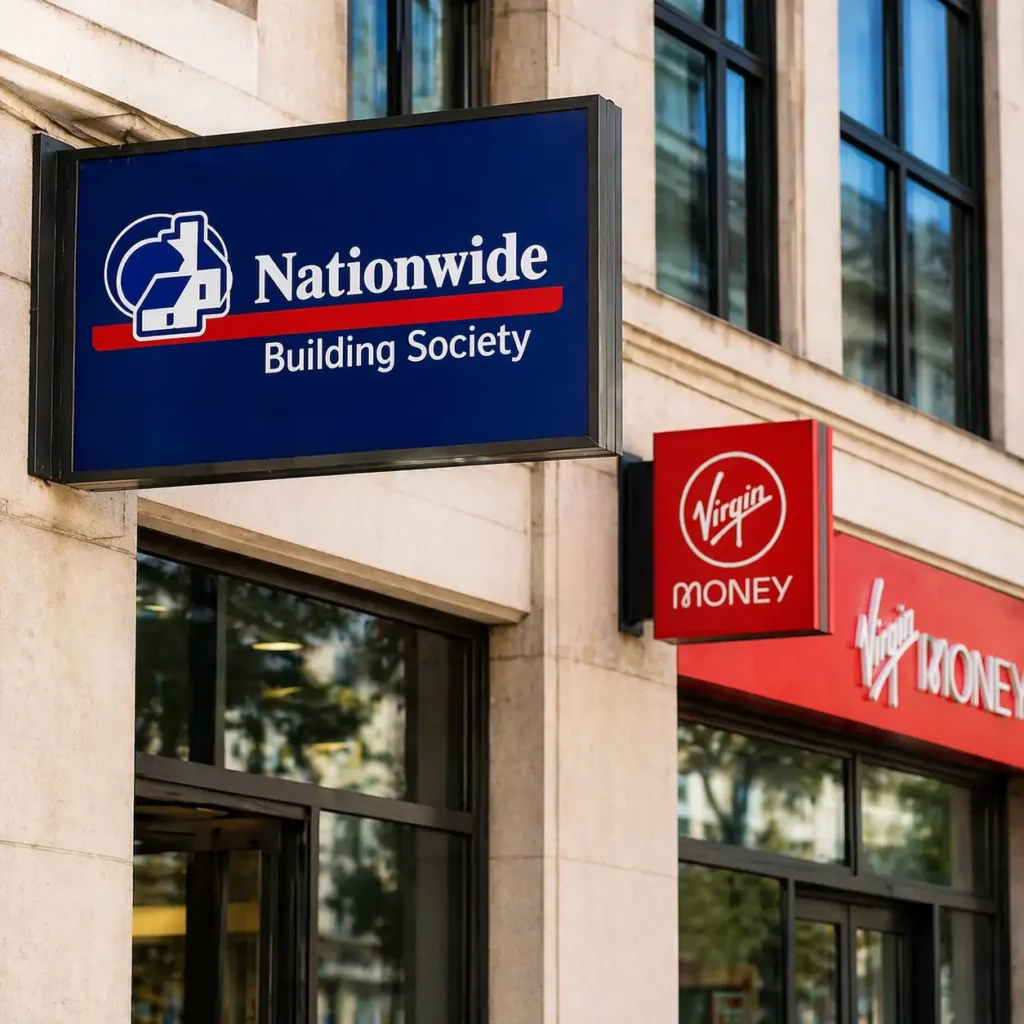

Nationwide’s annual £100 Fairer Share payment has become one of the most closely watched rewards in UK retail banking, and this year the conversation is getting even bigger. The reason is simple: the building society’s takeover of Virgin Money has brought more than 3 million additional customers into the Nationwide membership base, dramatically expanding the number of people who could one day benefit from the scheme.
That does not mean millions of former Virgin Money customers are about to receive £100 straight away. In fact, for most of them, the opposite is true. While they are now technically Nationwide members following the transfer of Virgin Money’s business on April 2, they appear to have arrived too late for the 2026 qualifying window. If Nationwide repeats the payment and keeps similar rules in place, 2027 is likely to be the first realistic opportunity for many of these new members to get it.
That timing issue is central to the story, but it is not the whole story. The bigger shift is what this deal means for Nationwide’s future, for Virgin Money customers adjusting to the new structure, and for the role Fairer Share now plays in the battle for savers and current account customers.
Why the Virgin Money deal matters for Nationwide customers
Nationwide completed its £2.9 billion takeover of Virgin Money earlier this month, a move that has strengthened its position in the UK banking market. The deal has made Nationwide the country’s second-largest provider of mortgages and savings, behind Lloyds Banking Group, and has widened its reach well beyond its traditional base as a building society.
For customers, the transition is designed to feel gradual. Former Virgin Money account holders can still use services much as they did before, and the brand change does not instantly alter the way their products work day to day. But in membership terms, something important has changed. They are now part of a mutual organisation rather than a shareholder-owned bank, and that opens the door to benefits that are tied to Nationwide’s model of returning value to members.
The Fairer Share payment is the clearest example. Unlike standard banking promotions, it is positioned as a way of sharing performance with members when the society is in strong enough financial shape to do so. It is one of the reasons Nationwide has been able to differentiate itself in a crowded market where many banks compete heavily on switching incentives, savings rates and cashback deals.
Still, there is an important reality check. Nationwide has made clear that Fairer Share payments are not guaranteed. The decision depends on financial performance and is ultimately one for the board. Being a member does not create an automatic right to receive £100 in future years.
Why millions may have to wait until 2027
The key frustration for many new members is the calendar. Nationwide’s Fairer Share scheme has previously been based on qualifying conditions that need to be met by a certain point, and the cutoff has typically fallen in March. Because Virgin Money’s business officially transferred on April 2, those newly added members appear to have missed the relevant point for any 2026 payment.
That means the expansion in membership is highly significant for the future, but less useful in the immediate term. It creates a much larger pool of people who could qualify later, yet most of those customers are unlikely to benefit this year. For many households, that will feel like being invited into the room just after the door has closed.
Even so, the numbers show why expectations are high. Nationwide paid more than 4 million members the Fairer Share bonus in 2025, up from 3.85 million in 2024 and 3.4 million in 2023. The 2025 round cost around £400 million, making it the largest distribution under the scheme so far. Those figures helped turn what might once have been viewed as a niche member perk into a major annual talking point for savers and borrowers alike.
The eligibility rules have also been fairly consistent in spirit. In 2025, Nationwide said the payment went to eligible members who chose it for everyday banking while also holding a qualifying savings or mortgage product. In other words, the scheme has tended to reward deeper relationships, not just passive account ownership. Official guidance on the Nationwide Fairer Share payment page makes the same broader point: payments depend on performance and future decisions by the board.
So while Virgin Money customers are now within Nationwide’s membership structure, they will still need to meet any future criteria if they want to qualify. That is what makes the next announcement so important.
Details of the 2026 Fairer Share payment are expected in May, and that update will be closely watched. It should provide a clearer picture of whether the payment is being repeated, what eligibility rules will apply this year, and how Nationwide intends to handle its newly enlarged membership base. Even if the answer for most former Virgin Money customers is “not yet,” the announcement will set the tone for what happens next.
The backdrop to all this is Nationwide’s strong recent performance. The building society has pointed to a 30% jump in annual profits after what it described as an outstanding year, helped by the completion of the Virgin Money takeover. It also paid a separate one-off £615 million “Thank You” reward in 2025 following the deal, underlining how strongly it wants to present itself as a member-focused institution at a time of major change.
That matters because the Fairer Share payment is about more than £100. It is part of a bigger message. Nationwide wants to show that mutual ownership can offer something tangible in a market where customers often feel traditional banks keep most of the upside for themselves. The Virgin Money acquisition gives it a much larger stage on which to make that argument.
For now, the most realistic message for new members is this: the opportunity has grown, but the timeline has not sped up. Millions more people may eventually become eligible for Nationwide’s headline-grabbing £100 bonus, yet most will probably have to wait until 2027 for their first real chance. That may be disappointing in the short term, but it also shows just how valuable the Fairer Share scheme has become in Britain’s savings and banking conversation.
You may also like: England Smartphone Ban in Schools: New Law Explained and What It Means for Students

Make Swikblog your go-to source on Google for reliable updates, smart insights, and daily trends.